History of Russian balalaika
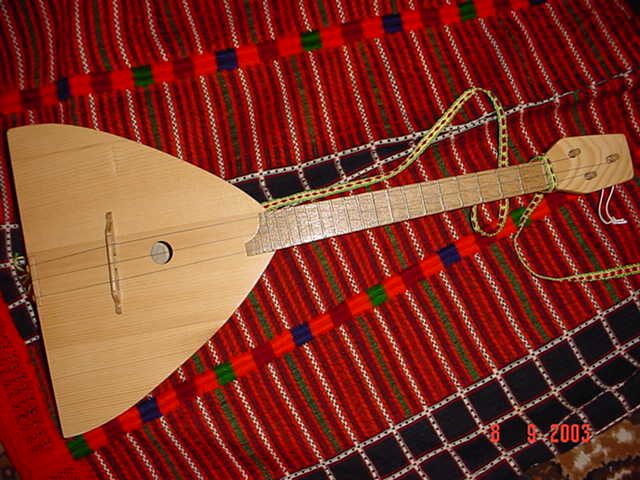
balalaika
| balalaika duo on facebook
| russian music
| switch to Russian
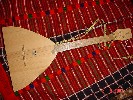
Balalaika was first mentioned in a document which dates back to XVII century (1688).
From this document we learn that Savka Fedoov, a citizen of the city of Arzamas, and Ivashka Fedorov,
a peasant, while passing through the Yauza Gates played the balalaika.
For such an imprudent behaviour they were flogged and exiled.
It would never occur to a civilized person living nowadays that a severe punishment
awaited anybody who gave himself to such an innocent occupation as playing the balalaika.
But let us recollect the Russian history.
balalaika
It happened soon after the death of the tsar Alexei Mikhailovich called "The Quietest".
This tzar was famous for his hatred towards the popular Russian culture.
In 1648 he issued an ukaz where he ordered to collect all musical instruments of the
Russian people and to burn them. All those who dared to continue playing them were to
be flogged and then exiled to the periphery of the Russian State (Ukraine).
To the end of the XVII century the persecution of Russian musicians and Russian instruments gradually subsided and at the end of the XVIII century balalaika became very popular with the public. Not only peasant boys who wanted to win favors of their sweethearts, but also court musicians played it. (Among them Ivan Khandoshkin, a violinist and a composer and Pavlovski, a bass singer in St.Petersburgh, and many others).
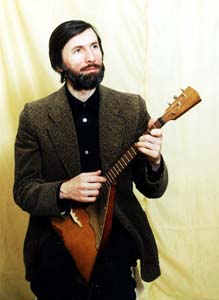
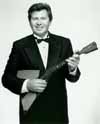
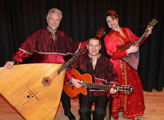
Balalaika teacher and player Yury Ivanets |
But after a period of popularity balalaika sank into oblivion towards the middle of the next century. Now harmonica was on the top and balalaika was played only by the poor people who did not have enough money to buy harmonica. Nobody knows what would have become of balalaika, if Vasili Andreev, a young Russian landowner had not seen it. On his way from St.Petersburgh to his estate Maryino he overheared his serf Antip play it. Vasili Andreev who considered himself a a connoisseur of the musical instruments of the Russian people was struck with wonder, because he had not heard anything of the kind before. Having thoroughly studied balalaika and having learned to play it, he arrived at the conclusion that balalaikas possibilities are unheard-of! But it needed perfection! With his improved balalaika andreev appeared at the stage in 1886. His performance became a sensation, a household word with every citizen in St.Petersburgh. All the papers and magazines of the city wrote about him. Inspired by his success, Andreev continued to work over his instrument untill finally he produced a whole family of balalaikas of different sizes and created an ensemble which was called "Amateurs of balalaika". The concerts of V.Andreev and his ensemble gained much popularity with the public. But he also pursued another object: having taken balalaika from the people, he wanted to return it to them. So he started to teach the soldiers of the St.Petersburgh garnison which united the Russian citizens from all the country. Going back home each soldier took his balalaika with him. This was the way how balalaika spread all over Russia again. To the end of the XX century only in St.Petersburgh there were as many as 20 000 balalaika players.
|
But Andreev and his associates: N.Privalov, F.Niman, V.Nasonov, S.Nalimov did not want to stop with their achievements which lead to the renaissance of balalaika. They wanted to improve other musical instruments of the Russian people as well: such as domra, psaltery, zhaleyka, Vladimir clarions etc. The result of their work was the creation of The Great Russian Orchestra, the first performance of which took place under the direction of Andreev 11.01.1897.
The Great Russian Orchestra of Andreev was a great success not only in Russia, but also in France, Germany, England and the USA. The success was really great. Many circles were founded in these countries where people could learn to play balalaika and many orchestras like that of Andreev were created. Especially it refers to England and the USA. Even today there are orchestras of Russian folk instruments and associations of balalaika and domra players in the USA.
At the beginning of the XX century Andreev gives up a career of a balalaika player concentrating all his attention, all his forces on the activity of a band-master and on the realization of his enlightenment projects. At this time he has such talented followers as Boris Troyanski, Alexander Dobrokhotov and Nikolai Osipov. Due to their playing some eminent composers noticed balalaika. In the 30-ies of the XX century S.Vasilenko creates a suite for balalaika and piano and a concerto for balalaika and symphony orchestra. M.M. Ippolitov-Ivanov writes a symphony-fantasia "Young peoples' gathering" also for balalaika and symphony orchestra. These works testified to the maturity of the instrument and showed that balalaika occupied its due place at the stage.
Owing to the improvements introduced by Andreev and owing to the methods of playing which he discovered, balalaika became an instrument with a wide range of possibilities for the players. And as far as its variety of timbres is concerned, no instrument can surpass balalaika. Not only Russian folk-songs can be interpreted
on balalaika, but also Russian and Western classics adapted for this musical instrument.
Moreover, the composers created a very rich and original repertoire for balalaika,
including 100 suites, sonatas, concertos and other big compositions.
Part of the book "Balalaika - from old times up to now" by YURY IVANETS
Posted on Barynya website with author's written permission.
RELATED LINKS
| |
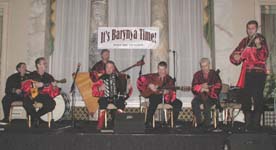
New York Balalaika Orchestra performs at Russian Orthodox weddings, fundraising balls, large scale social events, Doctor Zhivago style corporate parties.
|
| |
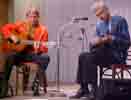
Russian Balalaika Duo Alex Siniavski and Mikhail Smirnov with program of Russian, Ukrainian, Gypsy, Cossack music and songs performed on balalaika, garmoshka and guitars.
|
| |
Brooklyn Balalaikas - Russian Folk Music Trio from Brooklyn, New York. Artistic Director Leonid Bruk.
|
| |
New York Russian folk music band specialty is Russian folk music and songs. All RUSSIAN BAND members are top professional musicians. Choice of Gypsy, Ukrainian, Russian (2 different sets) and Cossack costumes. Extended repertoire. Formal concert, background music or music for dancing party. Our main instruments are balalaika, domra, bayan, garmoshka (Russian button accordion), Gypsy guitar, classic guitar, contrabass balalaika, cello and vocals.
|
| |
Old Red Wine - Klezmer, Yiddish, Russian dixieland band from Brooklyn, New York. Artistic Director Shlomo Leiderman.
|
| |
Kalinka Duo - Sergey Vashchenko-balalaika, Vladimir Kaliazine-bayan from Austin, TX.
|
| |
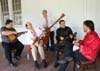
Balalaika Stooges: Sasha Ressetar (balalaika), Michael L. Sensor (balalaika), Andy Koslow (balalaika contrabass), Serge Rogozin (balalaika), and Rick Heeld (domra).
|
| |
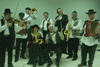
Tum Balalaika - Russian, Jewish, Ukranian, Gypsy band from Chicago, Illinois.
|
more Russian music ensembles, trio, and duets
   
Балалайка - краткий очерк истории
артисты-народники
| старинные музыкальные инструменты
| по английски
История балалайки уходит своими корнями в глубь веков,
однако, первое упоминание о ней в архивном документе относится к 1688 году.
В нем сказано, что житель Арзамаса Савка Федоров и крестьянин Ивашка Федоров,
въезжая на телеге в Яузские ворота, играли на балалайке, за что были приведены в Стрелецкий приказ,
биты батогами и отправлены в ссылку.
балалайка
Нам, живущим на рубеже 20 и 21 веков, это покажется варварской дикостью,
но давайте вспомним русскую историю. Происходило это вскоре после смерти царя
Алексея Михайловича, прозванного “Тишайшим”.
Среди прочих своих деяний этот царь прославился своей ненавистью к
народной русской культуре. В 1648 году он издал указ, в котором повелел собрать
все музыкальные инструменты русского народа и сжечь, а тех, кто не подчинится,
и будет продолжать на них играть – пороть и отправлять на вечное поселение в Малороссию.
К концу 17-го века репрессии постепенно прекратились, а в середине 18-го века
балалайка стала наипопулярнейшим инструментом. На ней играли не только деревенские парни,
желающие понравиться своим избранницам, но и серьезные придворные музыканты,
такие как скрипач и композитор Иван Хандошкин, бас петербургской оперы Павловский и другие.
Однако этот резкий всплеск популярности сменяется почти полным забвением к середине следующего столетия.
В моде теперь иноземная гостья – гармоника, а на балалайке играют лишь обитатели “дна”,
которые гармонику просто не в состоянии приобрести. И не известно как бы сложилась судьба балалайки,
если бы она не попалась на глаза Василию Андрееву – молодому русскому помещику.
Совершая визит из Петербурга в свое имение Марьино, он услышал балалайку у своего дворового Антипа.
Андреев, считавший себя знатоком русских народных инструментов, был поражен, поскольку ничего подобного
раньше не видел и не слышал. Изучив балалайку и научившись на ней играть он пришел к выводу,
что инструмент таит в себе небывалые возможности, но нуждается в усовершенствовании.
Исполнитель на балалайке Юрий Иванец |
Первое выступление Андреева с игрой на усовершенствованной балалайке, состоявшееся в 1886 году,
в зале дворянского собрания стало сенсацией, о которой написали все петербургские газеты.
Окрыленный успехом, он продолжает работать над инструментом, сконструировав семейство балалаек
разных размеров по образцу смычкового квартета, и создал из них ансамбль, который назывался
“Кружок любителей совместной игры на балалайках”.
Сольные концерты В.В.Андреева и выступления его кружка пользовались огромным успехом и принесли
ему известность и популярность. Однако он ставил перед собой задачу более глобальную, чем
просто популяризация инструмента. Взяв балалайку у народа и усовершенствовав ее, он хотел
вернуть ее в народ в новом облагороженном варианте.
И он нашел путь к решению этой невероятно сложной задачи, начав обучать игре на балалайке
солдат петербургского гарнизона, в котором проходили службу люди со всей необъятной Российской империи.
Увольняясь в запас, каждый обученный им солдат увозил с собой и балалайку.
Так балалайка снова зазвучала по всей России, а только в одном Петербурге к началу 20-го века
насчитывалось более двадцати тысяч лиц, играющих на балалайках.
|
Андреев и его сподвижники – Н.Привалов, Ф.Ниман, В.Насонов, С.Налимов – не ограничились возрождением лишь
одной балалайки. Они вели работу и по усовершенствованию и других инструментов русского народа, таких как домра,
гусли, жалейка, владимирские рожки и др. Итогом этой работы стало формирование Великорусского оркестра,
первое выступление которого состоялось под руководством Андреева 11 января 1897 года в зале Дворянского Собрания.
Великорусскому оркестру Андреева рукоплескала публика не только России, но и Франции, Германии, Англии, Америки.
Успех был до такой степени невероятный, что и в этих странах стали организовываться кружки по обучению игры
на балалайке и образовываться великорусские оркестры по образцу оркестра Андреева.
Особенно бурно этот процесс происходил в Англии и в Америке. В Америке и в наши дни имеются оркестры
русских народных инструментов, и действует Ассоциация балалаечников и домристов.
В первые годы столетия Андреев оставляет карьеру солиста-балалаечника, сосредоточив в основном свои силы на
дирижировании и воплощении в жизнь своих просветительских проектов, но к этому времени у него появляются
талантливые последователи такие, как Борис Трояновский, Александр Доброхотов и немногим позднее –
Николай Осипов. Благодаря их исполнительскому искусству на балалайку обратили внимание маститые композиторы.
В 30-е годы Сергей Василенко создает сюиту для балалайки с фортепиано и концерт для балалайки с
симфоническим оркестром, а М.М.Ипполитов-Иванов – симфоническую фантазию “На посиделках” также для
балалайки с симфоническим оркестром. Эти произведения явились как бы аттестатом художественной зрелости
инструмента и показали, что балалайка с полным правом занимает свое место на концертной эстраде.
Благодаря усовершенствованиям Андреева и приемам звукоизвлечения, открытых им и его последователями,
балалайка превратилась в инструмент с очень широкими исполнительскими возможностями, а по богатству
тембрового разнообразия балалайке нет равных. На балалайке замечательно звучат не только русские
народные песни, но и переложения произведений русской и западной классики, кроме того,
композиторы создали для балалайки разнообразный оригинальный репертуар, в том числе более 100 сюит,
сонат, концертов и других произведений крупной формы.
ЮРИЙ ИВАНЕЦ “Балалайка - из глубины веков до наших дней”.
Отрывок из книги. Перепечатано с разрешения автора.
For fast price quote contact Mikhail Smirnov at Barynya Entertainment
| |
Russian Christmas Music Balalaika Album
Balalaika virtuoso Alex Siniavski and Mikhail Smirnov (guitar)
Bibs Ekkel: Russian Gypsy Music Balalaika album
Lev Zabeginsky plays Music Of The World on Russian Balalaika
Zhenya Shevchenko and ensemble Barynya Russian Gypsy dance, songs and music DVD 2008
|