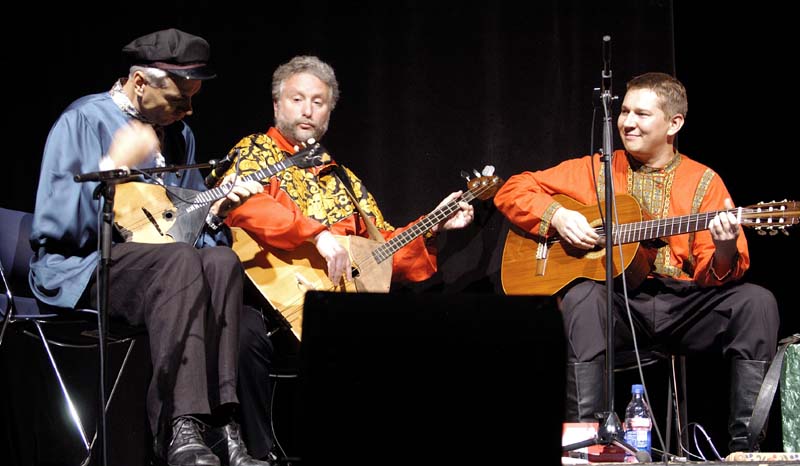
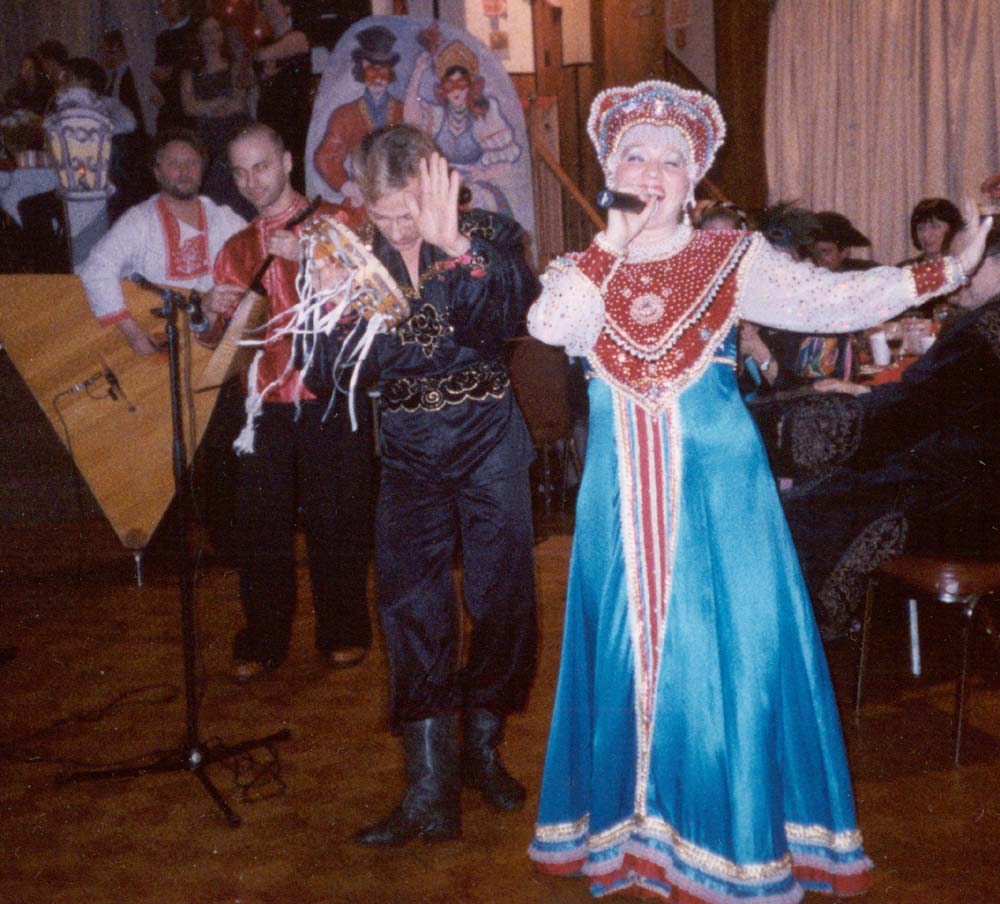
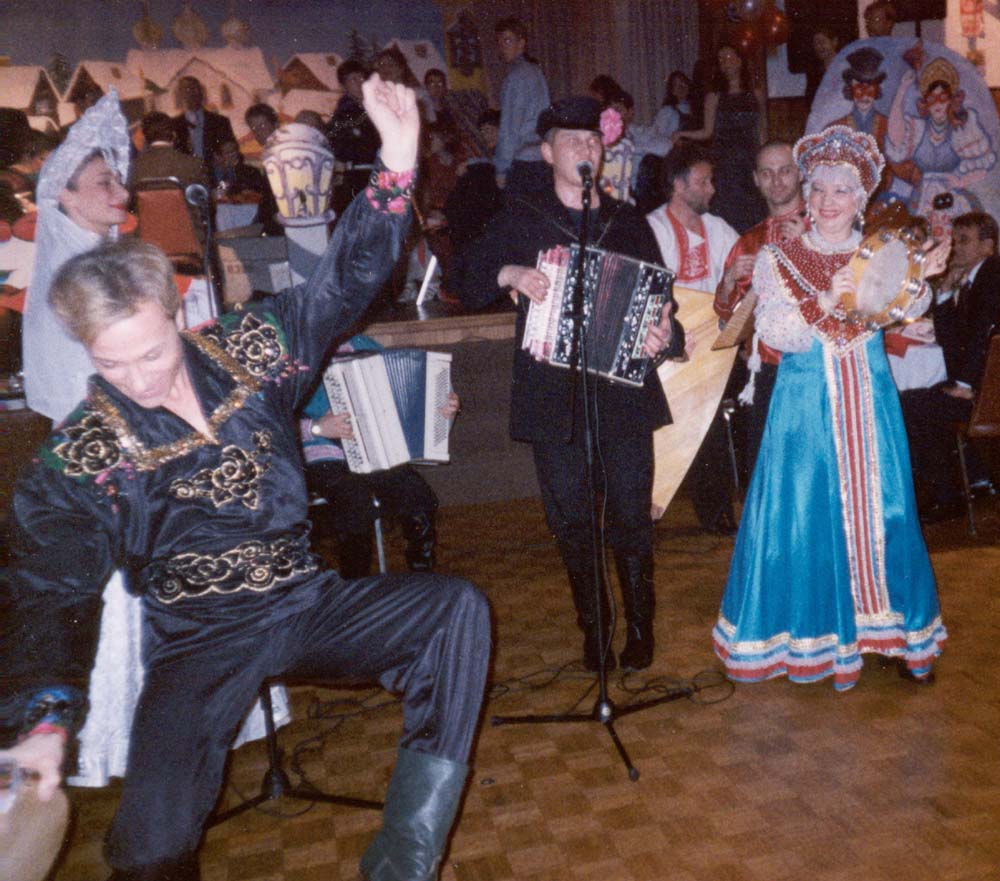
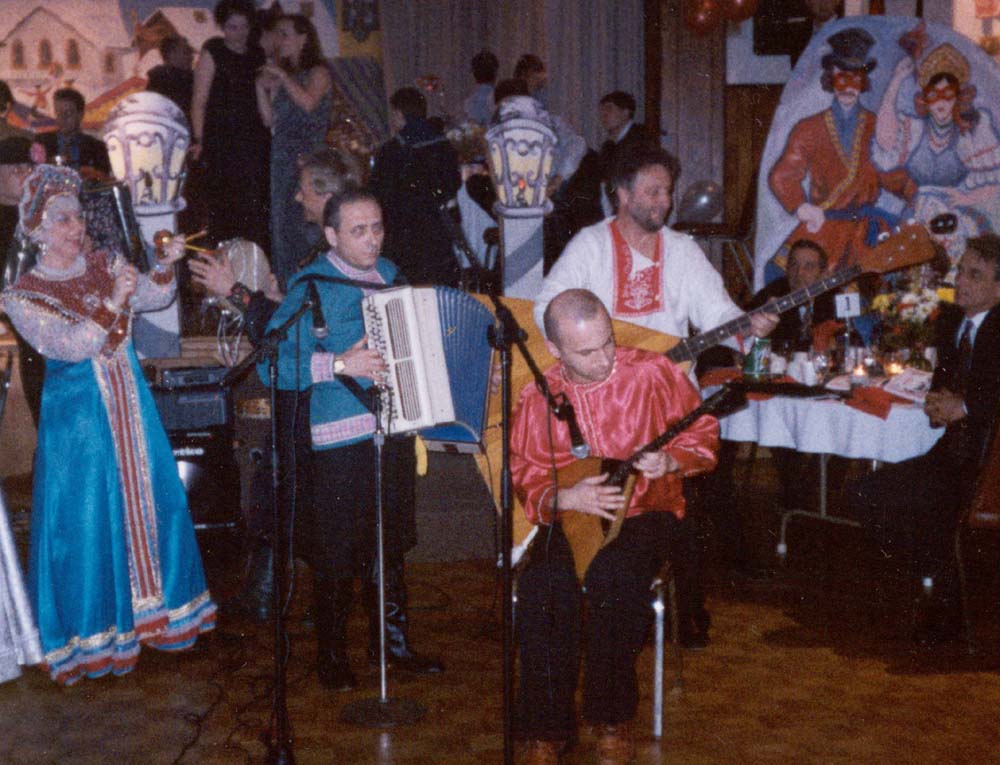
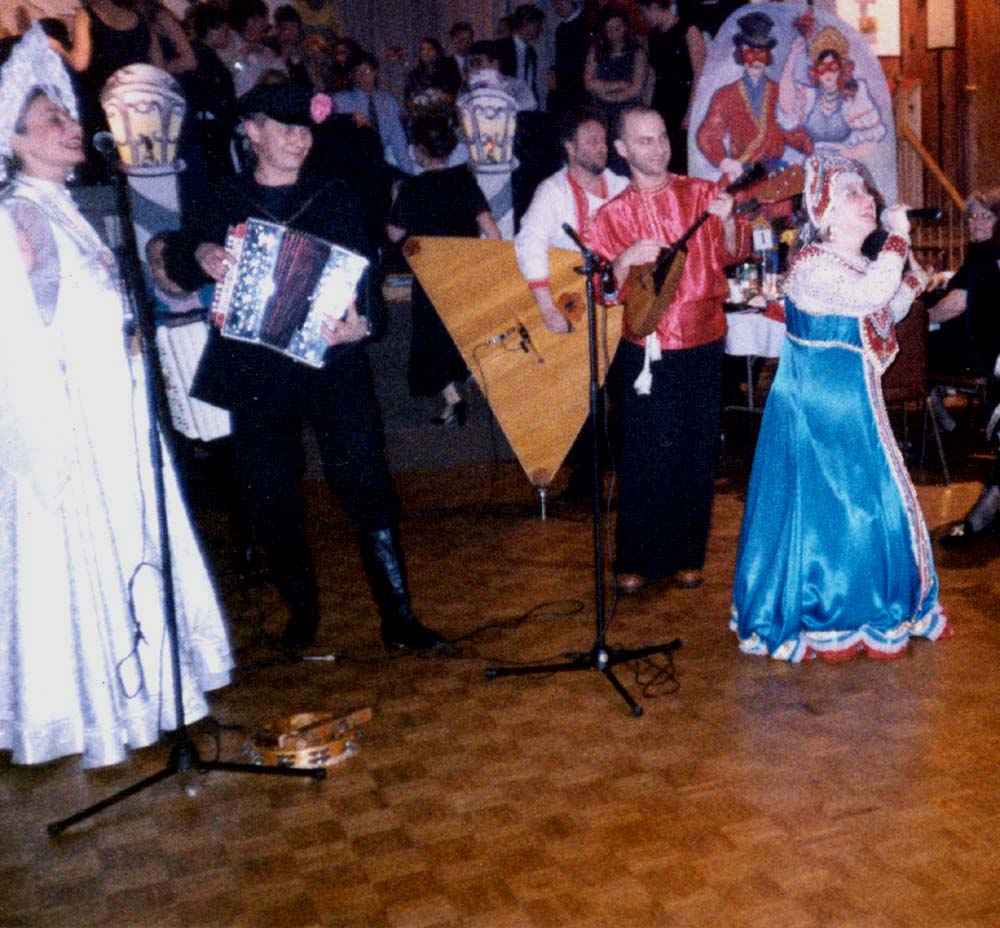
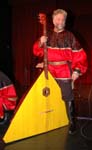
Leonid Bruk, contrabass balalaika player from New York City, USA
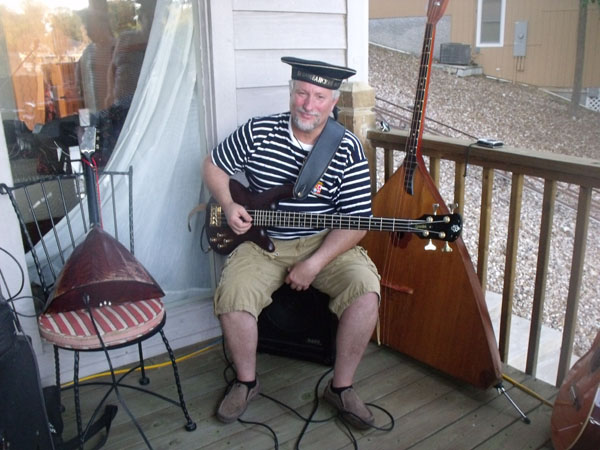
Acclaimed New York based contrabass balalaika player Leonid Bruk (Russian: Леонид Кимович Брук) was born in Leningrad, Russia. Leonid was graduated from music school as a bass guitarist and performed with many different groups. In 1998 he joined Russian dance and music ensemble Barynya. In 2000 he founded his own Russian folk music trio "BROOKLYN BALALAIKAS". Since 1889 when he arrived to USA, Leonid Bruk was deeply attracted to the bass-balalaika and contrabass balalaika. He has played with variuos folk groups including NYC Klezmer Band, Tamara Volskaia's Russian Souvenir ensemble, Mandalin Orchestra of New York, NYC Russian Band and New York Balalaika Orchestra and soon become known expert in Russian folk music. His specialty is playing balalaika bass and balalaika-contrabass.
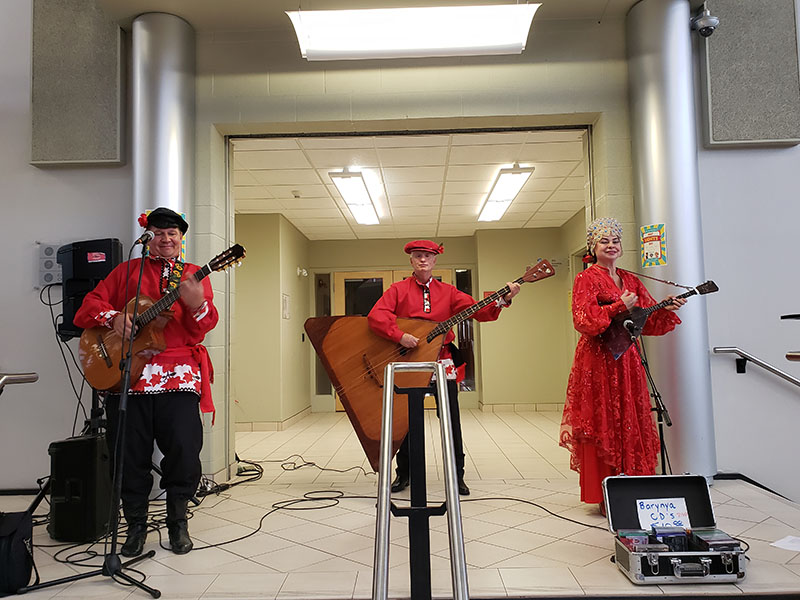
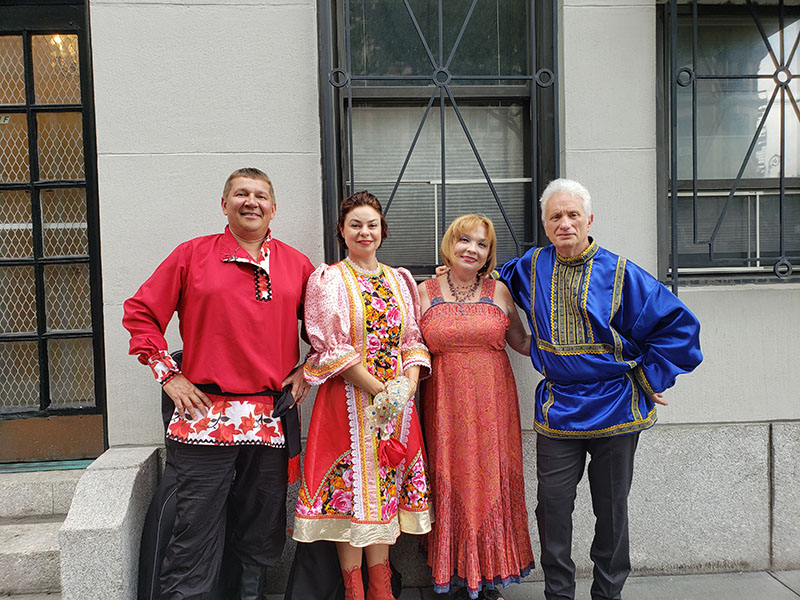
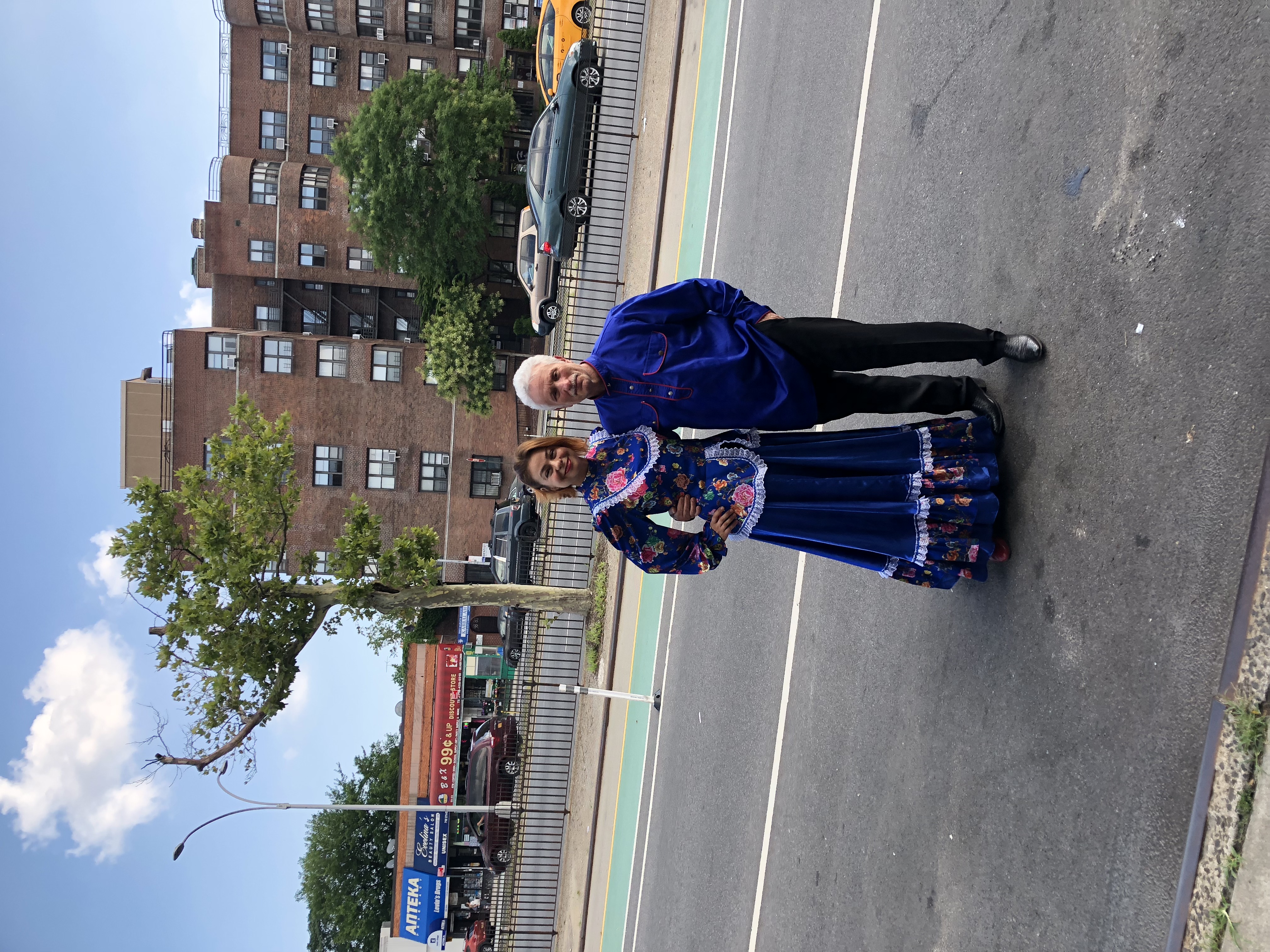
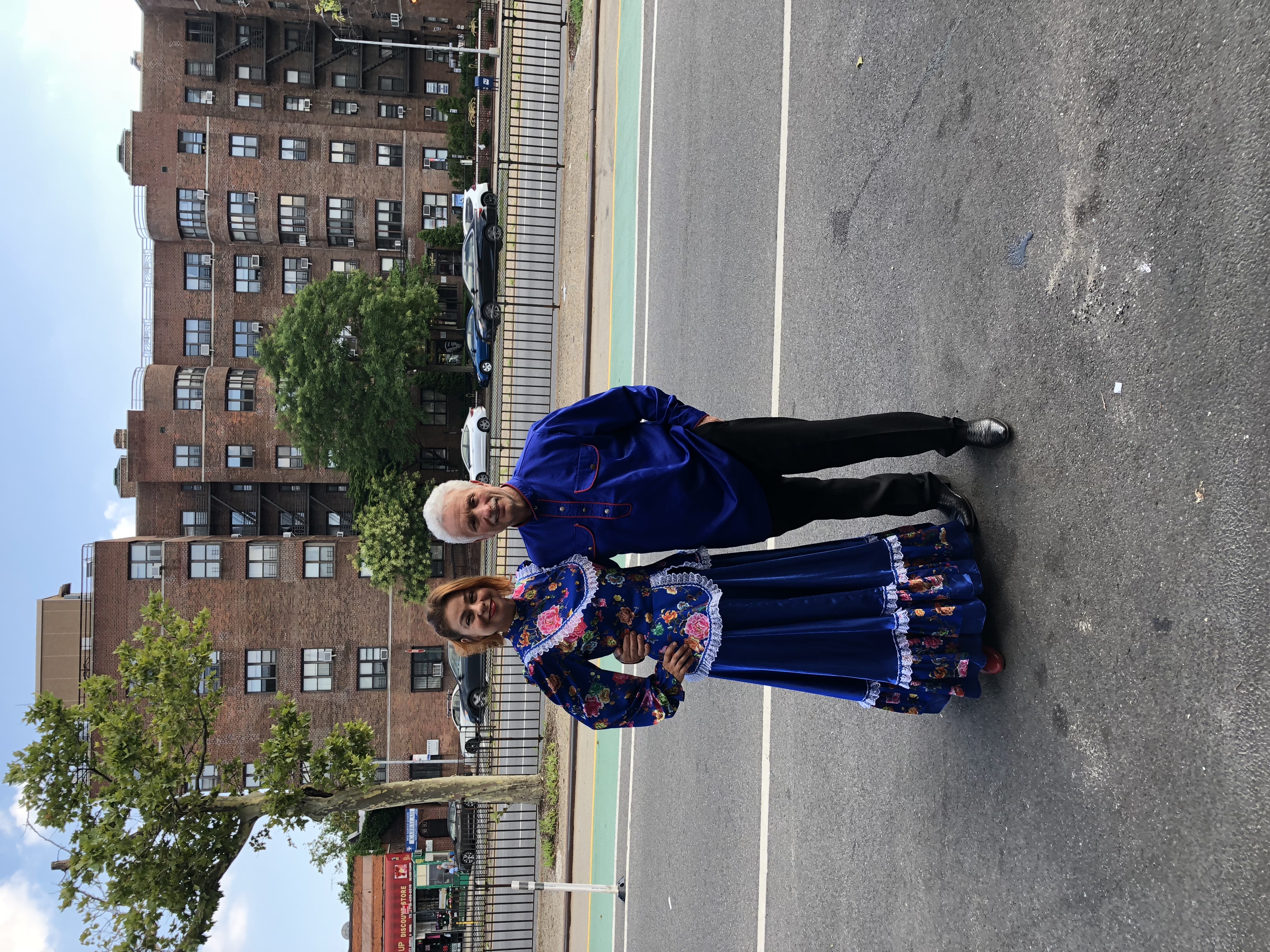
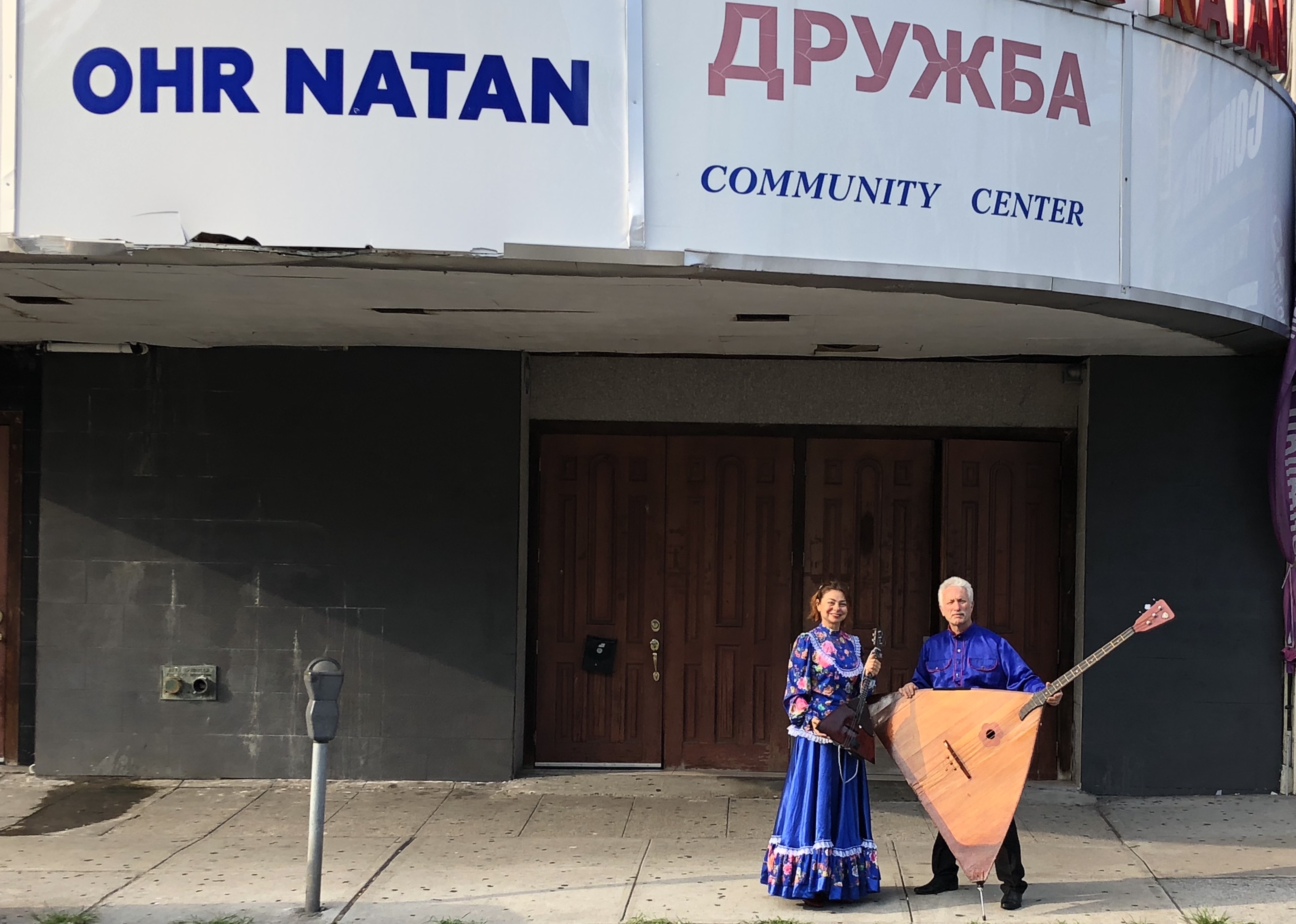
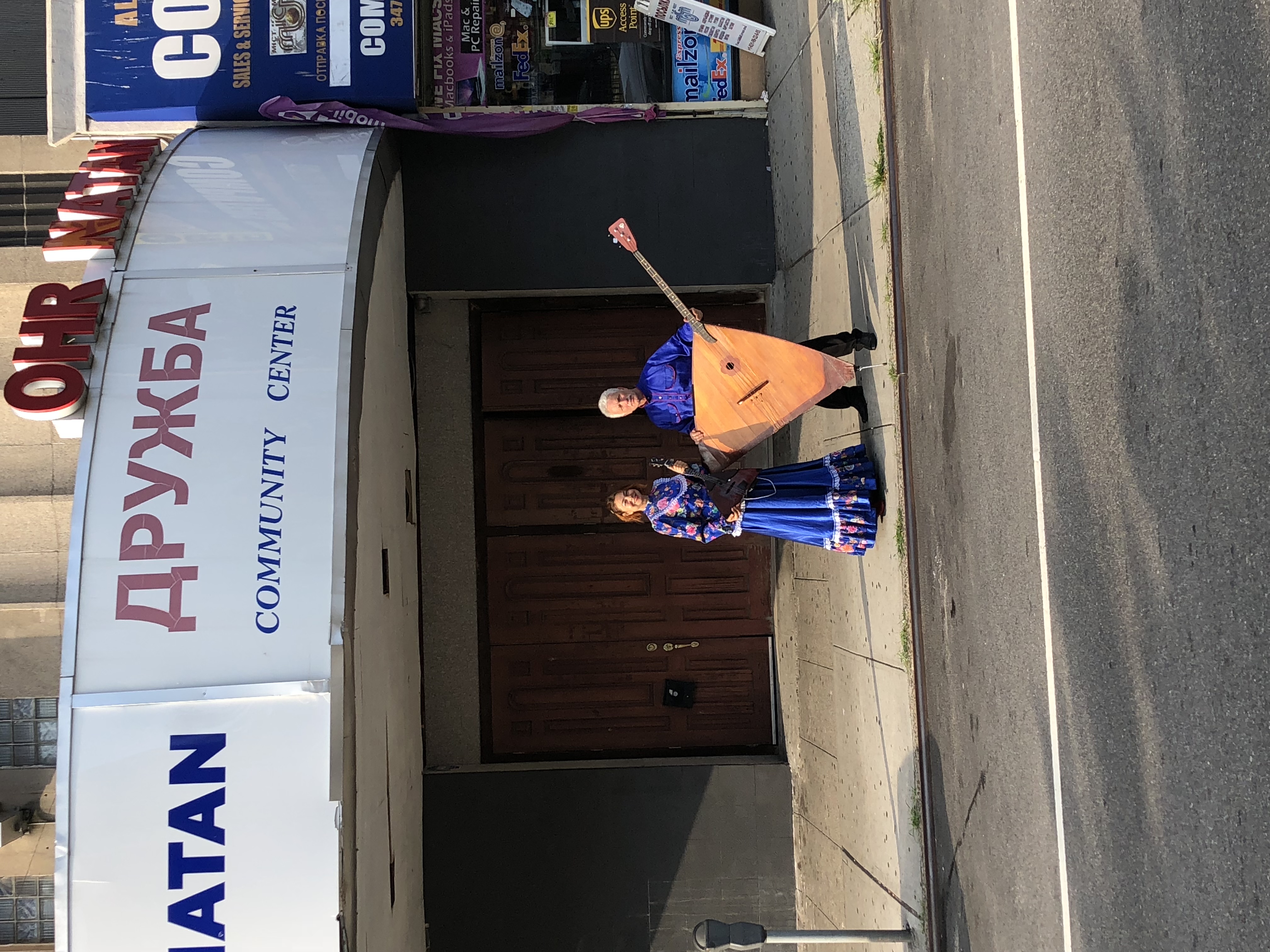
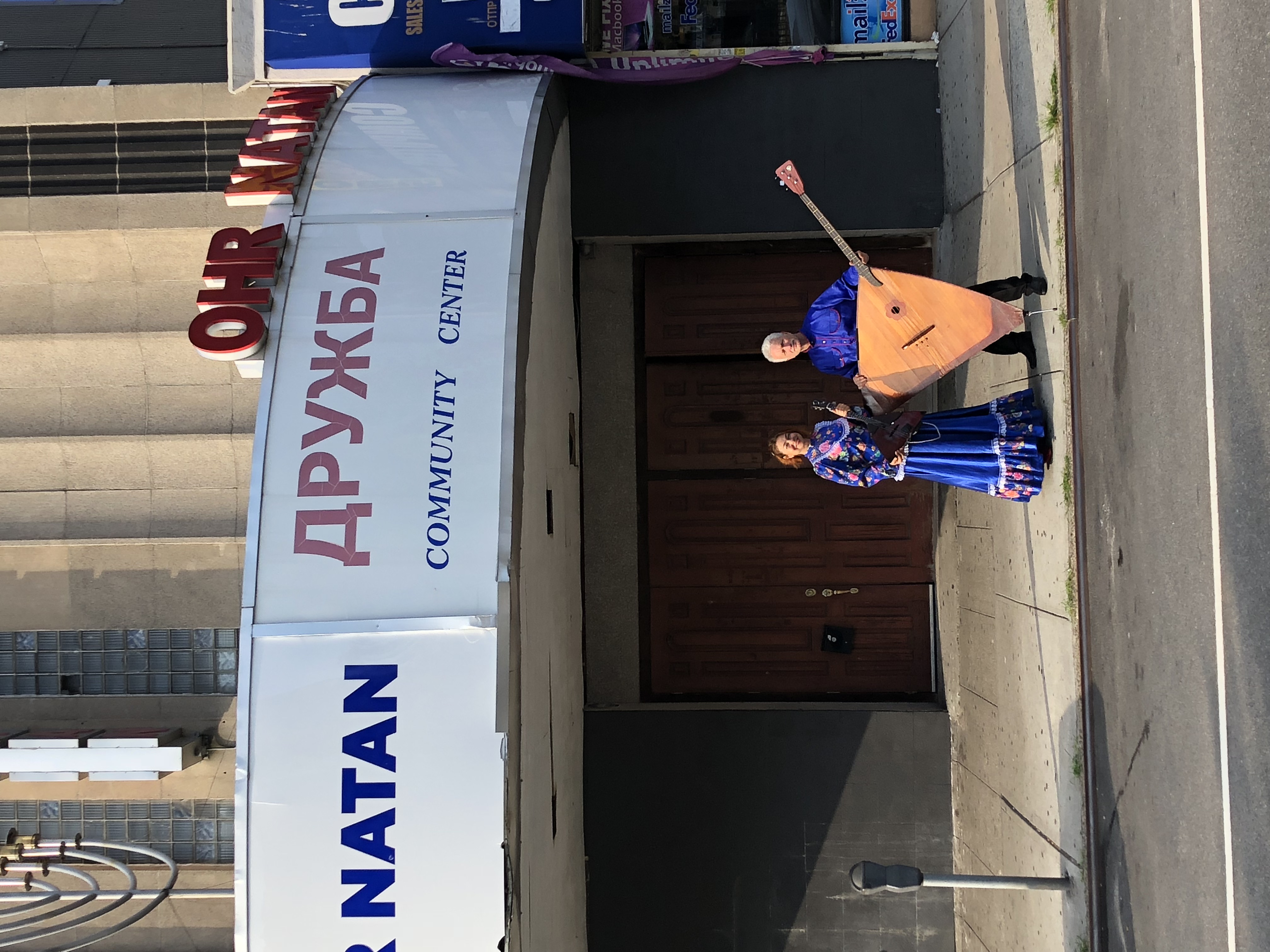
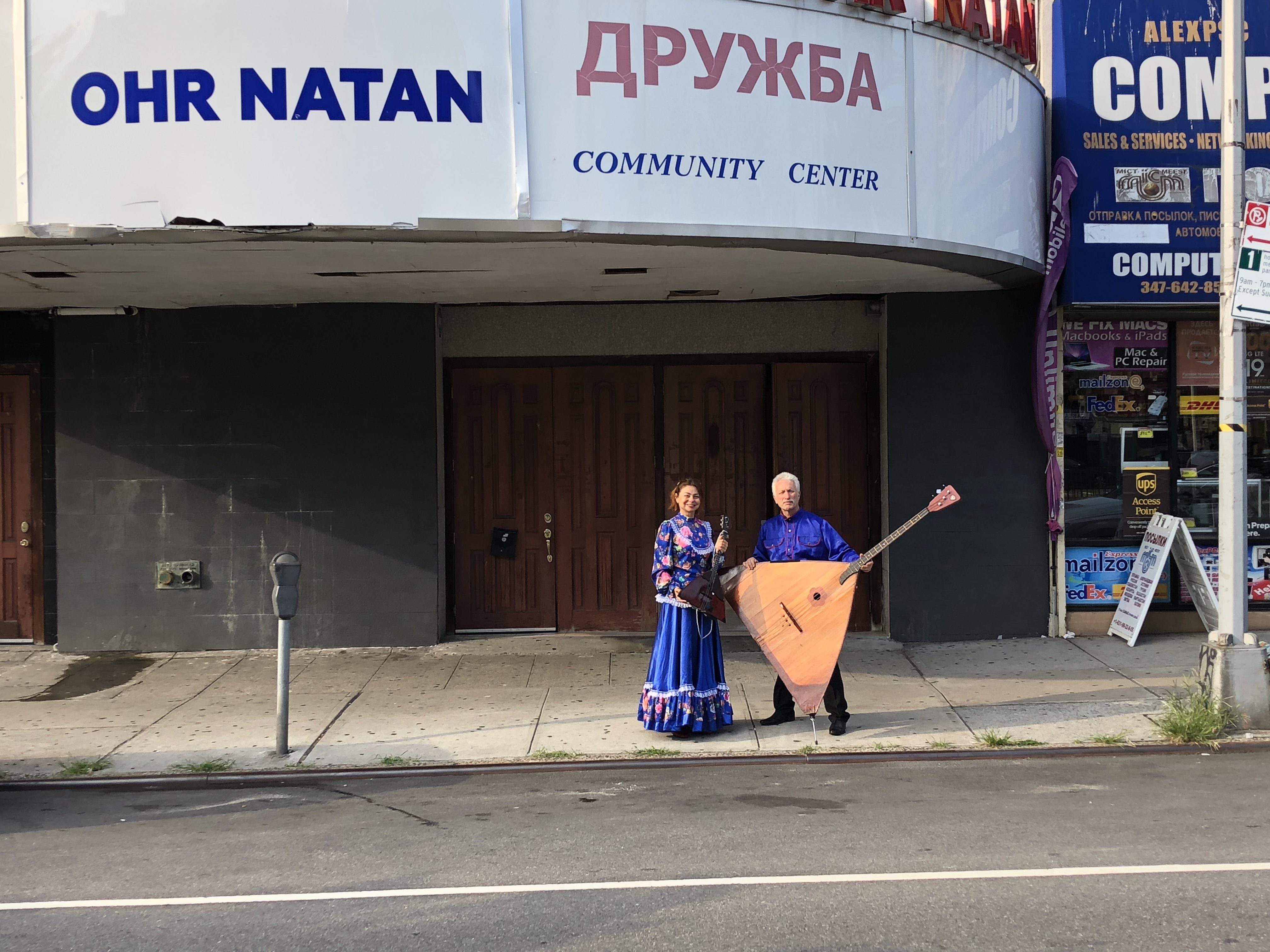
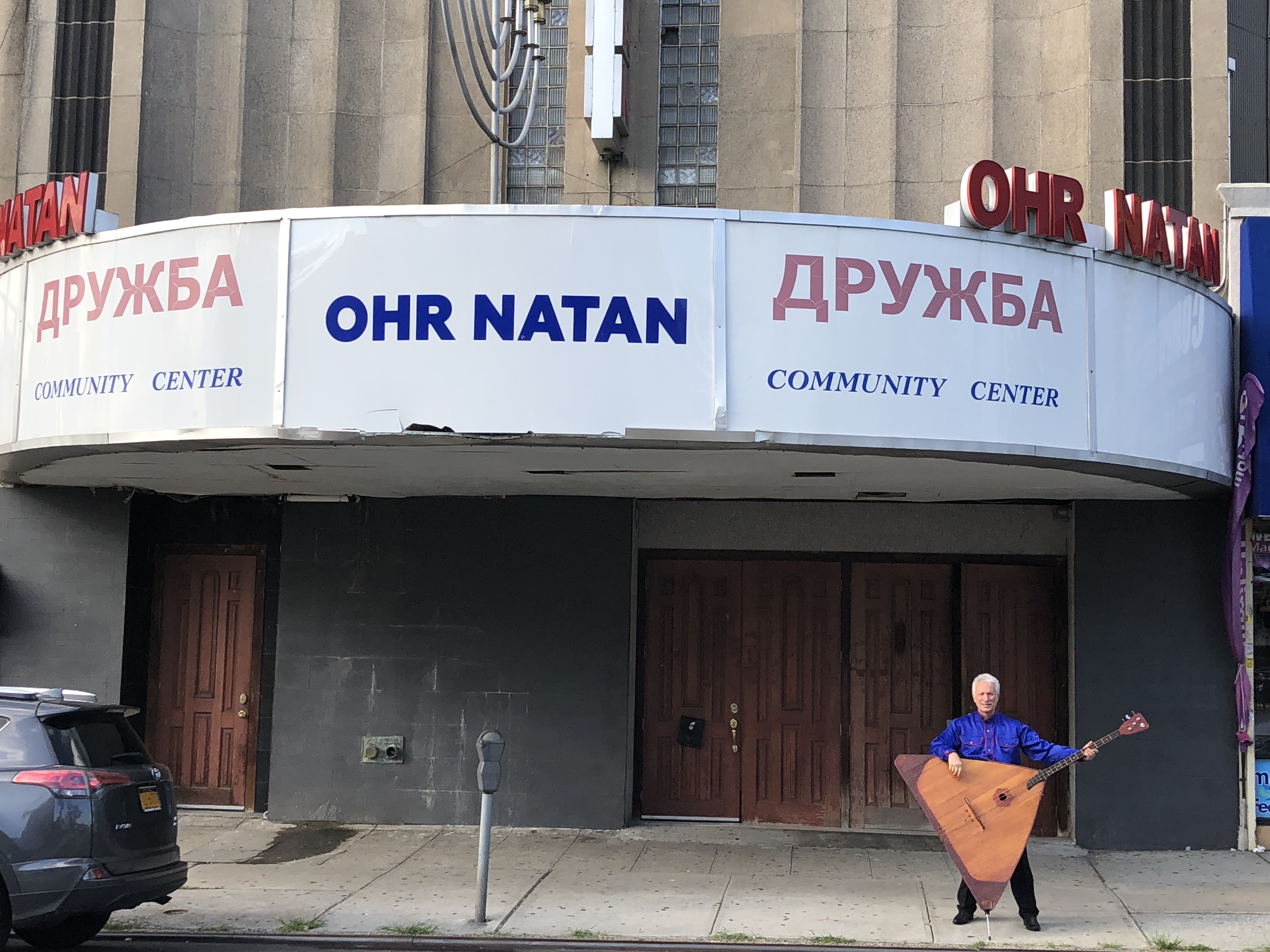
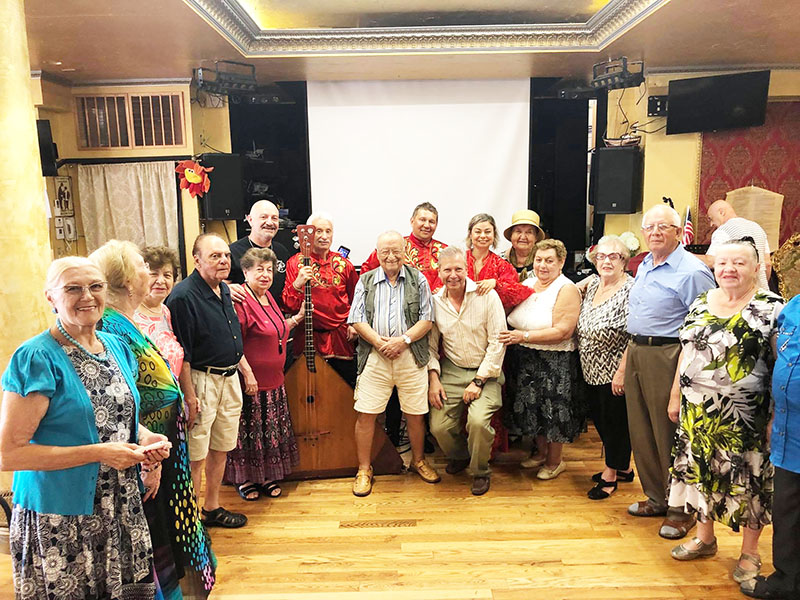
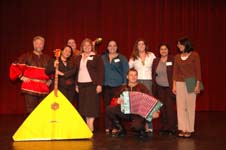
Photos with Elina Karokhina, Irina Zagornova and Mikhail Smirnov, Queens, New York
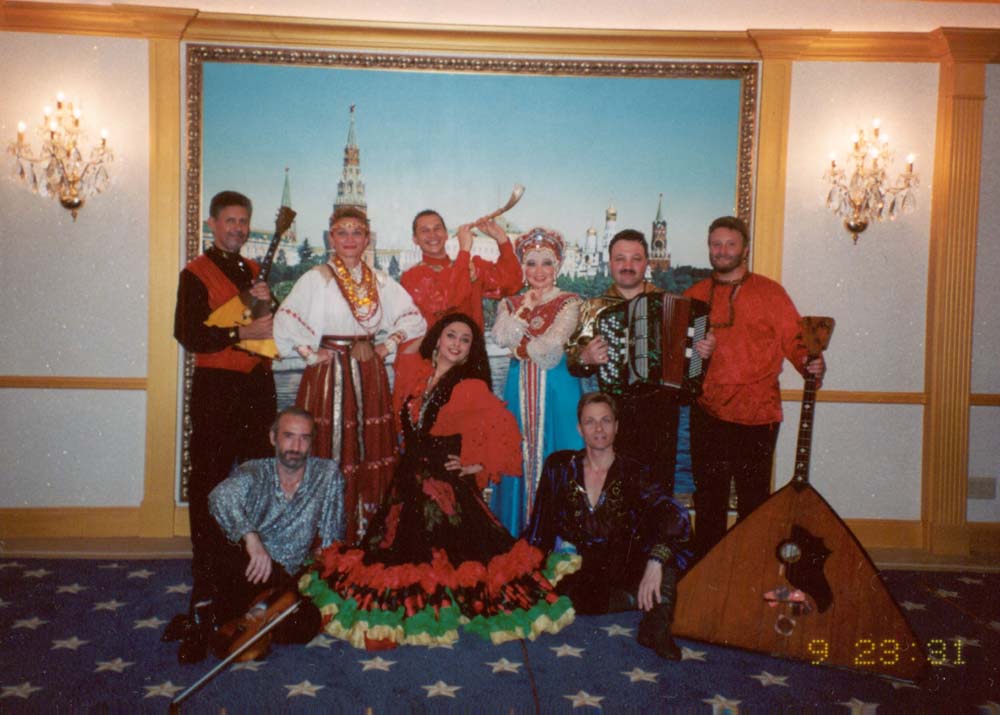
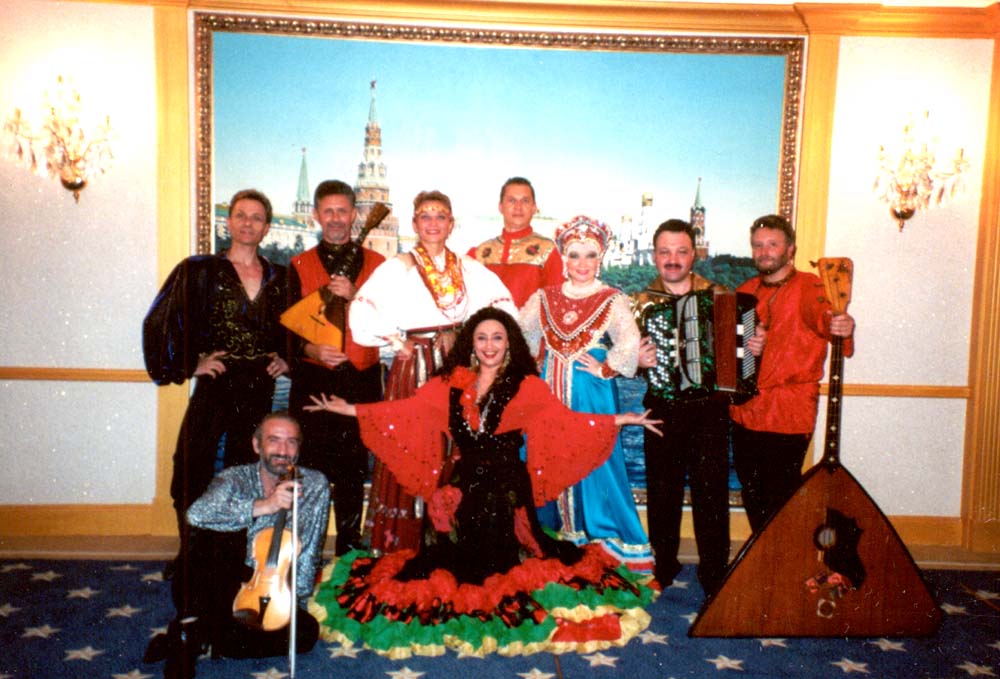
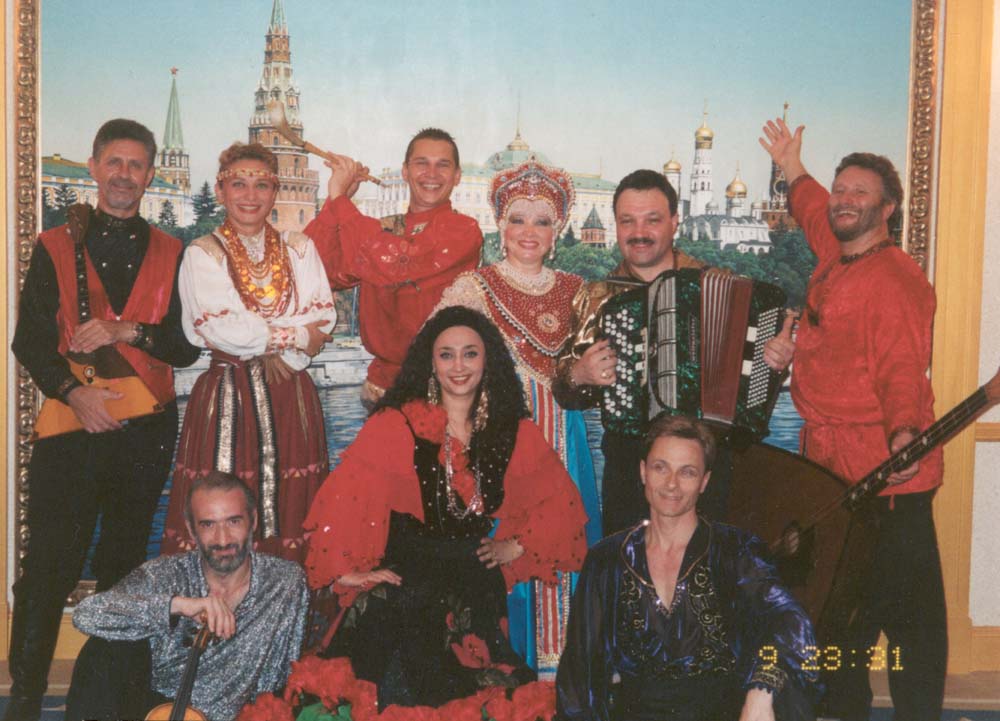
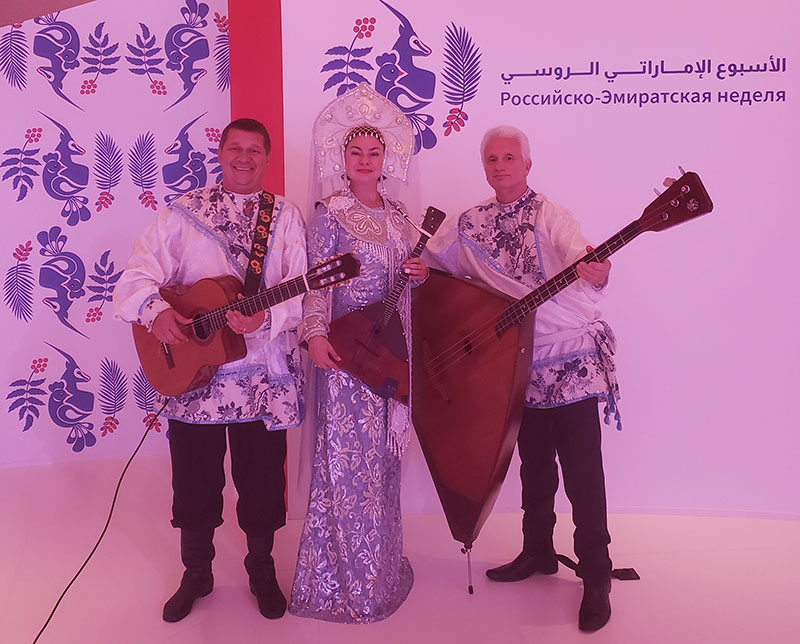
Emirates-Russian Week, Emirates Palace, Abu Dhabi, United Arab Emirates
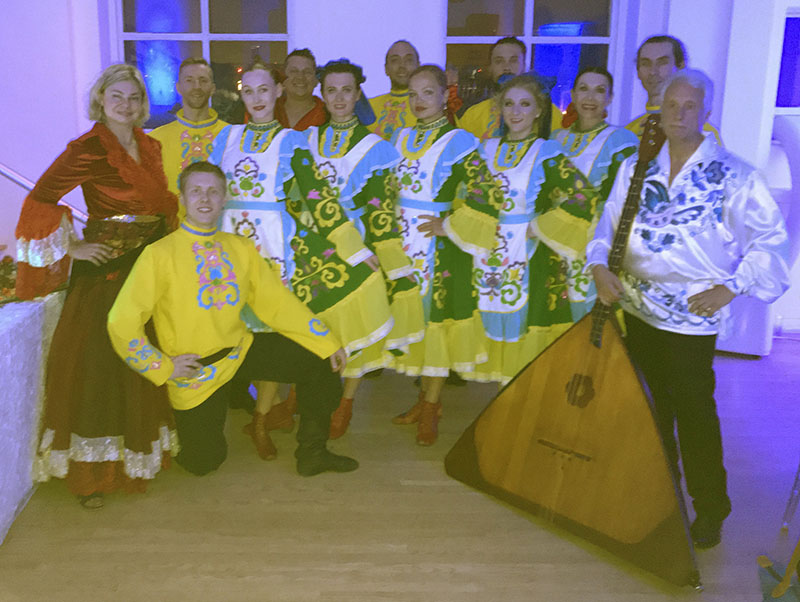
Musicians of Barynya ensemble provided several thirty minute performances during Emirates-Russian Week at the Emirates Palace in Abu Dhabi, United Arab Emirates.
Koinonia Christian Fellowship, Bloomingdale, Canada
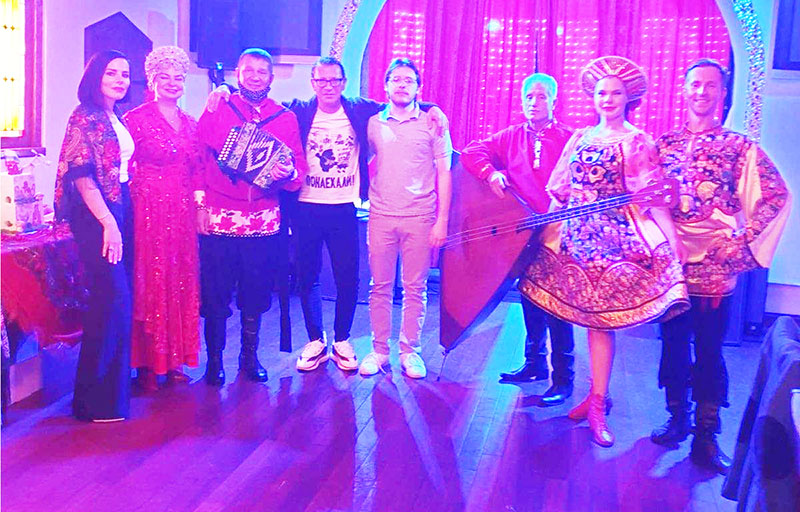
Leonid Bruk, Elina Karokhina, Mikhail Smirnov played during Svet Ministries Event at the Koinonia Christian Fellowship in Bloomingdale, Canada on Saturday, October 26, 2019 a program of Russian and Russian-Gypsy traditional music. Performance took place at the Koinonia Christian Fellowship, 850 Sawmill Rd, Bloomingdale, ON N0B 1K0, Canada.
Corporate event in Lithuania, Esperanza Resort, Vilnius County
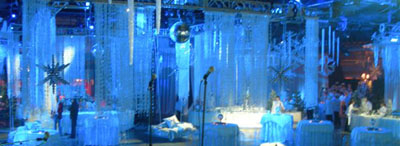
On Monday, December 18th, 2017 Balalaika Trio and folk dancers of Barynya ensemble performed during corporate event in Lithuania. It was high-class New Year's celebration produced by professional team of top people in the industry.
10-22-2024. New York Police Department Headquarers, New York City
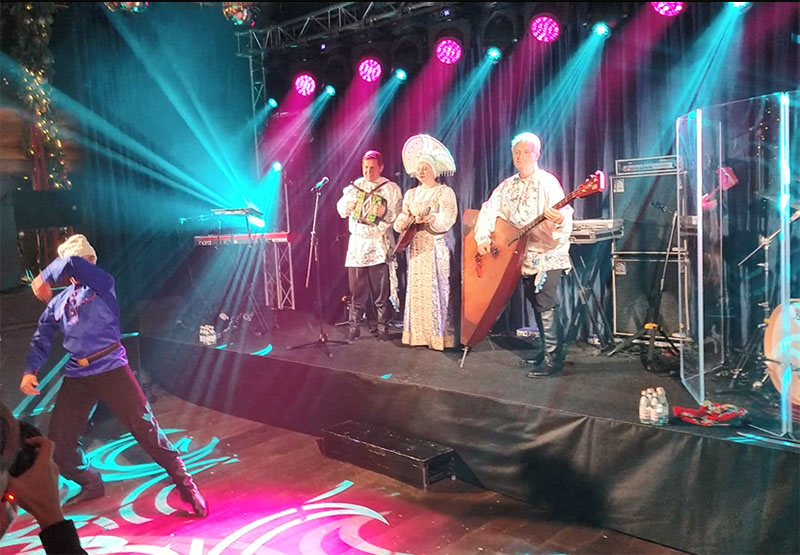
Ensemble Barynya was the main performer during Eastern European Heritage Night, sponsored by the Russian American Officers Association (RAOA). The event took place at NYPD Headquarters at One Police Plaza on October 22, 2024. The evening featured performances by Barynya and Pesvebi, delicious food, and guest speakers.
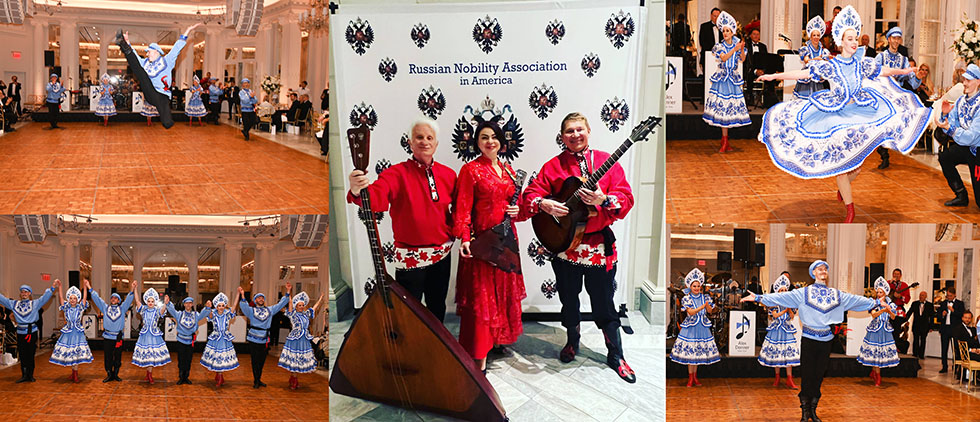
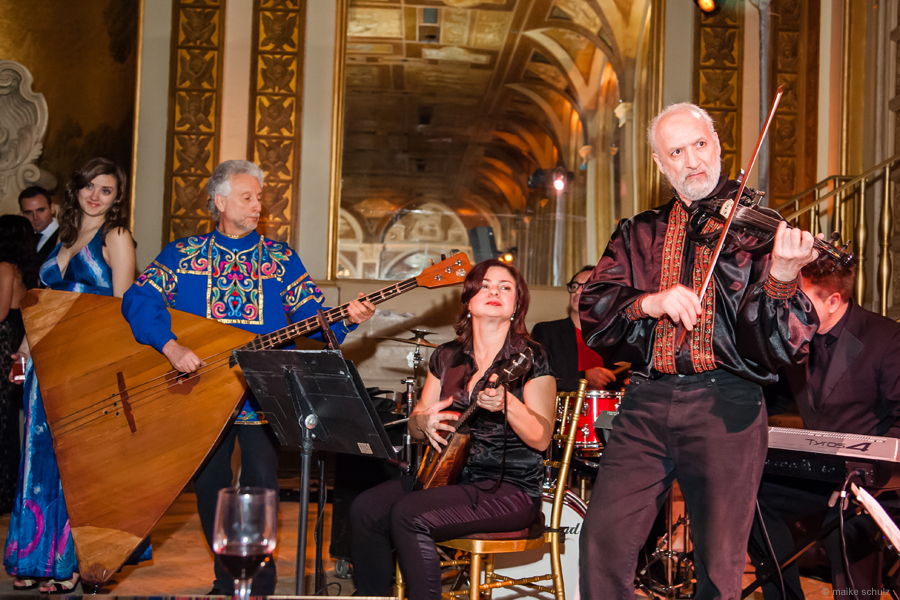
Russian Nobility Ball 2023, The Pierre A Taj Hotel, New York City
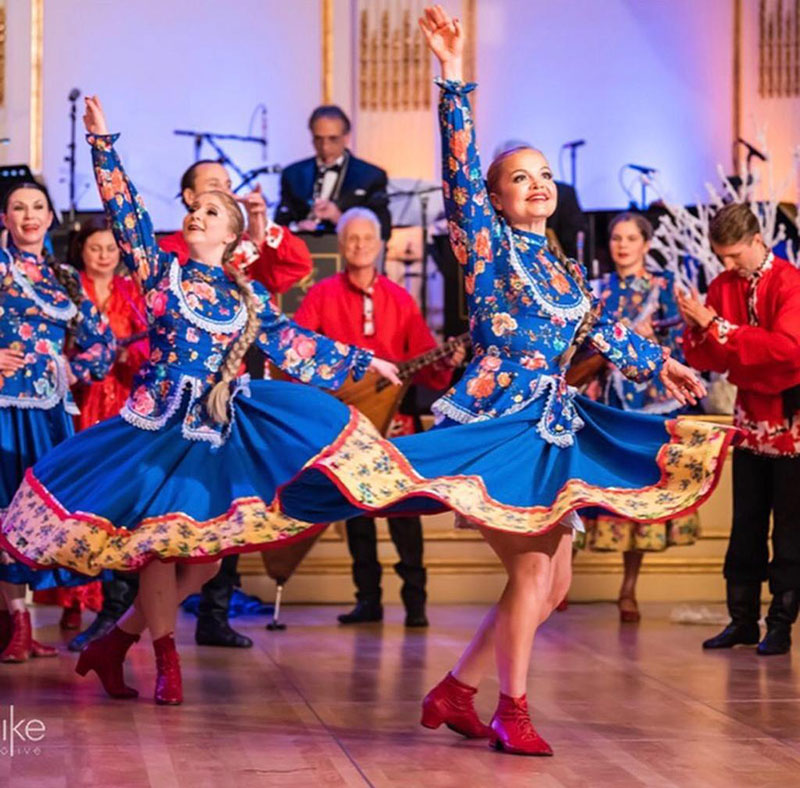
On Friday, May 5, 2023 90th Annual Russian Nobility Ball took place at The Pierre A Taj Hotel in New York City. Musicians played during cocktail hour, dancers opened the Ball with a Waltz from Sleeping Beauty. The dinner show included Kolomeyka, Mexican, Tatar, American, Gypsy, Flamenko, Hopak, Chardash (instrumental), and Kalinka.
Live Music Balalaika Band - Wedding Tasting Room & Taphouse at Mount Ida Reserve - in Scottsville, Virginia - October 8, 2022
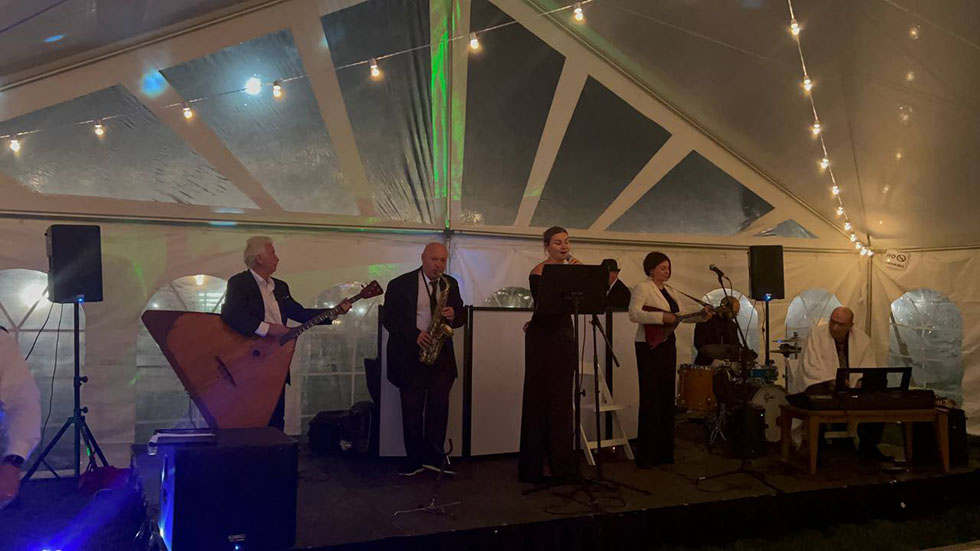
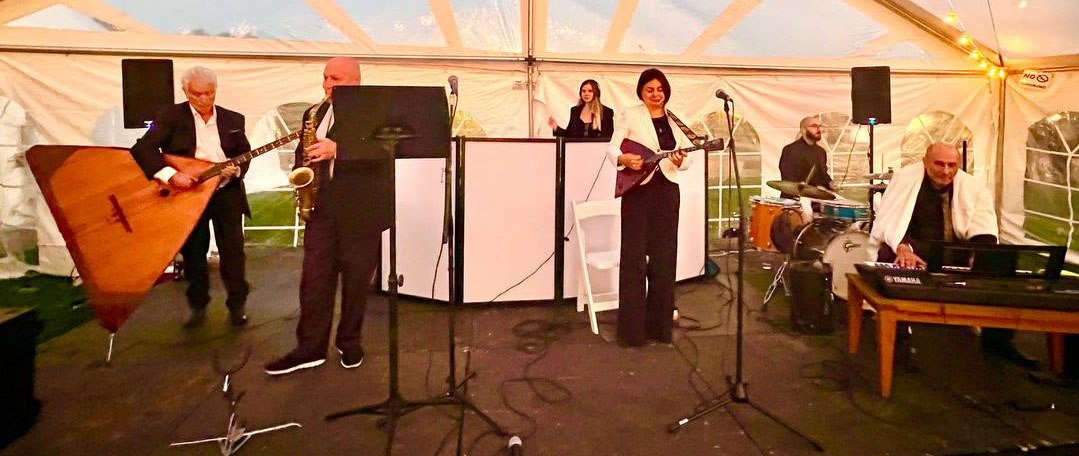
DJ Alisa, bilingual MC-Tamada Mikhail and eight piece live music band provided music and entertainment for mixed Russian-Jewish-American wedding reception in Scottsville, Virginia on Saturday, October 8th, 2022. For their venue newlyweds selected Tasting Room & Taphouse at Mount Ida Reserve, 5600 Moonlight Dr, Scottsville, VA 24590.
October 7th, 2022, St. George Pathfinders Ball, Congers, New York
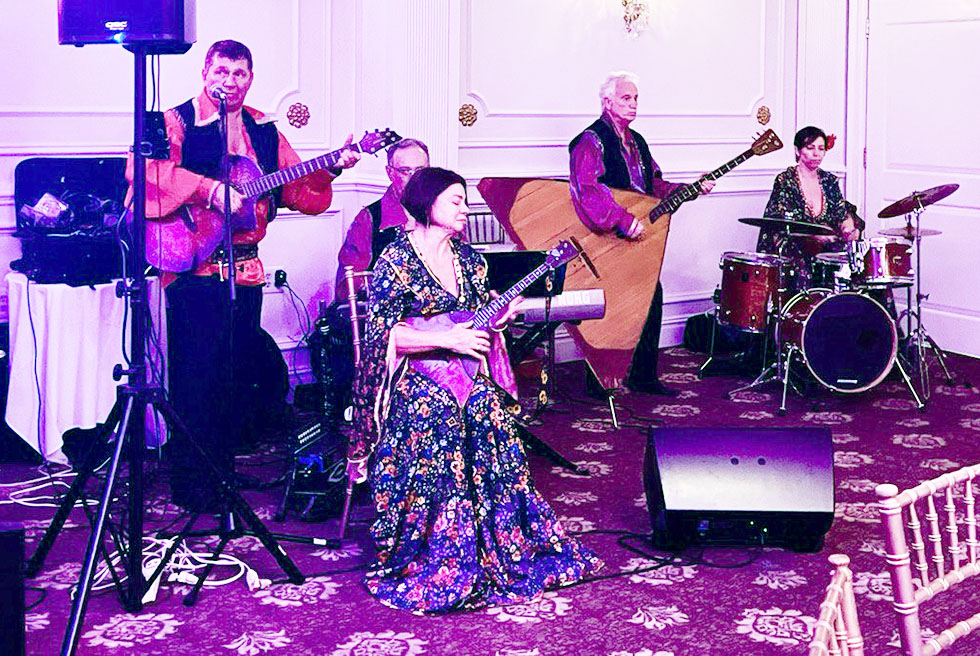
On Friday, October 7th, 2022 from 9pm to 12:30am New York Barynya Balalaika Orchestra provided music at the St. George Pathfinders Ball (ежегодный осенний благотворительный бал организации ОРЮР - Организация Российских Юных Разведчиков) at the Town and Country Caterers, 922 Route 9W, Congers, NY, 10920. Repertoire of the band included Russian, Gypsy, American, Ukrainian, and an international music and songs. Musicians: Elina Karokhina (balalaika), Leonid Bruk (balalaika-contrabass), Mikhail Smirnov (garmoshka, guitar, vocals), singer Vera Bergman, Alexandra Mogilevich (drums), Igor Balaban (keyboard, saxophone).
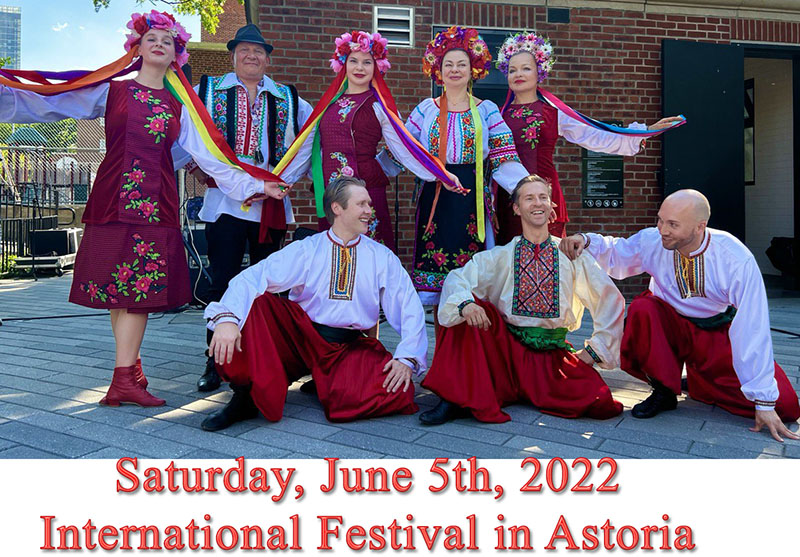
June 5, 2022. Astoria’s Multicultural Celebration Festival Dutch Kills Playground Long Island City, Queens, New York
Musicians and dancers provided exiting show during International Festival in Astoria, Queens on Saturday, June 5th, 2022. Exact address: Dutch Kills Playground 36th Avenue & Crescent Street, Long Island City, NY 11106. Performance started at 4pm. Cast: dancer Vladimir Nikitin, dancer Alisa Egorova, singer and accordion player Mikhail Smirnov, musician Elina Karokhina, dancer Masha Klyuchnikova, dancer Valentina Kvasova, dancer Arsentiy Oskin, dancer Konstantin Tulinov.
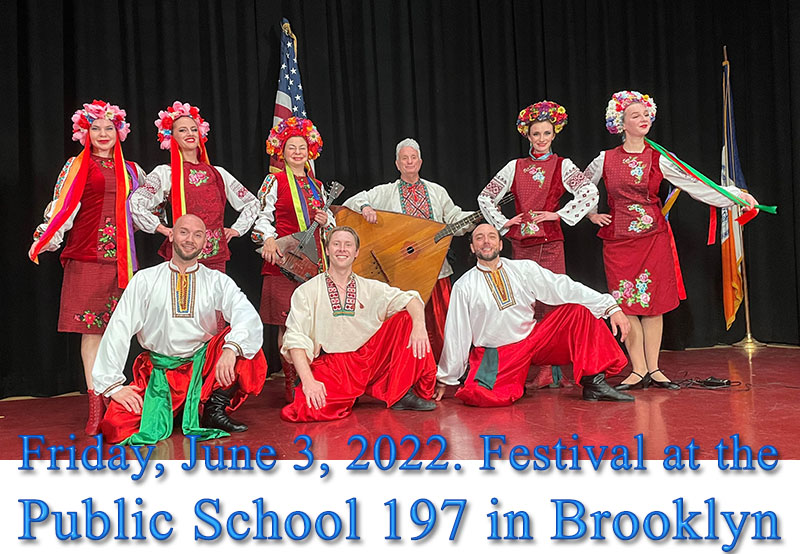
Friday, June 3rd, 2022. Multicultural Festival at the Kings Highway Academy (Public School 197) in Brooklyn, NY
Dancers and musicians performed several shows during multicultural festival at the Public School 197 in Brooklyn on Friday, June 3rd, 2022. Event took place at The Kings Highway Academy located at 1599 East 22nd Street, Brooklyn, New York 11210. Cast: dancer Vladimir Nikitin, dancer Alisa Egorova, dancer Masha Klyuchnikova, dancer Olga Yeliseeva, dancer Arsentiy Oskin, dancer Sergey Tsyganok, dancer Nika Gunko, musician Leonid Bruk, musician Elina Karokhina.
12-12-2021, Live at the Loft Hot Potato House, Brooklyn, New York
Live music at the Loft Hot Potato House in Brooklyn, New York. To find out who is playing, and the schedule of music please contact Restaurant Hot Potato House directly at 718-975-7990. Hot Potato House in Brooklyn is listed among Top 10 Russian Restaurants in New York City and suburbs. Exact address: 109 Oriental Blvd, Brooklyn, NY 11235.
10-08-2021, St. George Pathfinders Ball, Old Tappan Manor, Old Tappan, New Jersey
On Friday, October 8th, 2021 from 8 to 11:30pm musicians of the New York Barynya Balalaika Orchestra played at the St. George Pathfinders Ball, на ежегодном осеннем благотворительном балу организации ОРЮР (Организация Российских Юных Разведчиков) at the Old Tappan Manor, 137 Orangeburgh Rd, Old Tappan, New Jersey. Musicians: Elina Karokhina (balalaika), Leonid Bruk (balalaika-contrabass), Mikhail Smirnov (garmoshka, guitar, vocals), singer Vera Bergman, Alexandra Mogilevich (drums), Igor Balaban (keyboard, saxophone).
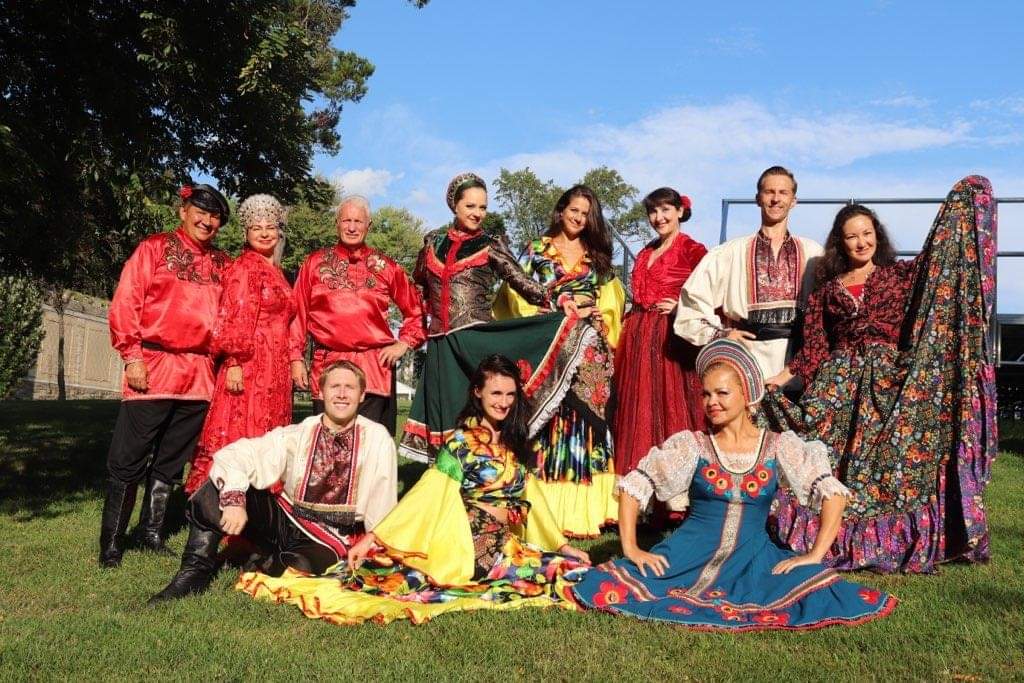
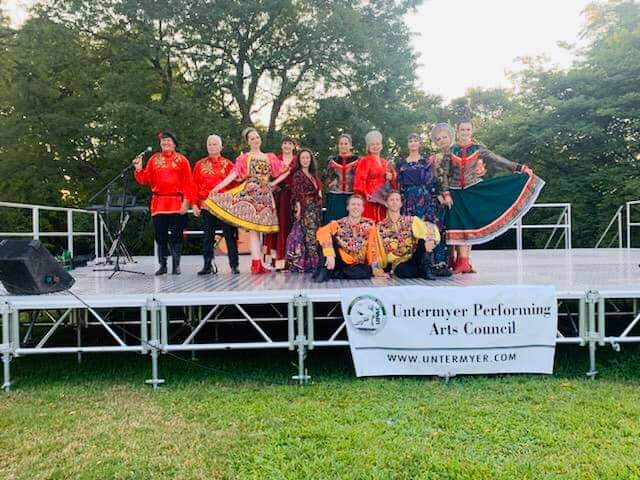
Первый публичный концерт ансамбля "Барыня" после начала эпидемии КОВИД-19 состоялся в субботу, 22-ого августа 2020 года в Антермаер парке города Янкерс (штат Нью-Йорк). Untermyer Park and Gardens (остатки поместья Сэмюэля Дж. Унтермайера "Грейстон") - исторический городской общественный парк площадью 43 акра, расположенный в Йонкерсе, штат Нью-Йорк, в округе Вестчестер, к северу от Манхаттена. На концерте было примерно пятьдесят человек зрителей (строго по пригласительным билетам). Вся публика была в масках. Люди сидели друг от друга на расстоянии в шесть футов (примерно два метра). Прямая трансляция выступления шла для остальных подписчиков этой концертной серии через Фейсбук и YouTube.
Saturday, August 22nd, 2020, Untermyer Park and Gardens, Yonkers, New York, Mikhail Smirnov, Leonid Bruk, Elena Notkina, Natasha Stolichnaya, Frida Anuarbek, Maryia Zhukovich, Vladimir Nikitin, Elina Karokhina, Konstantin Tulinov, Katsiaryna Mileuskaya, Valentina Kvasova, Veronika Hunko
Full concert video (video recording and editing Leonid Bruk)
Russian Themed Surprice Birthday Party, Chinar On The Island, Staten Island, New York, Russian dancers, musicians, singers, MC, Tamada, October 24, 2020
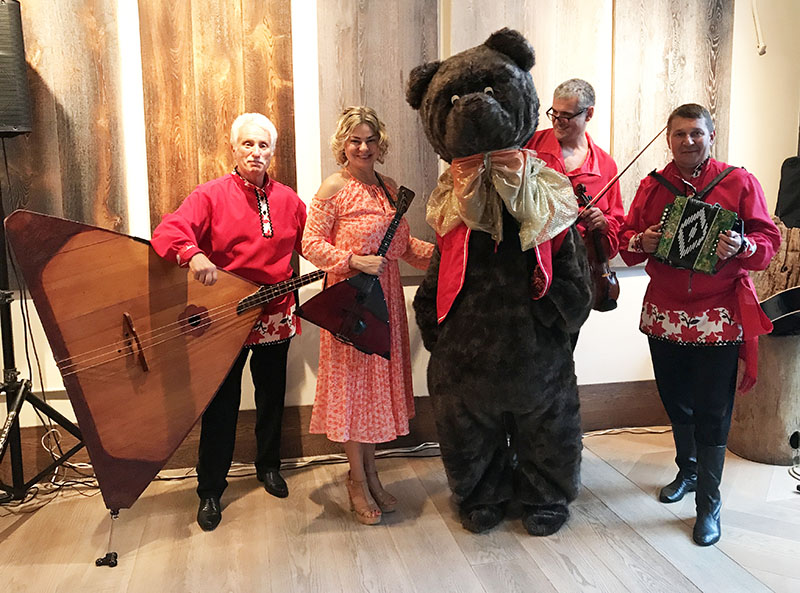
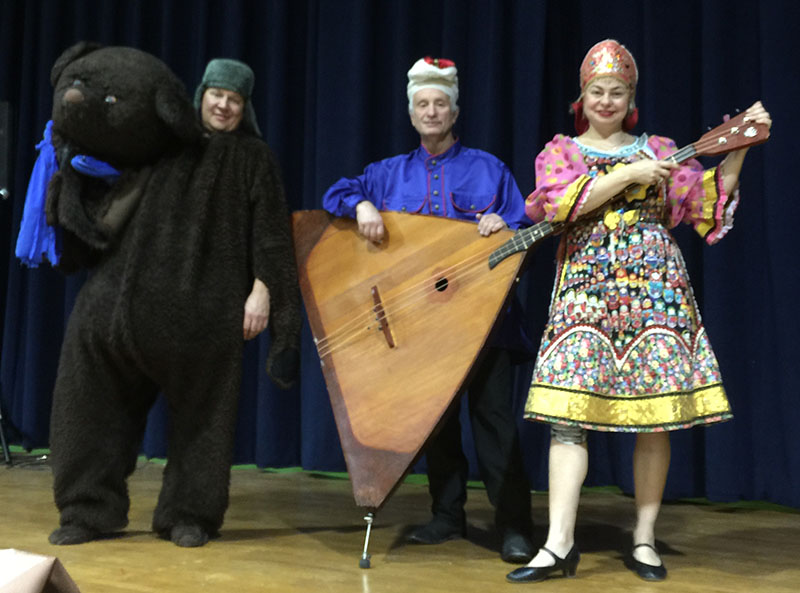
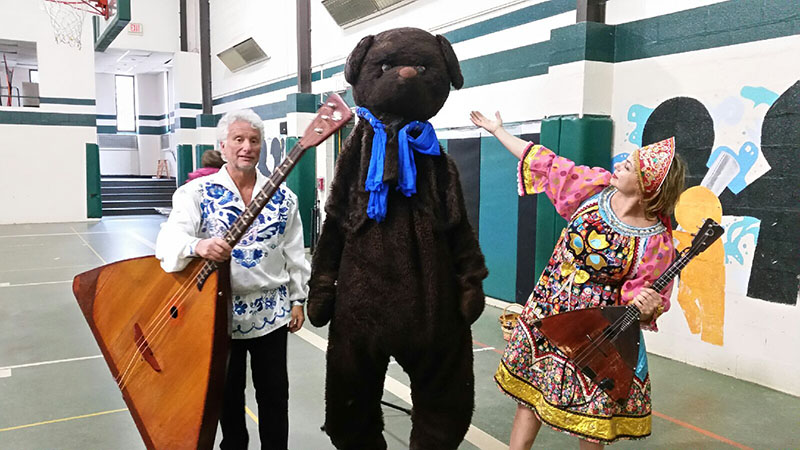
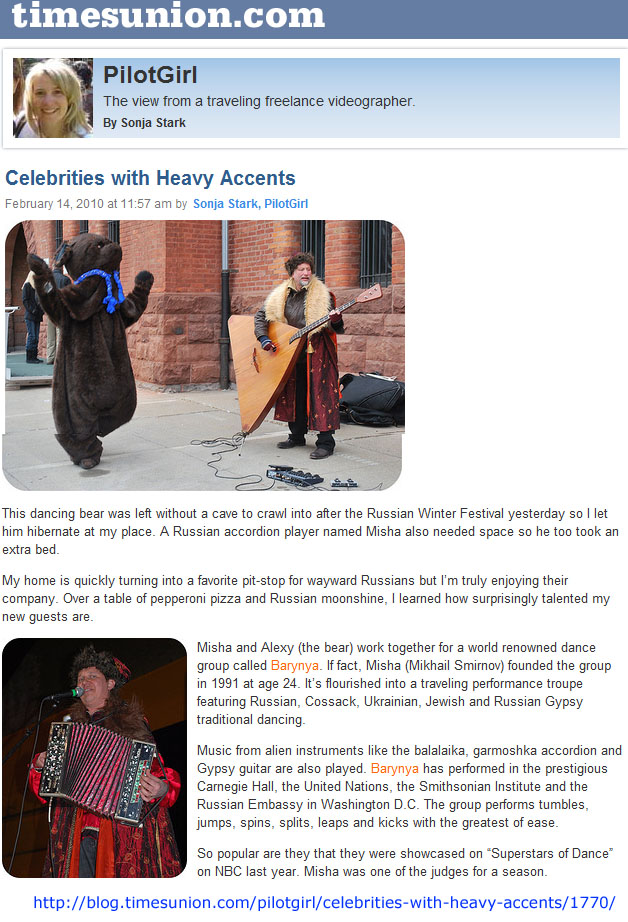
On Saturday, October 24th, 2020 five members of ensemble Barynya - Mikhail Smirnov (garmoshka, vocals, guitar), Elina Karokhina (balalaika), Alisa (dancer), Konstantin Tulinov (dancer), and Leonid Bruk (balalaika-contrabass) - provided entertainment during Russian themed Surprice Birthday Party at the Chinar On The Island, 283 Sand Ln, Staten Island, NY 10305. The company met the Guest of Honor Сергей Владимирович at the door with Bread and Salt ceremony followed by CHAROCHKI (величальная для именинника) dressed in traditional costumes with live music, and the Russian Bear. When guests were seated inside dancers and musicians provided a program with musicians playing the balalaika, garmoshka, balalaika contrabass, singing popular Russian songs, dancers performing several dance selections including Russian, Ukrainian, Gypsy, Jewish, Tatar with multiple costume changes. Artistic director of ensemble Barynya Mikhail Smirnov took care of Tamada/MC entertainment introducing toasts, and doing couple of games and trivia with guests, Guest of Honor and his wife.
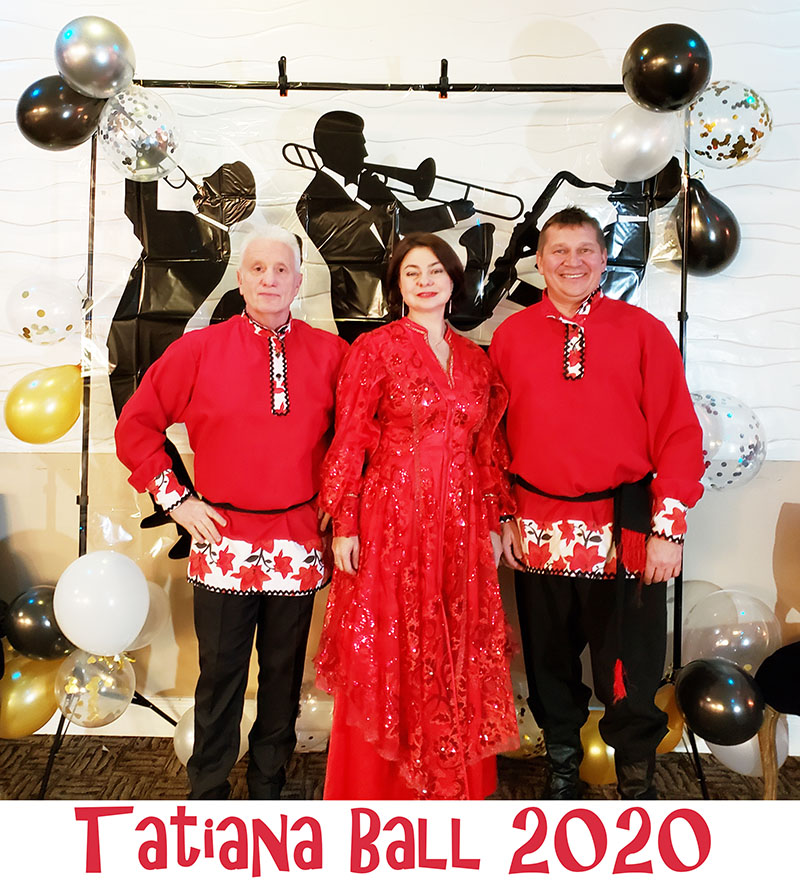
01-17-2020. Tatiana Ball, Crystal Party Center, Parma, Ohio
Friday, January 17th, 2020. Barynya Balalaika Trio {Leonid Bruk, Elina Karokhina, Mikhail Smirnov} performed waltzes, tangos, Russian and Gypsy traditional and popular music and songs during Russian Tatiana Ball 2020 in Ohio. Exact address of the venue: Crystal Party Center Wedding Hall & Catering, 5745 Chevrolet Blvd, Parma, OH 44130.
10-19-2019. 6th Annual Slavic Heritage Festival, Harford County, Maryland
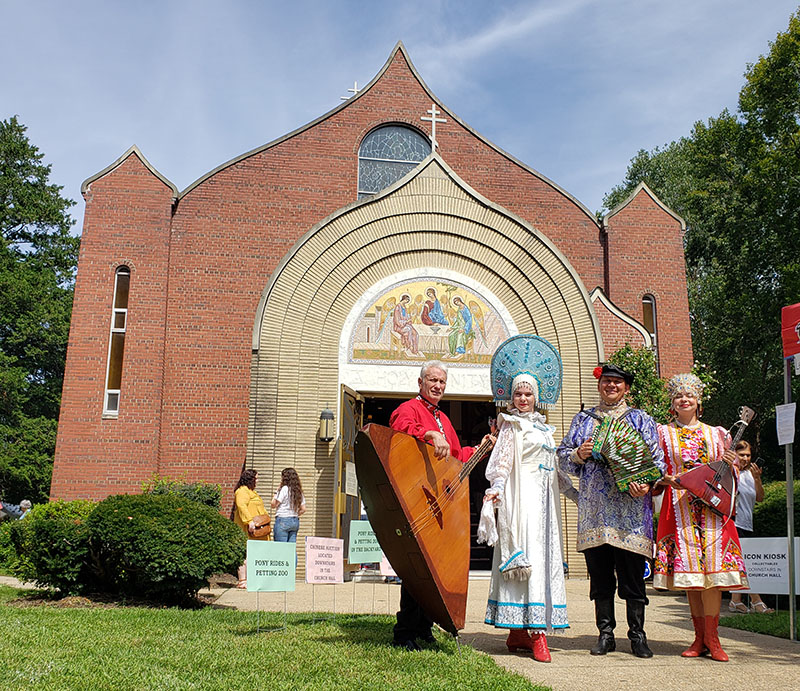
On Saturday, October 19th, 2019. Leonid Bruk, Elina Karokhina, Mikhail Smirnov, Alisa Egorova, Konstantin Tulinov, Arsentiy Oskin provided several performances during Sixth Annual Slavic Heritage Festival that was held on the grounds of St. Mary's Assumption Eastern Rite Church, 2807 Mountain Road, Joppa, Maryland 21085.
On Wednesday, October 2nd, 2019, from 7 to 8pm members of New York Russian Balalaika Trio Leonid Bruk (balalaika contrabass), Elina Karokhina (balalaika), Mikhail Smirnov (garmoshka), and and folk singer Irina Zagornova performed during kid's party in downtown Manhattan. The program of performance included Russian dance workshop, interactive games, Russian music and songs.
09-14-2019. Ann Arbor Russian Festival 2019, St. Vladimir Orthodox Church, Dexter, Michigan
Dancers, singers, and musicians of Barynya ensemble provided several performances during 7th Annual Ann Arbor Russian Festival 2019 that was taking place on the gounds of St. Vladimir Orthodox Church in Dexter, Michigan on Saturday, September 14th and Sunday, September 15th, 2019. Cast: Alisa Egorova (dancer), Serhiy Tsyganok (dancer), Konstantin Tulinov (dancer), Simona Zhukovski (dancer), balalaika virtuoso Elina Karokhina, Leonid Bruk (balalaika-contrabass), Mikhail Smirnov.
08-31-2019. Deity Events & Weddings, downtown Brooklyn, NY
On Saturday, August 31st, 2019 musicians of Barynya ensemble Alex Siniavski (balalaika), Leonid Bruk (contranass-balalaika), and Mikhail Smirnov (vocal, guitar) provided music for mixed Russian-Jewish-Catholic-American wedding reception in downtown Brooklyn (Deity Events & Weddings, 368 Atlantic Avenue, Brooklyn, NY 11217). Alex, Leonid and Mikhail played mix of Russian Gypsy popular and traditional songs and instrumental numbers on balalaika, balalaika-contrabass, and guitar.
08-31-2019. Faith Food and Fellowship Festival, East Meadow, New York
On Saturday, August 31st, 2019 Balalaika Trio and folk dancer Alisa performed during Faith Food and Fellowship Festival-2019 at the Holy Trinity Orthodox Church, 369 Green Ave East Meadow, NY.
08-16-2019. Upper West Side Manhattan. Private party.
On Friday, August 16th, 2019 balalaika virtuoso Elina Karokhina, folk singer Irina Zagornova, garmoshka player Mikhail Smirnov and contrabass balalalaika player Leonid Bruk performed mix of Russian, Cossack, Ukrainian, and Gypsy songs during private party in Manhattan's Upper West Side. Exact address: 310 West 72nd Street, apt 2c, New York City, NY.
05-03-2019. Russian restaurant Gambrinus, Brooklyn, New York
Musicians of the Barynya Balalaika Trio led by Elina Karokhina, best Russian balalaika virtuoso in the United States of America, performed three sets of Soviet, Russian, Jewish, and Gypsy songs and music during the Grand Re-Opening of iconic Russian Restaurant Gambrinus located on the corner of Ocean Parkway and Brighton Beach Avenue in the heart of Russian part of Brooklyn, NY on Friday, May 3rd, 2019 from 8pm to midnight. Exact address of the venue: Gambrinus & Co, 3100 Ocean Pkwy, Brooklyn, NY 11235.
03-09-2019. Lone Tree Arts Center, Lone Tree, Colorado
Russian dancers, singers and musicians of ensemble Barynya performed 90 min concert at the Lone Tree Arts Center in Lone Tree, Colorado on Saturday, March 9th, 2019. Cast of Barynya ensemble included dancers Alexander Rudoy, Konstantin Tulinov, Vladimir Nikitin, Olga Chpitalnaia, Katia Brovkina, Valentina Kvasova, Alisa Egorova, and musicians Leonid Bruk, Elina Karokhina, Mikhail Smirnov. Dancers performed Moldavian dance, Sailors' dance, Barynya, Kalinka, Hopak, Danila Cooper, Jewish wedding dances (Bottle dance, Candle dance), Siberian, Gypsy, Cossack, and other selections. Exact address of the venue: Lone Tree Arts Center, 10075 Commons Street, Lone Tree CO 80124.
Ensemble Barynya, Colorado, Russian dancers, Lone Tree Arts Center, Alexander Rudoy, Konstantin Tulinov, Vladimir Nikitin, Olga Chpitalnaia, Katia Brovkina, Valentina Kvasova, Alisa Egorova, Leonid Bruk, Elina Karokhina, Mikhail Smirnov
01-26-2019. Performance with Arizona Balalaika Orchestra in Tucson, Arizona
Russian balalaika virtuoso Elina Karokhina, singer/guitar player Mikhail Smirnov, contrabass-balalaika player Leonid Bruk, Arizona Balalaika Orchestra led by conductor Alexander Tentser performed a concert on Saturday, January 26th, 2019 at the Pima Community Center for the Arts in Tucson, Arizona.
11-21-2018. Russian restaurant Mari Vanna New York City, 50th Birthday party
On Sunday, November 11th, 2018 company performed during Russian-Gypsy themed 50th Birthday Celebration at Russian restaurant Mari Vanna in New York City, 41 E 20th St, New York, NY 10003. Cast of musicians and dancers: Leonid Bruk (balalaika contrabass), Elina Karokhina (balalaika), Mikhail Smirnov (guitar, garmoshka, vocals), dancer Alisa Egorova, Andrei Solodenko (accordion), Sasha Tseyitlin (violin). Show included arrival of huge costume character mascot - Russian Bear to dance and take photos with guests.
10-20-2018. Atlanta Balalaika Orchestra 37th Annual Fall Concert
Saturday, October 20th, 2018, 7:30 pm. Balalaika Trio with Atlanta Balalaika Orchestra in Concert titled An Evening of Music and Song From Slavic Lands at the Avondale First Baptist Church, 27 Covington Road, Avondale Estates, GA 30002.
10-13-2018. Concert at the Freeport High School in Freeport, New York
On Saturday, October 13th, 2018 ensemble Barynya performed 90 min concert sponsored by Freeport Community Concert Association (FCCA) at the Freeport High School, 50 S Brookside Ave, Freeport, NY 11520. Cast of Barynya ensemble included dancer Vladimir Nikitin, singer Irina Zagornova, contrabass balalaika player Leonid Bruk, dancer, choreographer, singer Valentina Kvasova, dancer Alexander Rudoy, dancer/singer Simona Zhukovski, dancer Serhiy Tsyganok, dancer Irina Biryukova, dancer Konstantin Tulinov, dancer Olga Yeliseyeva, dancer Olga Chpitalnaia, dancer Ilia Pankratov, dancer Alisa Egorova, balalaika virtuoso Elina Karokhina, and artistic director, singer, garmoshka, and guitar player Mikhail Smirnov.
On Friday, July 27, 2018 (6-11pm), Saturday, July 28, 2018 (1-9pm), and Sunday, July 29, 2018 (1-9pm) Barynya Balalaika Trio provided many shows during the Cleveland Russian Festival 2018 sponsored by St. Sergius Cathedral. Festival was taking place on grounds of German Central, 7863 York Road, Parma, Ohio.
07-16-2018. Valley Forge Casino Resort, King Of Prussia, Pennsylvania
75 min concert during the Balalaika and Domra Association of America (BDAA) 40th Anniversary conference on Monday, July 16th, 2018 at the Valley Forge Casino Resort, 1160 First Avenue, King of Prussia, PA 19406
06-28-2018. Concert in Bergen County, Long Life Adult Day Care, Cliffside Park, NJ
On Thursday, June 28th, 2018 Russian Balalaika Trio performed one hour concert at the Long Life Adult Day Care Center in Bergen County, New Jersey, USA. Exact address of the venue: Long Life Adult Day Care, 596 Anderson Ave, Cliffside Park, NJ 07010. Program of performance included Waltz "Babochka" (The Butefly) by Vasily Vasilievich Andreyev, "Variations on a Theme of Corelli in the Style of Tartini", composer Fritz Kreisler, arr. for balalaika by P. Necheporenko, "The White Acacia's Fragrant Flakes" by Alexander Shalov and V. Basner, "Sabre Dance" - a movement in the final act of Aram Khachaturian's ballet Gayane, "Barynya" by Yury Shishakov, and other selections.
06-24-2018. Coney Island Cultural Festival, Gravesend, Brooklyn, NY
Sunday, June 24, 2018, 4:05pm. Coney Island Cultural Festival in Gravesend part of Brooklyn. John Dewey High School, 50 Ave X, Brooklyn, New York 11223. Konstantin Tulinov, Vladimir Nikitin, Mikhail Smirnov, Elina Karokhina, Alisa Egorova, Leonid Bruk, Irina Zagornova, Simona Zhukovski, Dinara Subaeva, Boulat Moukhametov.
04-29-2018. Queens, Astoria, New York, Steinway Street Fair International Cultural Festival
Sunday, April 29th, 2018, 3:30PM - 3:55PM. Russian Balalaika Trio and Barynya dancers 25 min performance during the Steinway Street Fair International Cultural Festival on Steinway Street between Broadway & 31st Avenue in Astoria, Queens. Cast of performers: Vladimir Nikitin, Konstantin Tulinov, Serhiy Tsyganok, Dinara Subaeva, Alisa Egorova, Elina Karokhina, Leonid Bruk, Mikhail Smirnov, Vasily Yankovich.
Queens, New York, Steinway Street Fair International Festival Russian folk song "Saturday Affair" - Subboteya - У нас нонче субботея (video)
04-17-2018. Concert at the Darien High School in Connecticut
Russian music, dance and song ensemble "Barynya" provided Russian folk song and dance workshop and formal 90 min performance on Tuesday, April 17th 2018 at the Darien High School, 80 High School Lane, Darien CT 06820. Folk songs and dance master class with high school and middle school students started at 5pm. Performance started at 7pm. Cast of Barynya performers: Vladimir Nilitin, Konstantin Tulinov, Serhiy Tsyganok, Simona Zhukovski, Olga Chpitalnaia, Dinara Subaeva, Leonid Bruk, Alisa Egorova, Elina Karokhina, Mikhail Smirnov. Program of performance: Russian folk song and dance KALINKA (The Snowball Tree), Russian song and dance METELITSA (The Snowstorm), Sibirian Nanai dance (НАНАЕЦ), BARYNYA, PIDMANULA, KAMARINSKAIA, TATARSKIY, contrabass-balalaika solo, Jewish Candle dance, Andgry Husband (КАК ЗАСТАВИЛ МЕНЯ МУЖ), Jewish Bottle dance (БУТЫЛКИ), Peddlers (КОРОБУШКА), Cossack dance (КАЗАЧИЙ ТАНЕЦ ВАРЕНЬКА), Russian Tongue-Twisters (СКОРОГОВОРКИ), Sailors dance (ЯБЛОЧКО), Ukrainian National Dance "Hopak" (ГОПАК), Dark Eyes (ОЧИ ЧЕРНЫЕ), Russian Gypsy Romani dance Mardzhandzha (ЦЫГАНСКИЙ ТАНЕЦ МАРДЖАНДЖА), Waltz Durane (ДЮРАН), and other selections.
01-13-2018. New York Hilton Midtown, New York, NY. APAP showcase.
Saturday, January 13th, 2018, 8:40pm. APAP (Association of Performing Arts Professionals) showcase in NYC. New York Hilton Midtown, Regent Parlor 2nd Floor, 1335 Avenue of The Americas, New York, NY 10019. Cast: Vladimir Nikitin, Konstantin Tulinov, Dinara Subaeva, Valentina Kvasova, Alisa Egorova, Elina Karokhina, Irina Zagornova, Mikhail Smirnov, Leonid Bruk.
Russian themed birthday party on Saturday, October 14th, 2017 at the Noble Nest in White Lake, New York. Mikhail Smirnov (guitar, garmoshka, vocals), Leonid Bruk (balalaika-contrabass), singer Simona Zhukovsky, balalaika virtuoso Elina Karokhina, singer Valentina Kvasova provided traditional Russian, Cossack, Ukrainian, and Gypsy songs during cocktail hour. Dancers of Aria Entertainment have met the guests and performed several dance routines during the dinner.
Leonid Bruk, Elina Karokhina, and Mikhail Smirnov provided 45 min school assembly performance on Thursday, September 28th, 2017 at the Rodgers Forge Elementary School in Baltimore, Maryland. Exact address of the school: 250 Dumbarton Road, Baltimore, MD 21212.
09-04-2017. Lakeside Adult Care Center, Brooklyn, New York
Monday, September 4th, 2017, 11am and 4pm. 1 hour concert dedicated to Labor Day Celebration at the Lakeside Adult Health Care Center, 945 East 108th Street, Brooklyn, New York 11236. Program of Jewsh, Russian, Gypsy traditional music and songs, classical music selections.
Saturday, July 29th, 2017, 1pm-2pm, 3:30pm-5pm, 6:30pm-8:30pm, 9:45-11pm. Sunday, July 30th, 2017, 1-2:30pm, 6:30-8pm. German Central, 7863 York Road, Parma, Ohio. 4th Annual Cleveland Russian Festival presented by St. Sergius Cathedral in Cleveland, Ohio.
07-26-2017. Caramoor Center for Music and the Arts, Katonah, NY
On Wednesday, July 26, 2017 from 5:20 to 7pm. Mikhail Smirnov, Leonid Bruk, Valentina Kvasova, Elina Karokhina. Caramoor Center for Music and the Arts, 149 Girdle Ridge Rd, Katonah, NY 10536.
07-20-2017. Holiday Inn Alexandria Old Town, Alexandria, Virginia
Musicians of Barynya Balalaika Trio and Russian dancer Alisa performed 60 min concert during the Balalaika and Domra Association of America (BDAA) 39th conference in Virginia, USA. Concert took place on Thursday, July 20th, 2017 at the Holiday Inn Alexandria Old Town, 625 First Street, Alexandria, Virginia 22314.
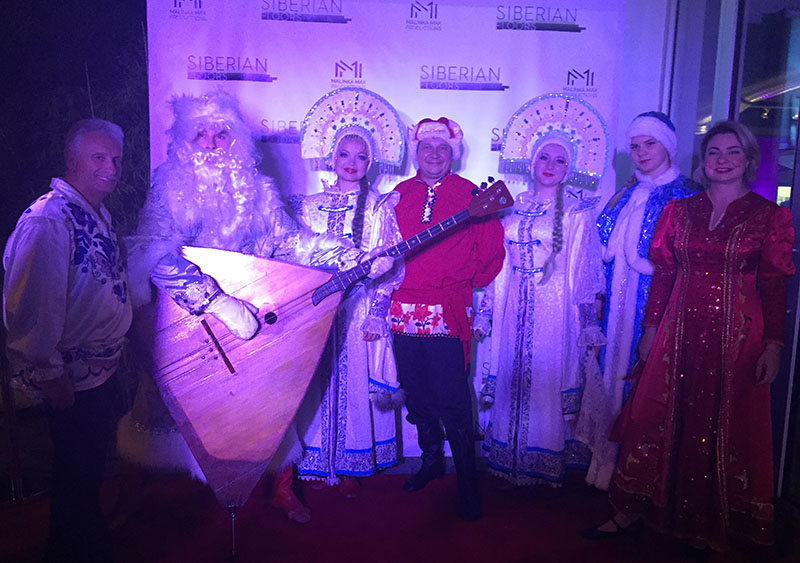
Wednesday, July 12th, 2017, 7-11pm. Corporate event at the Siberian Floors NYC, 145 Hudson Street, New York, NY 10013. Mikhail Smirnov (garmoshka), Elina Karokhina (balalaika), Leonid Bruk (balalaika contrabass), dancer Alisa Egorova, dancer Vladimir Nikitin, dancer Dinara Subaeva, Alex Tseytlin (violin).
Saturday, July 1st, 2017, 9pm. Musicians of Balalaika Trio and ten dancers of Russian folk dance ensemble Barynya provided Gypsy, Cossack, Tatar, Russian and Ukrainian dances and music during private party in New York City.
On Friday, May 26, Saturday, May 27, and Sunday, May 28, 2017 (Memorial Day weekend 2017) musicians of Barynya Balalaika Trio and dancers of Barynya ensemble performed several shows during Troika Festival in Erie, Pennsylvania. All performances were taking place on the grounds of Church of the Nativity Community Center, 109 German Street, Erie, PA.
01-31-2017. Muhlenberg South Elementary School, Beechmont, Kentucky
Russian folk music, dance and song trio Barynya - Leonid Bruk (balalaika-contrabass), Elina Karokhina (balalaika), and Mikhail Smirnov (garmoshka, guitar, vocals) / - performed a concert on Tuesday, January 31st, 2017 at the Muhlenberg South Elementary School located in Beechmont, Kentucky. A program of the performance included Sabre Dance from "Gayane" by Aram Khachaturian, traditional Russian song "Kalinka" with accompaniment of Russian button accordion garmoshka, World Balalaika Medley, Siberian Nanai Fighting Dance "Wrestling of Nanai Kids" (Russian: "Нанаец"), dance of Russian Bear (Russian: "Танец Медведя"), Russian folk song and dance "The Snowstorm" (Russian: "Метелица"), Jewish Wedding Dance With Candles (Russian: "Танец со свечками"), Russian Romani Roma Gypsy song and dance "Dark Eyes" (Russian: "Очи Чёрные"), Russian folk dance lesson "Barynya" (Russian: "Урок танца"), Ukrainian folk song and dance "Pidmanoola" (Russian: "Украинский"), Russian folk instrument balalaika introduction with folk song Kamarinskaiya (Russian: "Камаринская"), Russian Tongue Twisters Medley ("Скороговорки"), Russian Percussian Orchestra interactive game with students ("Трещётки"), instrumental solo Chardash (Russian: "Чардаш"), and other selections.
01-28-2017. Pima Community College, Tucson, Arizona
Barynya Balalaika Trio, Elina Karokhina, Mikhail Smirnov, Leonid Bruk. Concert with Arizona Balalaika Orchestra at the Pima Community College in Tucson, Arizona on January 28, 2017
Nikolai Massenkoff and ensemble Barynya Illinois and Missouri tour 2016
Russian folk singer Nikolai Massenkoff and ensemble Barynya were doing a short concert tour in Illinois and Missouri in October 2016. Concerts took place on Tuesday, October 25, 2016, 11am at FREEDOM HALL, 410 LAKEWOOD BOULEVARD, PARK FOREST, Illinois 60466, on Monday, October 24, 2016, 9:30am at Brubeck Arts Center on Campus of Wabash Valley College, 2200 COLLEGE DRIVE, MOUNT CARMEL, Illinois 62863, on Sunday, October 23, 2016, 1:30pm. Brubeck Arts Center on Campus of Wabash Valley College, 2200 COLLEGE DRIVE, MOUNT CARMEL, Illinois 62863, on Saturday, October 22, 2016, 6pm at BELLE STARR THEATER, 112 E. BOONSLICK ROAD, WARRENTON, MISSOURI 63383. Cast of performers included soloist, star, singer inger Nikolai Massenkoff, Leonid Bruk (contrabass-balalaika), Elina Karokhina (balalaika), Mikhail Smirnov (guitar, garmoshka, vocals), Vladimir Nikitin (dancer), Simona Zhukovsky (dancer).
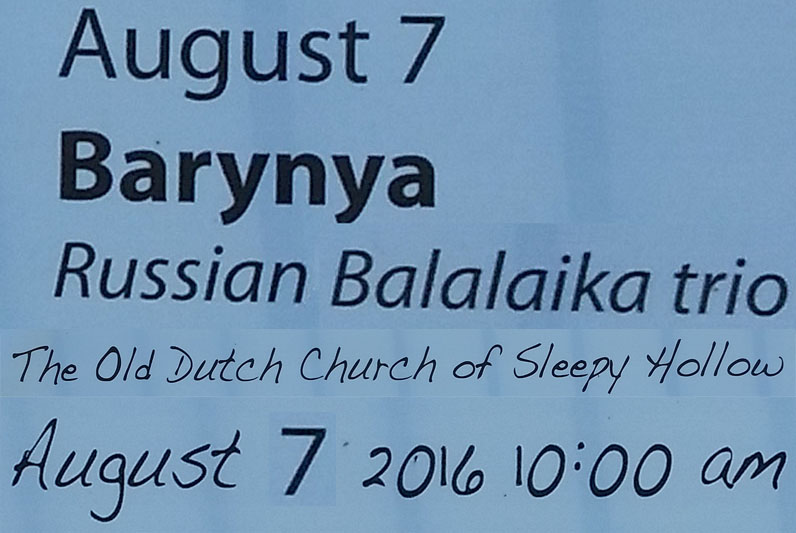
Sunday, August 7th, 2016, 9-11:15am. Performance at The Old Dutch Church of Sleepy Hollow in Sleepy Hollow, New York. Exact address: Reformed Church of the Tarrytowns, 42 North Broadway, Tarrytown, New York 10591 (www.reformedchurchtarrytowns.org).
Russian Balalaika music and song trio Barynya performed 45 min program during the Balalaika & Domra Association of America conference 2016 in Bloomington, Indiana on Friday, July 22, 2016 at the Courtyard Bloomington, 310 S. College Avenue, Bloomington, Indiana 47403.
On Thursday, July 21st, 2016 from 5 to 9pm Barynya Balalaika Trio provided free and opened to public performance during an annual Street Music Festival in Illinois. Program of performance included traditional, popular and classical music from Russia and around the world performed on balalaika, balalaika-contrabass, garmoshka, and guitar.
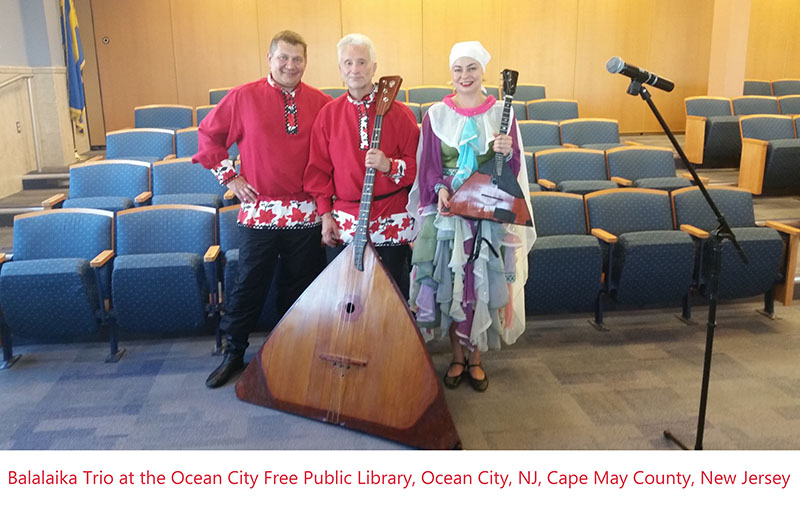
07-20-2016. Ocean City Free Public Library, Ocean City, NJ, Cape May County, New Jersey
Wednesday, July 20th, 2016, 4pm. Barynya Balalaika Trio at the Ocean City Free Public Library, 1735 Simpson Ave., Ocean City, NJ 08226. Cape May County, New Jersey.
07-20-2016. Bankbridge Elementary School, Sewell, NJ, Gloucester County, New Jersey
On Wednesday, July 20th, 2016 starting at 9:30am Barynya Balalaika Trio perormed 45 min concert at the Bankbridge Elem. School in Gloucester County, New Jersey. Exact address of the school: Bankbridge Elementary School, 850 Bankbridge Road, Sewell, NJ 08080.
06-05-2016. Wedding at the Lyndhurst Mansion Castle (Jay Gould Estate), Tarrytown, NY
On Sunday, June 5th, 2016, from 6:30 to 10:30pm Barynya Balalaika Trio performed during cocktail hour and a few fast songs during dancing part of the reception during the wedding at the Lyndhurst Mansion Castle (Jay Gould Estate), 635 S Broadway, Tarrytown, NY 10591.
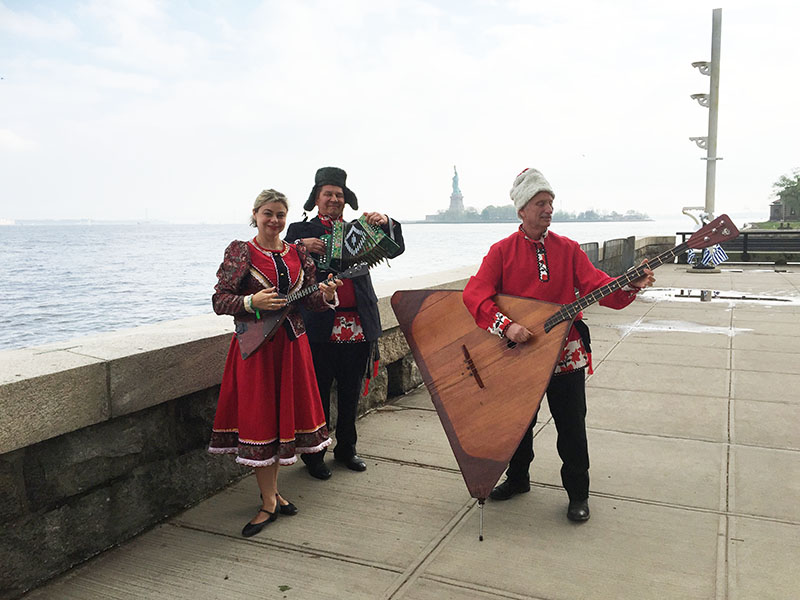
05-07-2016. Ellis Island Medals of Honor Ceremony, Ellis Island, NYC
On Saturday, May 7th, 2016 Barynya Balalaika Trio {Leonid Bruk, Elina Karokhina, Mikhail Smirnov} performed during Ellis Island Medals of Honor Ceremony on Ellis Island in New York (federally owned island in New York Harbor).
May 2nd, 2016. Wesleyan University, Farm Hill Elementary School, Memorial Chapel, Middletown, CT
Leonid Bruk, Elina Karokhina, Mikhail Smirnov performed three concerts in Middletown, Connecticut. First show and workshop took place at the World Music Hall of Wesleyan University. Second performance was a 45 min concert for students and teachers at the Farm Hill Elementary School located at 390 E Ridge Rd, Middletown, CT 06457 on Monday, May 2nd. 2016. School assembly performance started at 2PM. The Balalaika Trio performed Siberian Nanai Wrestling Dance "Нанаец", Russian folk button accordion "Гармошка" introduction with traditional Russian song "Kalinka", The Snowstorm, Russian folk dance ("Метелица"), Kamarinskaiya, Russian folk instrument balalaika introduction ("Камаринская"), Russian Tongue Twisters Medley ("Скороговорки"), Jewish wedding dance "Свечки", Russian Percussian Orchestra interactive game with students ("Трещётки"), Russian Romani Roma Gypsy song and dance ("Цыганский"), Russian folk dance lesson ("Урок танца"), Ukrainian folk song and dance Pidmanoola ("Украинский"), instrumental solo "Чардаш", Russian Bear dance "Медведь", and other selections. Last performance took place at the Memorial Chapel Middletown located at 221 High Street in Middletown, CT.
On Monday, May 2nd, 2016 at 10am Balalaika Trio provided one hour performance at Connecticut Baptist Homes, 292 Thorpe Ave., Meriden, CT 06450. Program included Russian, Cossack, Gypsy, Jewish, Ukrainian songs and dances as well as classical repertoire.
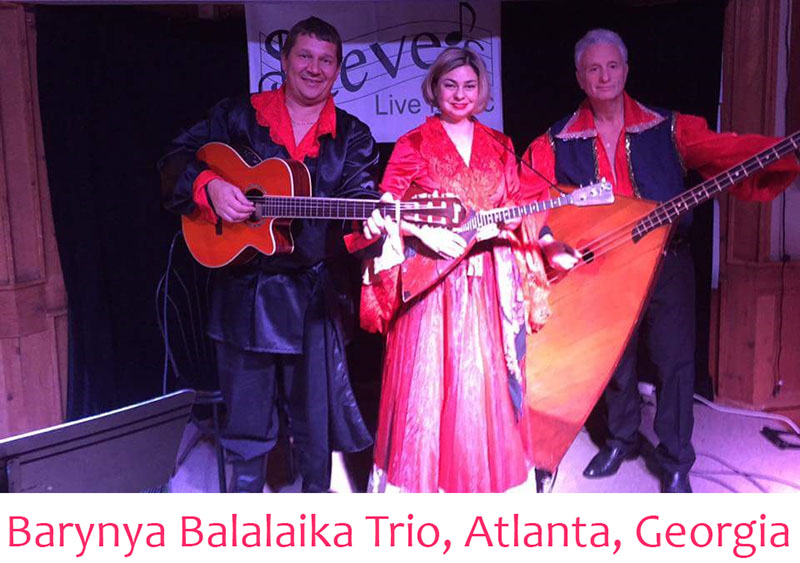
02-12-2016. Steve's Live Music, Sandy Springs, Georgia
Friday, February 12th, 2016, 8-9pm. Barynya Balalaika Trio (Lina, Leonid, Misha) performed one hour concert at the Steve's Live Music, 234 Hilderbrand Dr, Sandy Springs, Georgia 30328.
Thursday, December 17th, 2015, 8pm-2am. Corporate event at the Siberian Floors, 6191 Biscayne Blvd, Miami, Florida 33137. Tel: 305.428.2092, Fax: 212.954.5513. Program of Russian, Jewish, Cossack, Gypsy songs, music and dances.
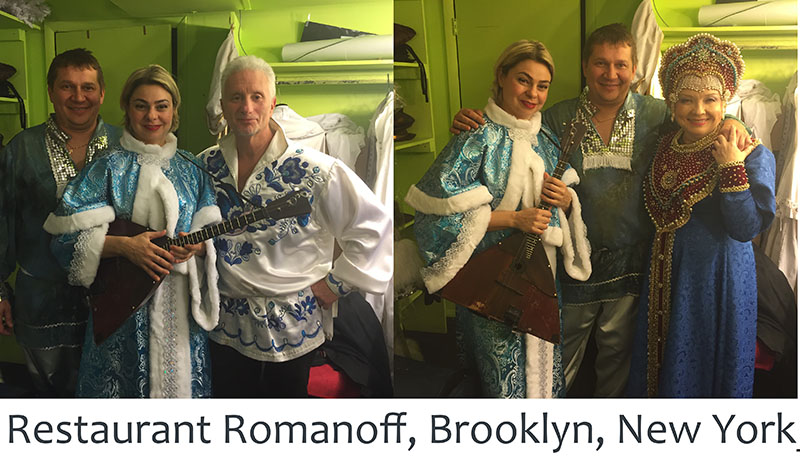
On Saturday, December 12th, 2015 Barynya Balalaika Trio, singer Irina Zagornova, dancers Olga Chpitalnaia, Valentina Kvasova, A.Lapidas, Iliya Pankratov performed a show at popular Russian restaurant Romanoff in Brooklyn, New York. Exact address: 2670 Coney Island Ave, Brooklyn, NY 11235.
10-10-2015. Private party in Greenwich, Connecticut
On Saturday, October 10th, 2015 from 6 to 11pm the Balalaika Trio played for several hours during party at the private house in Greenwich, Connecticut. Elina Karokhina (balalaika), Mikhail Smirnov (garmoshka) and Leonid Bruk (balalaika-contrabass) performed mix of classical, popular, and traditional Russian, Cossack, Gypsy, Ukrainian, Jewish music and songs.
Russian song, dance and music Balalaika trio Barynya performed on Sunday, July 12th, 2015 at house concert and party hosted by Nina and Eugene Tritinichenko in Holland, Michigan. Barynya Balalaika Trio (Leonid Bruk (balalaika-contrabass), Elina Karokhina (balalaika), Smirnov (guitar, garmoshka, vocals)) presented 1 hour performance and performed a few songs during the party that followed the concert.
07-09-2015. World Music Concert Series in Downtown Oak Park, Oak Park, Illinois
Russian song, dance and music Balalaika and garmoshka Trio Barynya performed on Thursday, July 09, 2015, from 7 to 9pm at the Downtown Oak Park, 1010 Lake Street, Oak Park, Illinois during the Thursday Night Out World Music Concert Series in Downtown Oak Park, www.downtownoakpark.net. Barynya Balalaika Trio cast: Leonid Bruk (balalaika-contrabass), Elina Karokhina ( balalaika), Mikhail Smirnov (guitar, garmoshka, vocals) presented two hours performance that included Russian, Cossack, Siberian, Gypsy, Ukrainian, Jewish music and songs, and also classical and popular repertoire.
07-08-2015. Sheraton Suites Akron Cuyahoga Falls, Cuyahoga Falls, Ohio. BDAA-2015.
Wednesday, July 8, 2015. 1 hour concert in Cuyahoga Falls, Ohio during 2015 convention of Balalaika and Domra Association of America. Trio performed a mix of Russian, classical, and Gypsy music.Performance took place at the Sheraton Suites Akron Cuyahoga Falls, 1989 Front St, Cuyahoga Falls, OH 44221 on Wednesday, July 8, 2015.
04-16-2015. Concert at the United States West Point Military Academy, West Point, New York
Balalaika Trio perfored a formal concert at the West Point Military Academy on April 16th, 2015. Elina Karokhina (balalaika), Mikhail Smirnov (garmoshka, guitar, vocals), Leonid Bruk (balalaika-contrabass) played a mix of popular, classical and traditional music and songs from Russia and from around the world. Program of performance included Andreev's Waltz, Russian folk song Kamarinskaya, Dr. Zhivago, The Moon Is Shining Brightly, Peddlers, Yablocko, Ural Mountain dance, Angry Husband, Onegin's Name Day Waltz, Russian Tongue Twisters, Mozart Turkish Rondo, Russian Folk Songs Medley, Dark Eyes, Gypsy Roma Medley, Shostakovich Waltz #2, Chardash, Balalaika Medley, Valenki (Felt Boots).
02-28-2015. Polish Community Center, Albany New York
Saturday, February 28, 2015, 12:45pm – 1:30pm, 2:45pm – 3:30pm, 4:05pm – 4:50pm. 3 performances at the Polish Community Center, 225 Washington Avenue Extension, Albany, New York 12205. New Russia Cultural Center's Russian festival. Cast: Andrei Kisselev (dancer), Yana Volkova (dancer), Irina Zagornova (singer), Leonid Bruk, Elina Karokhina, Mikhail Smirnov.
On Saturday, January 10th, 2015 from 7:30 to 9:45pm. Barynya Balalaika Trio performed during Faberge event that was taking place in New York City. Exact address: 26 East 73rd Street, New York, NY 10021. Cast: Mikhail Smirnov (guitar, garmoshka, vocals), Leonid Bruk (balalaika-contrabass), Elina Karokhina (balalaika).
12-21-2014. Walt Whitman Theatre, Brooklyn Center for the Performing Arts
On Sunday, December 21st, 2014 at 3pm Barynya Balalaika Trio (Bruk, Karokhina, Smirnov) performed at Walt Whitman Theatre (Brooklyn Center for the Performing Arts) in Brooklyn College during kid's New Year's Musical Fairytail "The Snowmaiden". Exact address of the venue: 2900 Avenue H, Brooklyn, NY 11210
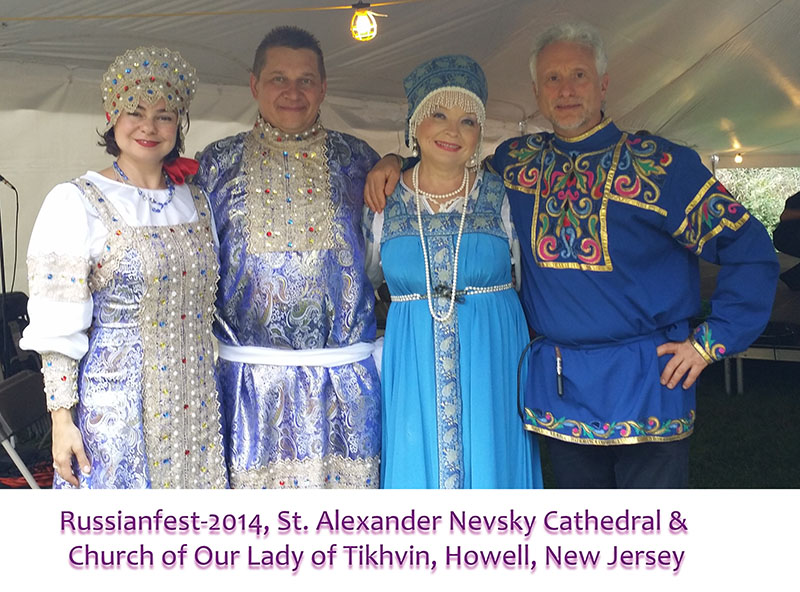
09-21-2014. St. Alexander Nevsky Cathedral & Church of Our Lady of Tikhvin in Howell, NJ
On Sunday, September 21st, 2014 Barynya Balalaika Trio (Leonid Bruk, , Mikhail Smirnov, Elina Karokhina) and folk singer Irina Zagornova performed at the Russianfest on the grounds of St. Alexander Nevsky Cathedral & Church of Our Lady of Tikhvin, 200 Alexander Avenue, Howell, New Jersey 07731.
9-20-2014. North Brunswick, NJ, concert with singer A.Menshikov
On Saturday, September 20th, 2014 starting at 1:45pm musicians of Barynya Balalaika Trio Leonid Bruk, Mikhail Smirnov, Elina Karokhina and singer Alexander Menshikov performed one hour concert at the Heritage Day Festival in North Brunswick Community Park, 2053 U.S. 130, North Brunswick, NJ 08902.
02-07-2014. 49th Petroushka Ball at the Plaza Hotel NYC
Friday, February 7th, 2014,7pm-2am. 49th Petroushka Ball at the Plaza Hotel NYC, 768 5th Ave, New York, NY. Grand Ballroom & Terrace Room. Singer Alexander Menshikov, Igor Lutsev (drums), Sergei Gurbel (sax), Vladimir Barskiy (piano), Leonid Bruk (contrabass balalaika), Mikhail Smirnov (garmoshka, guitar, vocals), Elina Karokhina (balalaika), Sergey Ryabtsev (violin), dancers: Valentina Kvasova and Olga Chpitalnaia.
08-30-2013. Kislak Camp, Lakewood, Wayne County, Pennsylvania
Friday, August 30th, 2013. 1 hour performance at the Kislak Camp, 119 Woods Rd, Lakewood, PA 18439. Leonid Bruk, Mikhail Smirnov, Elina Karokhina, Irina Zagornova.
07-18-2013. Peabody Essex Museum (PEM), exhibition Faberge Revealed, Salem, Massachusetts
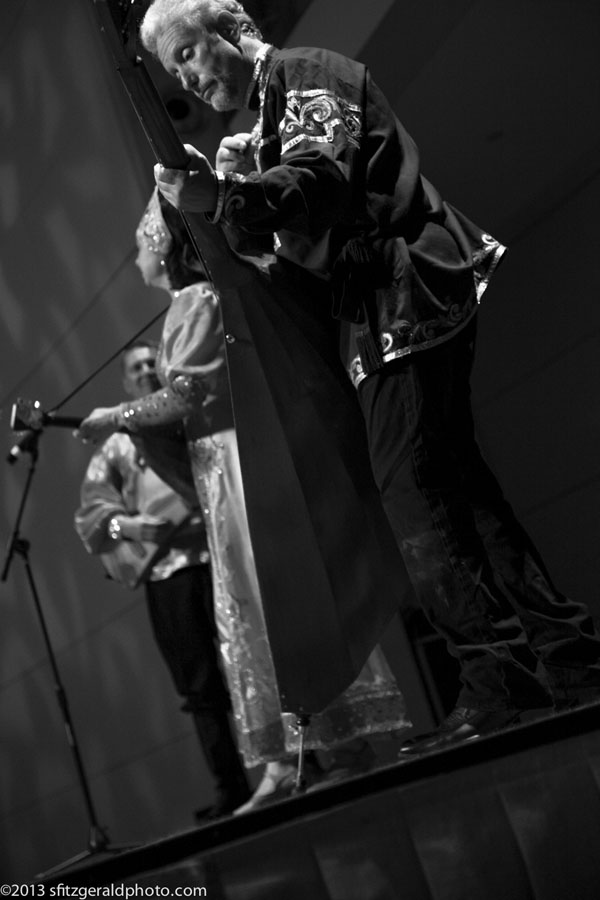
Photo from concert of "Barynya" ensemble at the Peabody Essex Museum (PEM) during exhibition "Faberge Revealed" in Salem, Massachusetts, July 2013. Barynya cast: Leonid Bruk, Mikhail Smirnov, Elina Karokhina, Anna Brovkina, Aliaksandr Anatska, Alexander Rudoy. All photos made by Shawn Fitzgerald Photography are available on Barynya website.
Wednesday, July 10th through Sunday, July 14th, 2013 musicians of Barynya Balalaika trio (Elina Karokhina, Mikhail Smirnov, Leonid Bruk) and Russian folk singer Irina Zagornova performed during the Balalaika and Domra Association of America (BDAA) 35th Annual Convention in Sarasota, Florida.
12-11-2011. Huntington Library, Suffolk County, Long Island
Sunday, December 11, 2011, 2pm. 1 hour performance at Huntington Public Library, 338 Main Street, Huntington, NY 11743. 3 male dancers, 3 musicians: Nick Kobryn, Ilia Pankratov, Petr Tikhonov, Elina Karokhina, Mikhail Smirnov, Leonid Bruk.
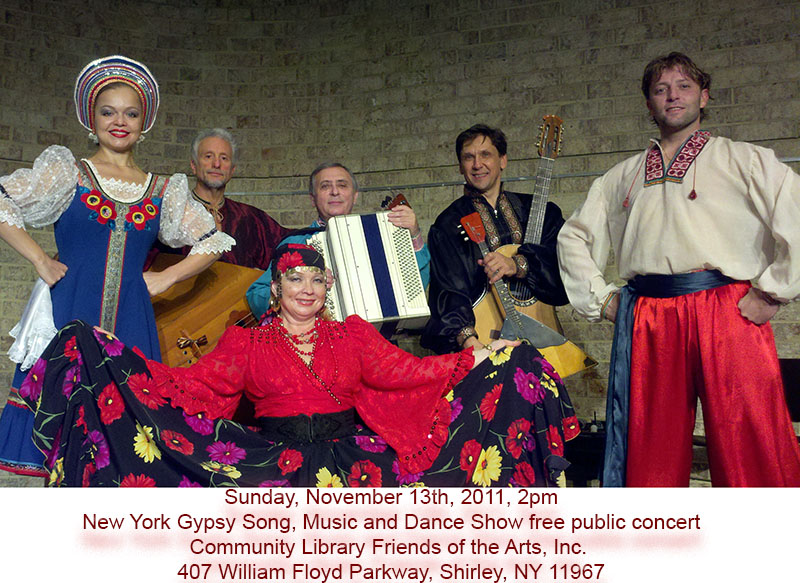
11-13-2011. Free public performance, Community Library, Shirley, New York
Two dancers, two singers, and two musicians performed one hour show at the Community Library in Shirley, New York on Sunday, November 13th, 2011. Performance started at 2pm. Cast of performers: Aliaksandr Anatska (dancer), Valentina Kvasova (dancer), Leonid Bruk (balalaika-contrabass), Irina Zagornova (singer), Sergey Pobedinsky (singer, guitar player), Yan Khmel (button accordion). Exact address of the venue: Community Library Friends of the Arts, Inc. 407 William Floyd Parkway, Shirley, NY 11967.
11-05-2011. Saints Peter and Paul Russian Orthodox Church, South River NJ
On Saturday, November 5th, 2011 Barynya Balalaika Trio performed at the Saints Peter and Paul Russian Orthodox Church's special event in South River, New Jersey. Exact address of the venue: 9 Jeffrie AveSouth River, NJ 08882
On Sunday, October 30th, 2011, 5-7pm. performance during Biologique Recherche's cocktail party at the Gansevoort Park Hotel, 420 Park Ave South, New York, NY.
09-17-2011. Russian-American Wedding at the Garrison, Garrison, New York
On Saturday, September 17th, 2011 musicians and dancers of Russian dance, song, and music ensemble Barynya provided music and entertainment during mixed Russian-American wedding in Garrison, New York. Cast of Barynya included Danila Sherstobitov (dancer), Ilia Pankratov (dancer), Olga Chpitalnaia (dancer), Anna Brovkina (dancer), Leinid Bruk (contrabass balalaika player), Mikhail Smirnov (singer, garmoshka, and guitar player), and balalaika virtuoso Elina Karokhina. Exact address of the venue: The Garrison, 2015 US 9, Garrison, New York 10524. Address for GPS: 1 Snakehill Rd, Garrison, NY 10524.
06-29-2011. Barynya Russian Balalaika Trio on TV in Boston, MA
Barynya Balalaika Trio: Elina Karokhina (balalaika), Leonid Bruk (balalaika-contrabass), Mikhail Smirnov (garmoshka, guitar, vocals). Recorded and produced by EstradaProduction. All photos and videos from this event are available at the website www.Russian365.com.
04-04-2011. Dickinson College, Carlisle, Pennsylvania, April 4th, 2011
02-11-2011. Petroushka Ball, Waldorf Astoria, New York City
Performance during dinner by Elina Karokhina (balalaika), Leonid Bruk (balalaika-contrabass), Mikhail Smirnov (guitar), and singer Alexander Menshikov. Recorded by Alexander Gurman (alexandergurman's YouTube channel) on February 11, 2011 at the Waldorf Astoria in New York City during the Petroushka Ball-2011.
01-19-2011. Performance during basketball game NJ NETS vs Utah JAZZ at the Prudential Center arena in Newark, New Jersey, USA.
Musicians Alexandre Tseytlin (violin), Leonid Bruk (bass, balalaika-contrabass), Elina Karokhina (balalaika), Mikhail Smirnov (garmoshka, guitar), singer Alexander Menshikov, and singer Irina Zagornova entertained during the New Jersey Nets VIP reception. The guest list included NETS owner (Mikhail Prokhorov), the Russian Ambassador to the UN (H.E. Vitaly Ivanovich Churkin), and the Russian Consul General (Honorable Andrey Konstantinovich Yushmanov).
On Tuesday, December 16th, 2010 Russian dance amd music ensemble Barynya performed during Rusal corporate party at the Russian Consulate NYC - the diplomatic mission of the Russian Federation in New York City. Cast: Elina Karokhina, Mikhail Smirnov, Leonid Bruk and singer Irina Zagornova at the RUSAL USA corporate party.
08-14-2010. Public performance in Westchester County, New York
On Saturday, August 14th, 2010, 7:30PM to 9:15PM. Russian Balalaika Trio and dancers of ensemble Barynya provided free public performance in Westchester County, New York. Performers cast: Leonid Bruk (balalaika contrabass), Elina Karokhina (balalaika), Mikhail Smirnov (garmoshka, guitar, vocals), Alexander Rudoy (dancer), Aliaksandr Anatska (dancer), Olga Yeliseyeva (dancer), Olga Chpitalnaia (dancer), Vldmr Lgnv (bass), and folk singer Irina Zagornova. Exact address: Untermyer Park, 945 North Broadway, Yonkers, New York.
Woolen Boots {Valenki} (video) - 11,364 views on youtube since September 1st, 2010
07-17-2010. 50th Birthday Party - Russian Sailors' Theme, Lake Ozark, Missouri
MC MISHA, singer Sasha Menshikov, Leonid Bruk, Elina Karokhina entertained an exclusive private party on the Lake Ozark in Missouri. The party with the Russian Sailor's theme took place outside just above the beautiful lake. The temperature was above 90 however everyone had a good time. Musicians played live music with garmoshka, guitar, balalaika, bass guitar, and balalaika-contrabass). The team performed American, Russian, Gypsy, Ukrainian, Jewish, and European popular songs and music.
Leonid Bruk and Russian music ensemble Barynya performances during the Balalaika and Domra Association of America conference-2010. The conference took place at the Sheraton Bloomington Hotel in Minneapolis, Minnesota in July 2010. Musicians: Elina Karokhina (balalaika), Leonid Bruk (balalaika-contrabass), Mikhail Smirnov (guitar, vocals). Camera - Sergey Rogozin, video editing - Leonid Bruk. All videos and photos from this performance.
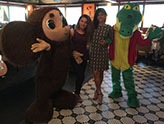
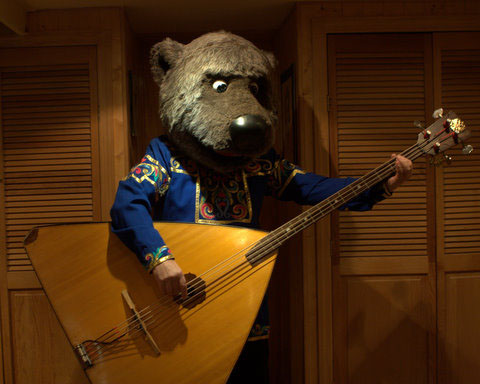
Leonid Bruk is pictured as a Russian bear who plays bass balalaika. More costumed characters are available for hire.
May 2010, Russian consulate NYC, New York, USA
Performance at the Russian Consulate NYC with singer Sergey Pobedinskiy, violinist virtuoso Valery Zhmud, famous Russian singer Baskov, and Russian folk singer Irina Zagornova.
April 9, 2010, Toronto, Canada
Friday, April 9th, 2010, Old Mill Inn, 21 Old Mill Road, Toronto, Ontario, M8X 1G5 CANADA, Winter Palace Ball and the Gala Charity Fundraiser benefitting Ruskoka, a summer camp for underprivileged children.
Musicians: Elina Karokhina
(balalaika),
Leonid Bruk
(contrabass balalaika),
Yan Khmel
(bayan),
Mikhail Smirnov
(garmoshka, guitar, vocals),
Valery Abramov (tenor-saxophone), Oleg Sorin (trumpet).
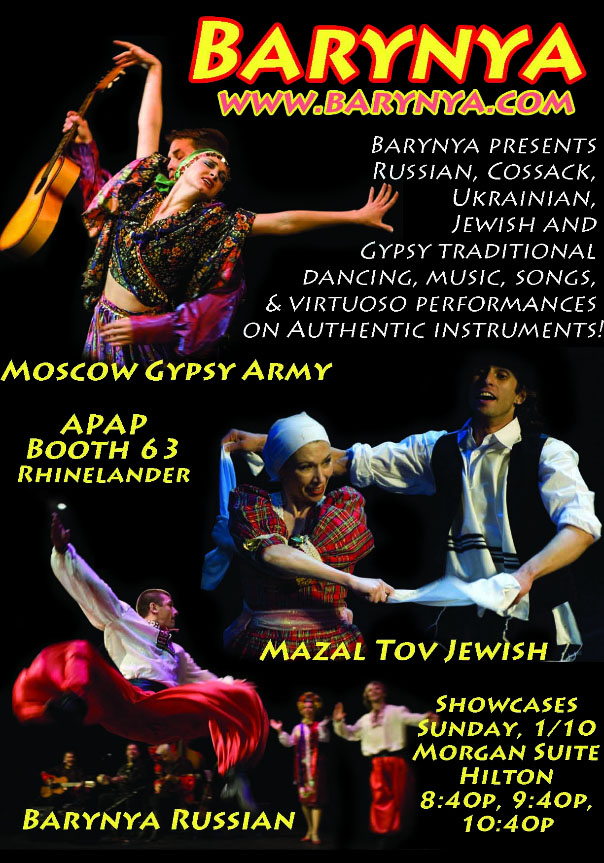
Sunday, January 10, 2010, 8:40PM, 9:40PM, 10:40PM,
APAP booking conference NYC Hilton, Morgan Suite, 2 Floor
1335 Avenue of the Americas, New York, NY 10019
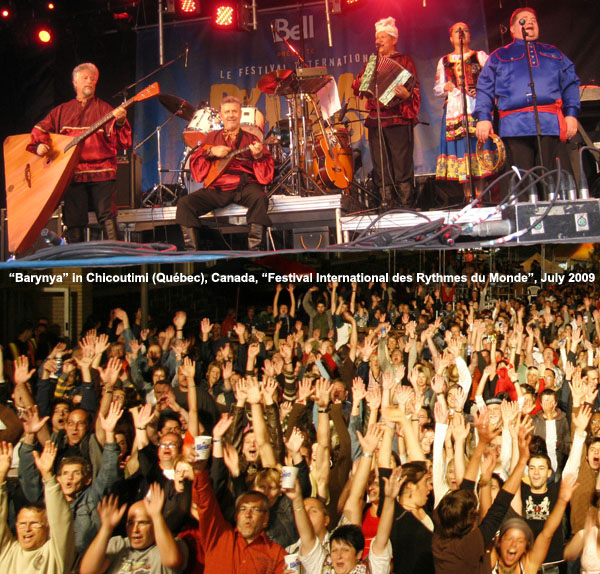
Festival International des Rythmes du Monde, Chicoutimi (Quebec), Canada, July 2009
Over 10 thousand people attended Barynya performance during Festival in Chicoutimi. Performers: Leonid Bruk, Mikhail Smirnov, Alexander Menshikov, Yan Khmel, Lev Zabeginsky, Valentina Kvasova, Ilia Pankratov.
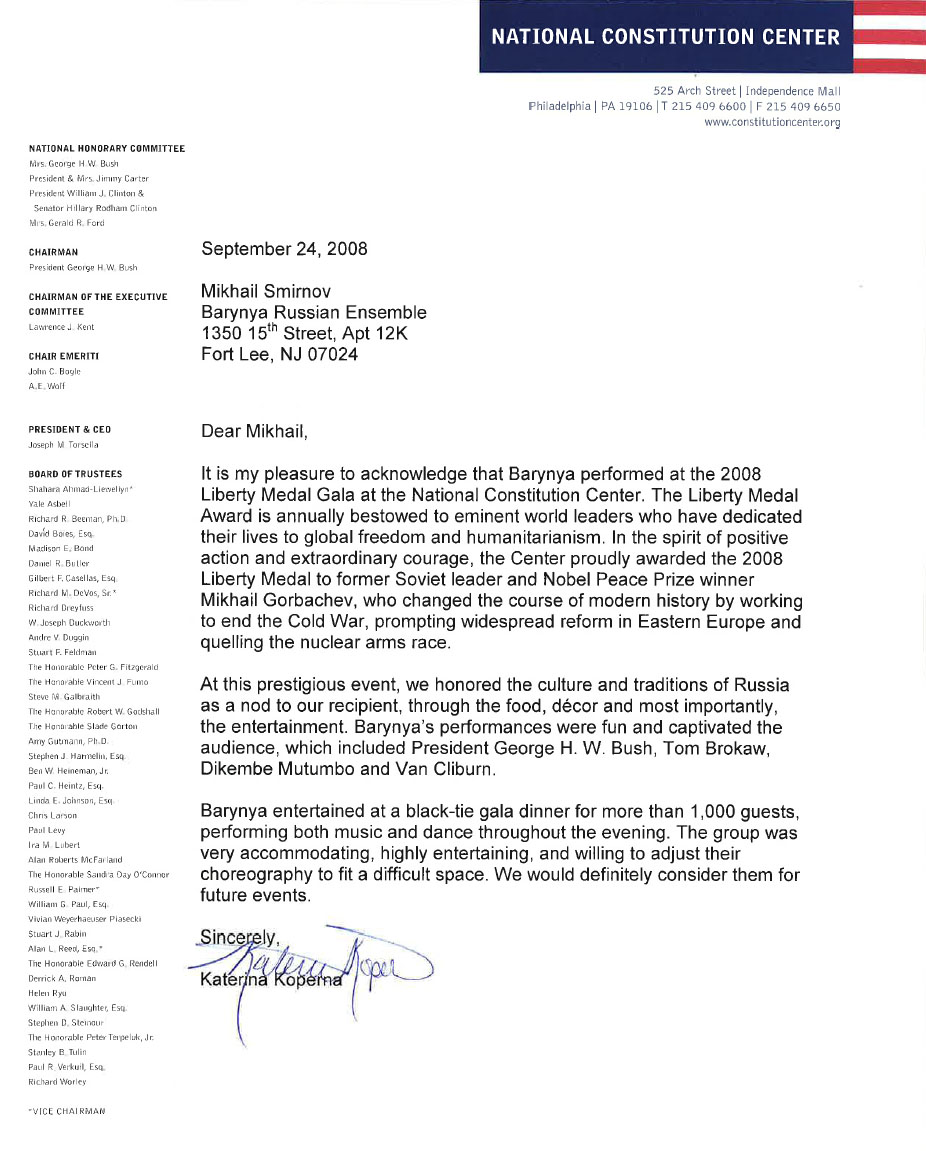
Mikhail Gorbachev's Liberty Medal Award Gala
National Constitution Center, Philadelphia, PA
Ensemble Barynya performed during diner Gala after the Liberty Medal 2008 was presented to former Soviet leader Mikhail Gorbachev by President George H.W. Bush. Official ceremony took place on Thursday, September 18, 2008 at The National Constitution Center located at 525 Arch St. on Philadelphia’s Independence Mall... letter of recommendation.
Eight Barynya dancers, four musicians and three singers entertained a black-tie dinner for more than 1,000 guests. Audience included President George H. W. Bush, Tom Brokaw, Dikembe Mutumbo and Van Cliburn. Barynya performed both concert music and dance throughout the evening. President's Bush and Gorbachev were thrilled. World known concert pianist Van Cliburn shake hands with the balalaika virtuoso Lev Zabeginsky. MC of the evening, American television journalist Tom Brokaw, used one of our microphones to do the toasts. He was standing next to Barynya musicians on the stage.
New York Russian Radio Station City Radio 540AM
Festival of Russian music, dance and culture, May 2008
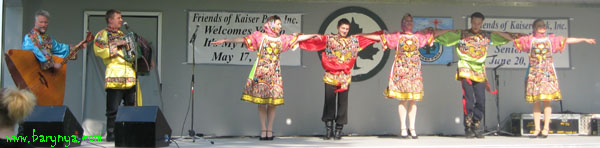
Brighton Beach Festival of Russian music, dance and culture on May 18th, 2008 was organized by New York Russian Radio Station CITY RADIO 540AM. Barynya performed in the beginning of the concert. Five dancers and two musicians were on the stage built near the south end of Coney Island Avenue (next to Boardwalk) in Brooklyn, New York.
Dancers Valentina Kvasova,
Ganna Makarova,
Olga Chpitalnaia,
Danila Sherstobitov,
Alexey Maltsev performed Russian dances "Barynya", "Metelitsa", "Kalinka", "Korobushka", Cossack dance Varenka, and Ukrainian folk dance "Hopak".
Mikhail Smirnov was singing and playing garmoshka while
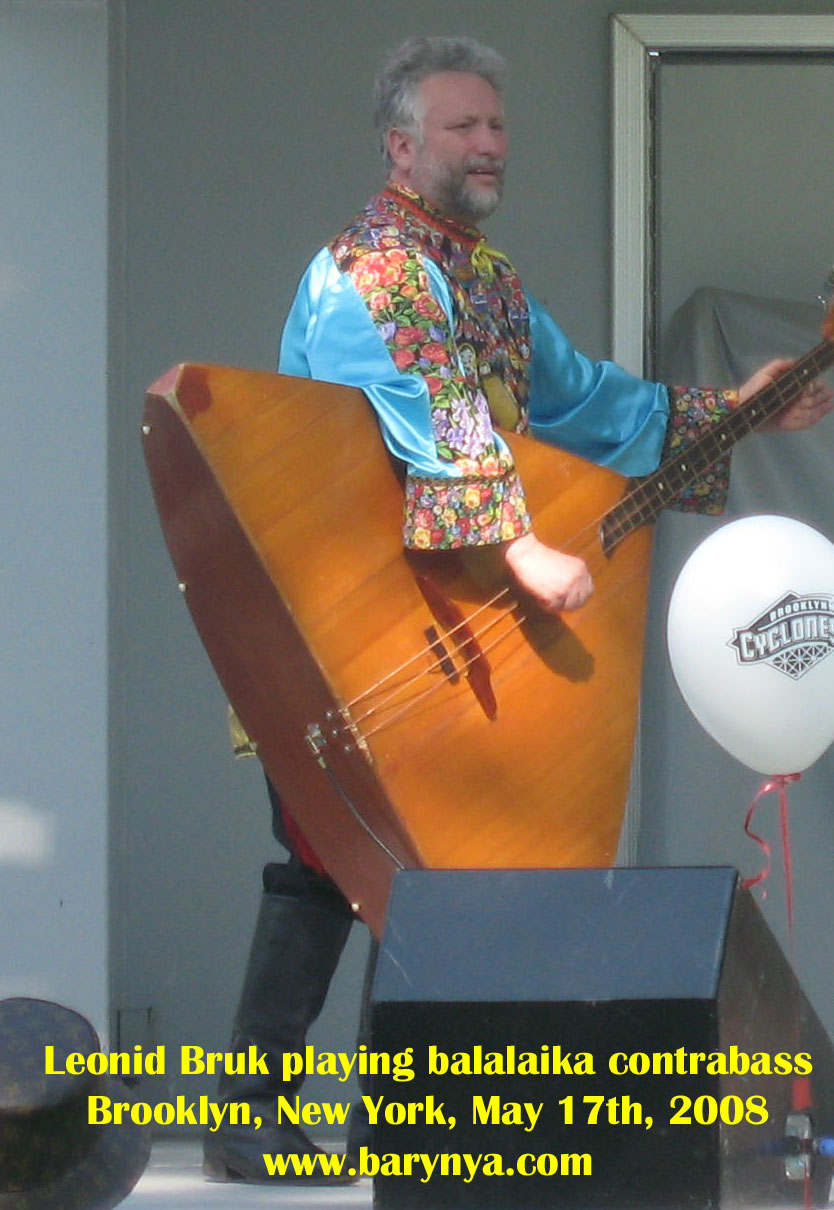
Leonid Bruk was burning fingers on his huge balalaika-contrabass.
Recorded during performance on January 19, 2008 in Eugene, Oregon during Slavic Festival. Musicians: Alex Siniavski (balalaika, Gypsy guitar), Sergey Ryabtsev (violin), Mikhail Smirnov (garmoshka, guitar), Leonid Bruk (balalaika-contrabass), singer Alexander Menshikov.
On December 13, 2007 at 8pm Russian dance and music ensemble Barynya performed at the "Guvernment" (Kool Haus Entertainment Complex), 132 Queens Quay East, Toronto, Ontario M5A 3Y5 Canada...
view more pictures
July, 2007. Performance series in Ohio communities
Ensemble Barynya was touring the state of OHIO as part of the Ohio Arts Council’s Summer International Music and Performing Arts in Communities Tour (IMPACT). Barynya performed many shows, Russian & Ukrainian dance workshops from July 17 to July 28, 2007. Performance locations included Lakeside, Warren, Marietta, Jackson and Grandview Heights. All performances were free and open to the public.
The Russian Nobility Association in America annual Spring Russian Nobility
Ball took place at the luxurious "Pierre" Hotel on May 11, 2007 in New York City.
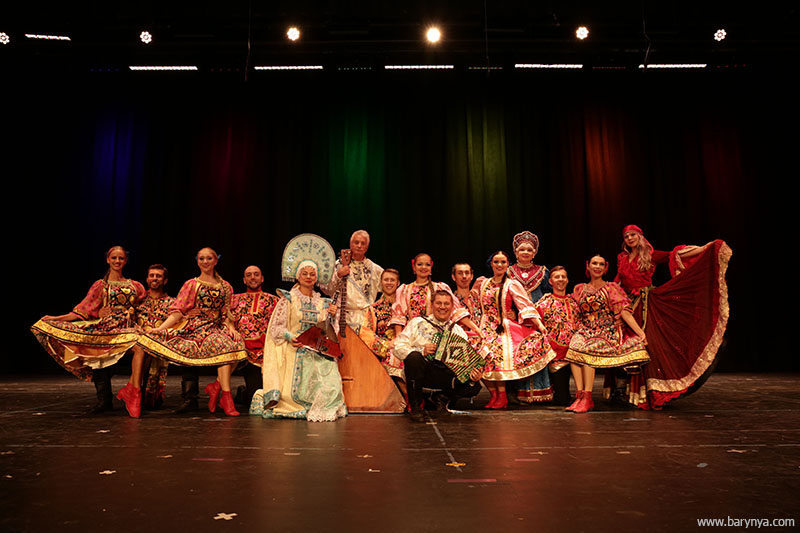
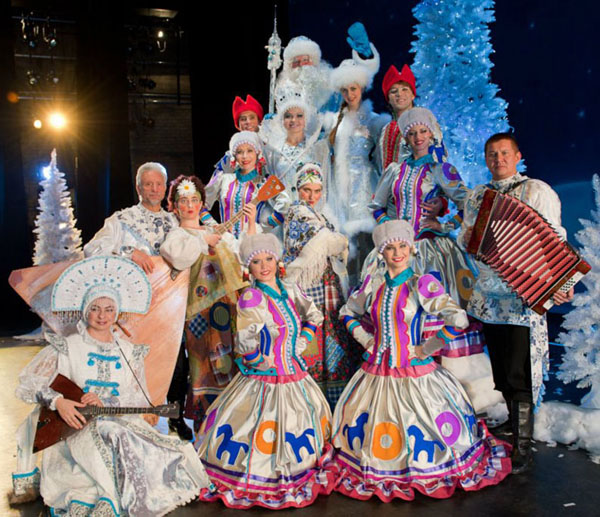
Musicians and dancers of New York based Russian dance and music ensemble Barynya (full company)
provided music for coctail hour and thirty minute music and dance program during the dinner. "Barynya" performed popular Russian Gypsy pieces: "Two Guitars", "Kay One", "Vingerka", "3 lines", Russian favorite balalaika arrangement "The Moon is shining brightly" and Cossack song and dance "Varen'ka"
Variations on Russian folk song: "The Moon Is Shining Brightly"
(sometimes translated as "The New Moon is Lighting") written by the "Father of Russian Balalaika" Vasily Vasileyevich Andreyev (1861-1918) is so
popular it was even mentioned in Michail Bulgakov's book "The heart of a dog":
Someone was hard at work playing a rousing tune on the balalaika two
rooms away and the sound of a series of intricate variations on 'The Moon is
Shining' mingled in Philip Philipovich's head with the words of the
sickening newspaper article. When he had read it he pretended to spit over
his shoulder and hummed absentmindedly through his teeth: ' "The moo-oon is
shining . . . shining bright . . . the moon is shining . . ." God, that
damned tune's on my brain!'... read more
Below is the small translation of the song lyrics into English. Russian original text is included as well for those who can read Russian Cyrillic.
СВЕТИТ МЕСЯЦ
Светит месяц, светит ясный
Светит белая заря.
Осветила путь дорожку
Мне до Сашина двора
THE MOON IS SHINING
The moon is shining, shining brightly
The white nightfall is shining too
My pathway is eliminated
All the way to the Sasha's place
March 2007. George Washington University
Slavic Spring Festival in Washington, D.C. pictures, video
Daydreams Waltz mpeg video file This waltz composed by "father" of Russian balalaika Vassily Vassilievich Andreev (born 186l).
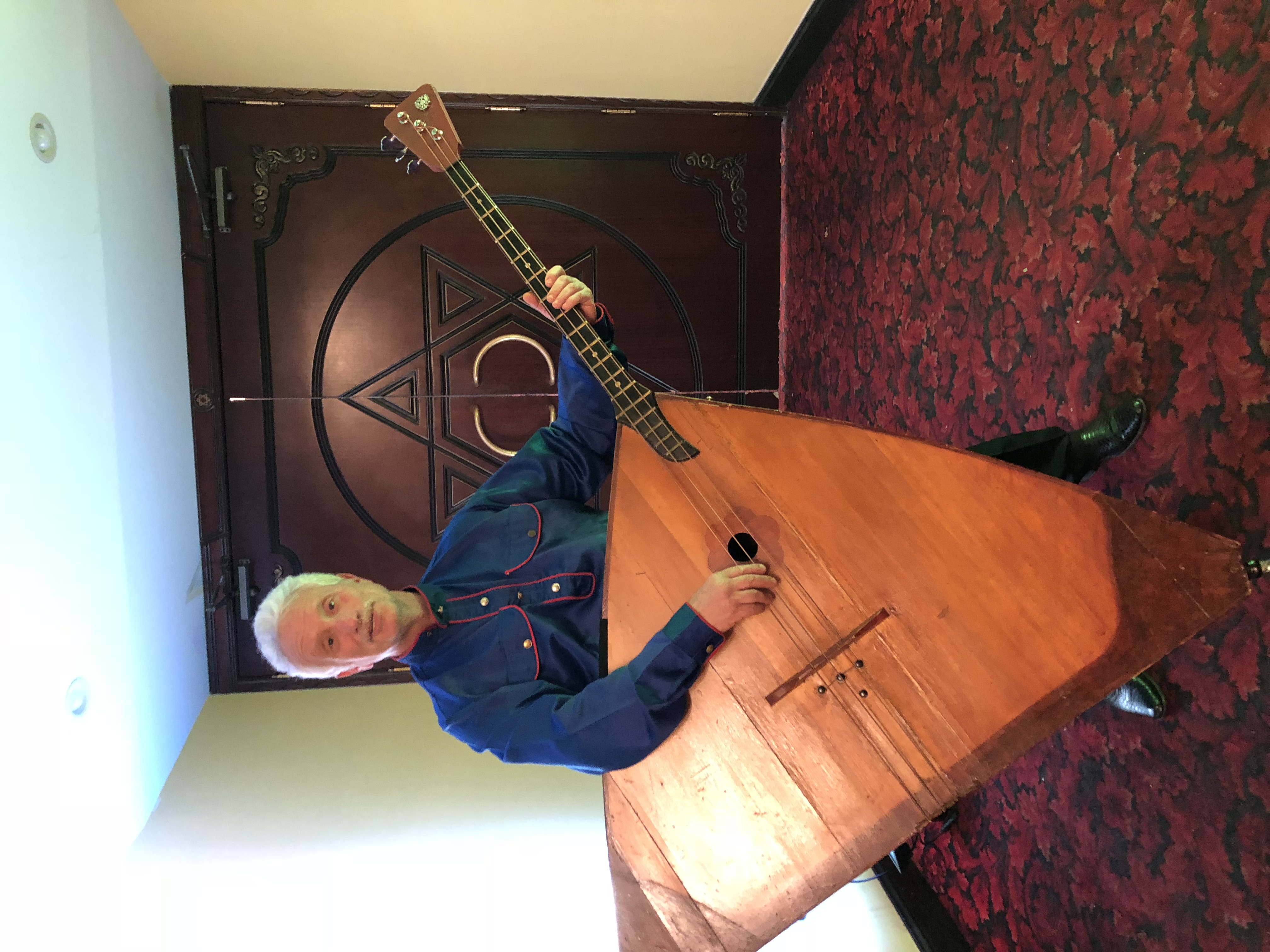
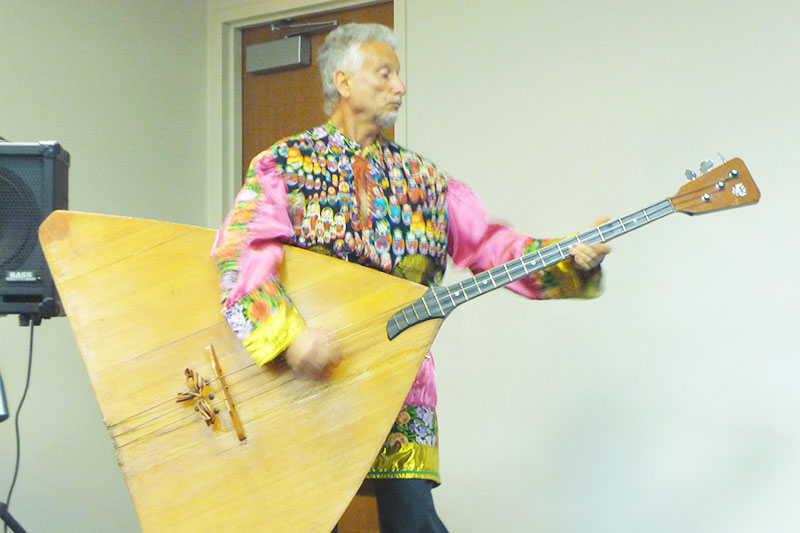
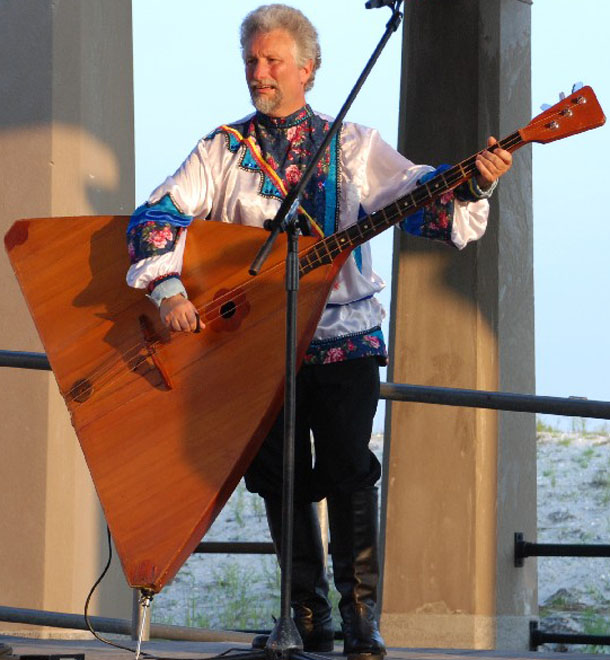
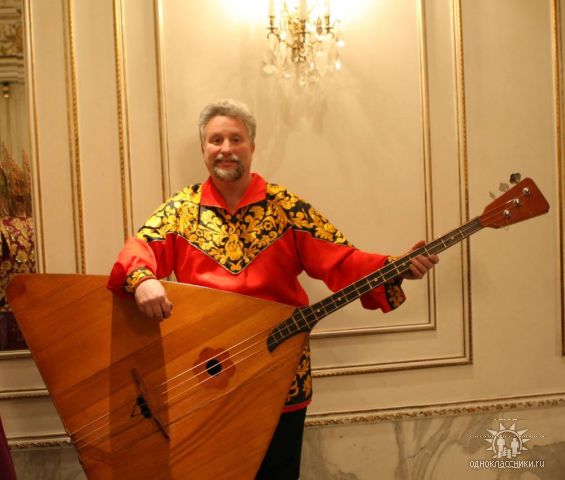
Leonid Bruk with his balalaika-contrabass
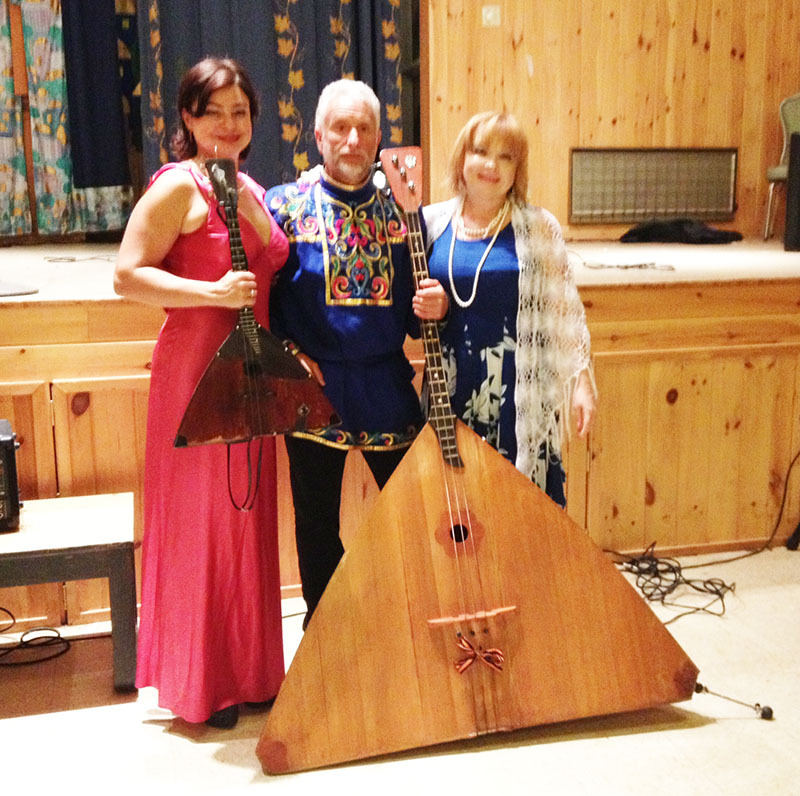
Balalaika-bass and contrabass balalaikas are the biggest in size, and the strongest and deepest in sound.
BALALAIKA BASS DESCRIPTION First string: D, minor octave.
Second string: A, major octave.
Third string: E, major octave.
The instrument size and form require from the musician to play it in standing position.
A metal pin is attached to it from below, which abuts against the floor.
So neither the instrument body nor its sounding-board touch the performer's dress, and this causes great resonant effect, resulting in powerful,
long and deep sound.
To make the string sound well, musician has to press the strings correctly and tightly by one-two fingers of the left hand,
and strike with the right hand softly, but deeply and with strength. There have been no considerable changes since the time of Vasily Vasilievich Andreyev, but the playing technique is being constantly developed and improved.
Leonid Bruk at Russian Cabaret "Moscow" (corner of East 54th Street and Madison Avenue, Manhattan, New York City)
with Russian-Gypsy folk dance and music show group. Also on the photo Irina Zagornova, Natalia Smirnov, Svetlana Yankovskaya, Gennady Gutkin,
Lev Zabeginsky, Misha Smirnov, Sergey Riabtsev and Yuriy Vodolaga
BALALAIKA CONTRABASS DESCRIPTION First string: D, major octave.
Second string: A, contra octave.
Third string: E, contra octave.
The playing method is the same as the playing method of the balalaika bass.
However, the arpeggio is not used here.
To obtain a harmonious and powerful tremolo without rattling, it is recommended to use a big and solid leather plectrum.
The balalaika contrabass is the foundation of the orchestra and its' harmonious and rhythmic support.
The balalaika contrabass plays the same role in the orchestra as the bass.
Leonid Bruk performing famous Russian folk song KALINKA at Russian Maslenitsa Bliny Annual Diner at Holy
Virgin Protection Church, Nyack, New York with Russian folk singer Irina Zagornova, garmoshka player Mikhail Smirnov, bayan virtuoso Yan Khmel, Russian folk singer Natalia Smirnov,
balalaika player Edik Kutovoi and Russian folk dancer Yury Vodolaga
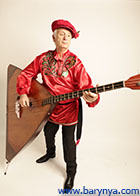
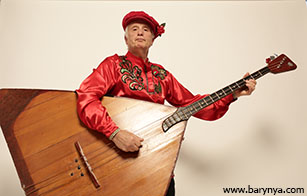
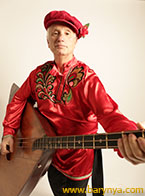
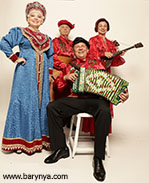
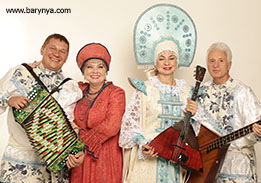
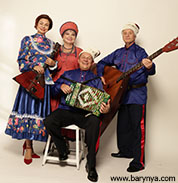
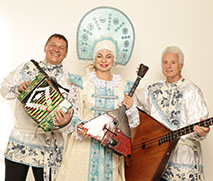
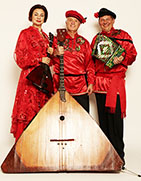
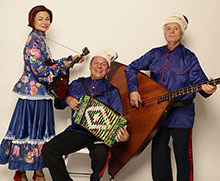


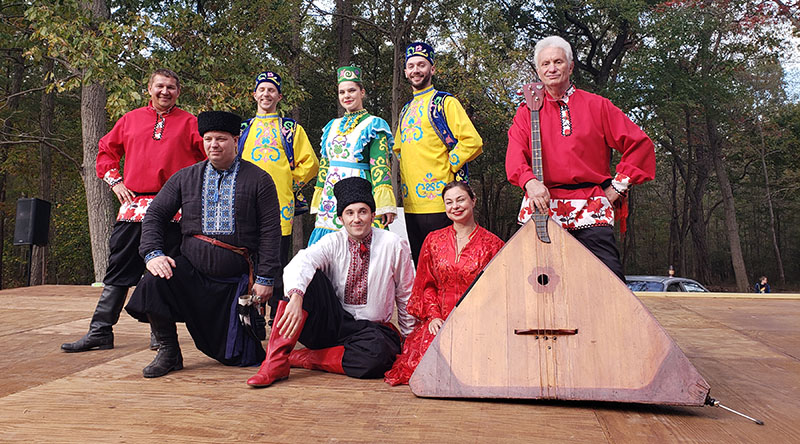
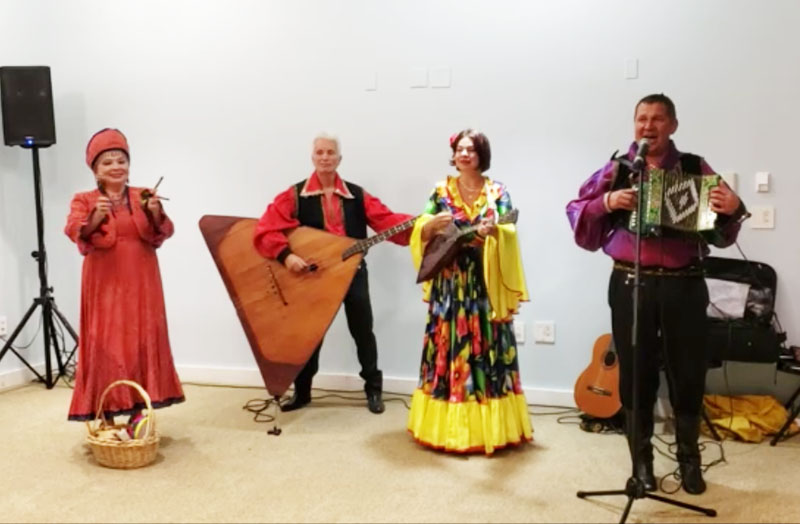
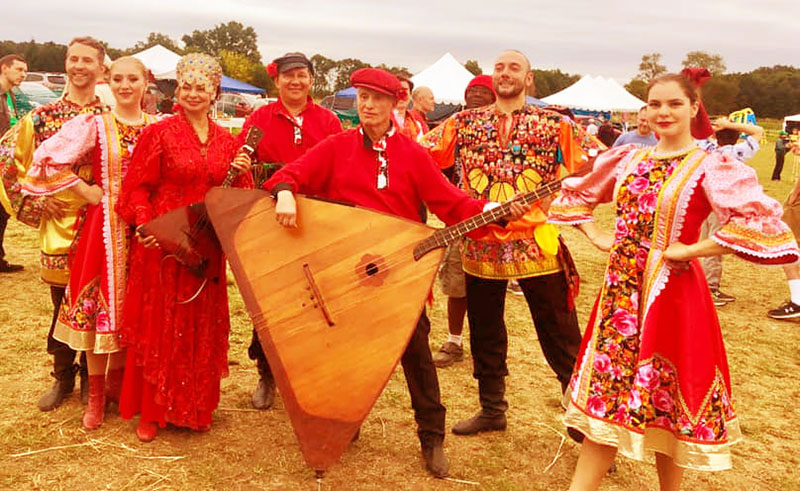
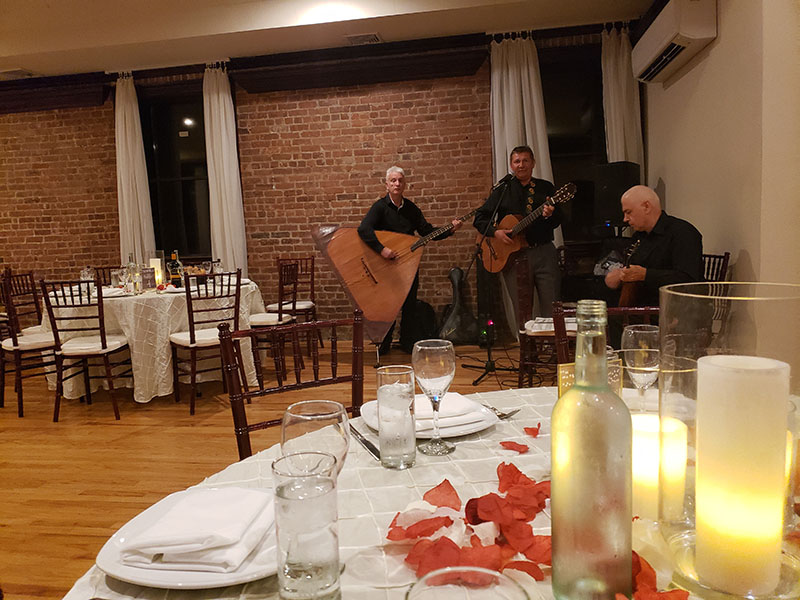
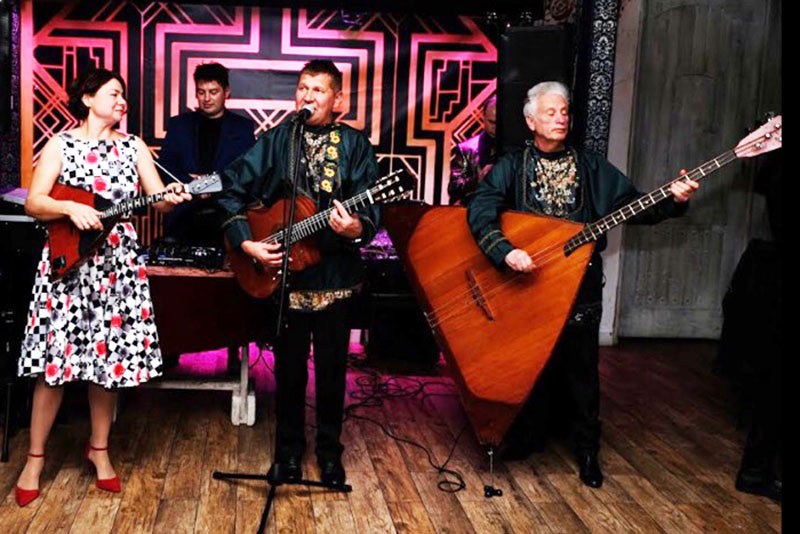
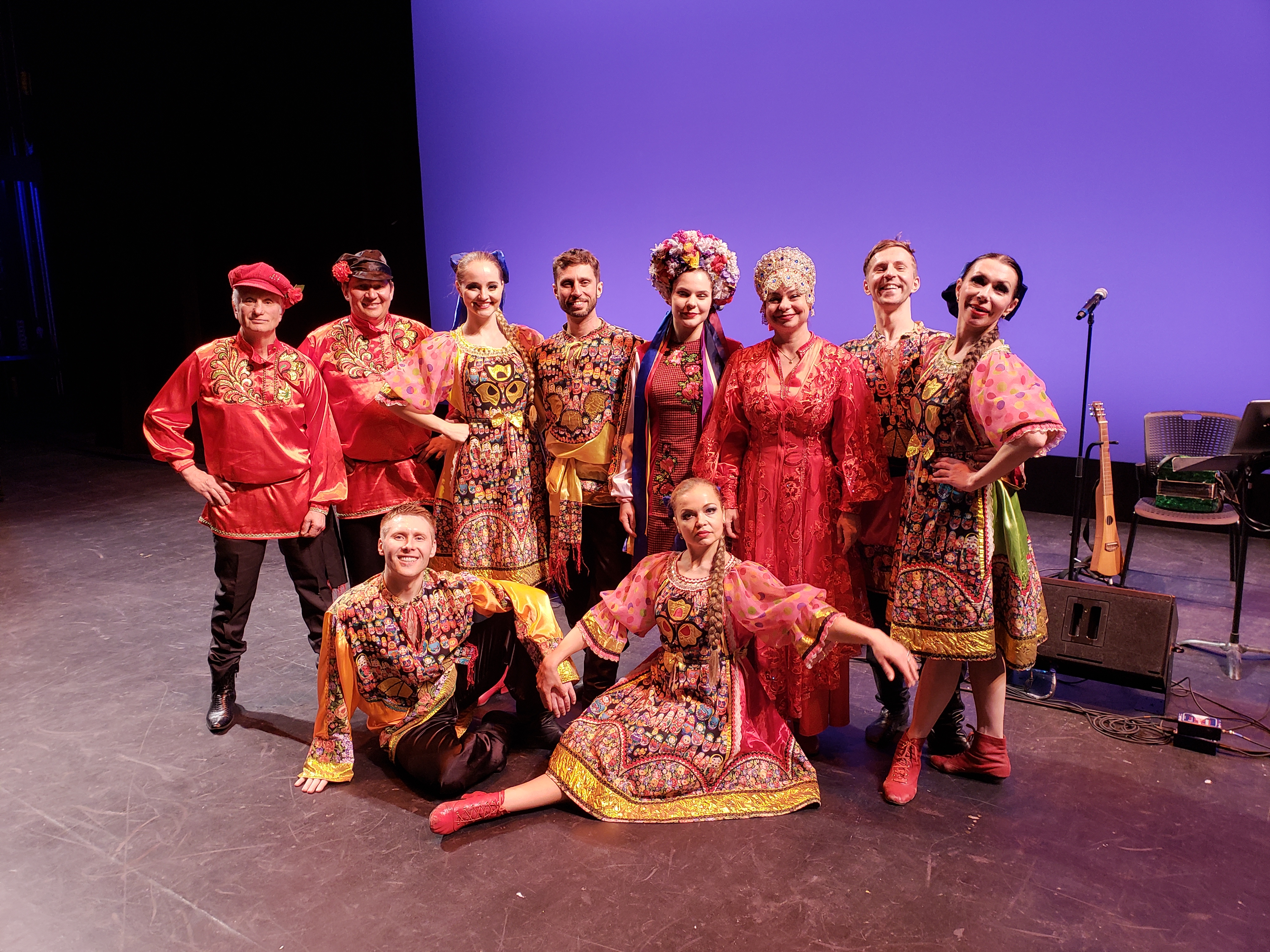
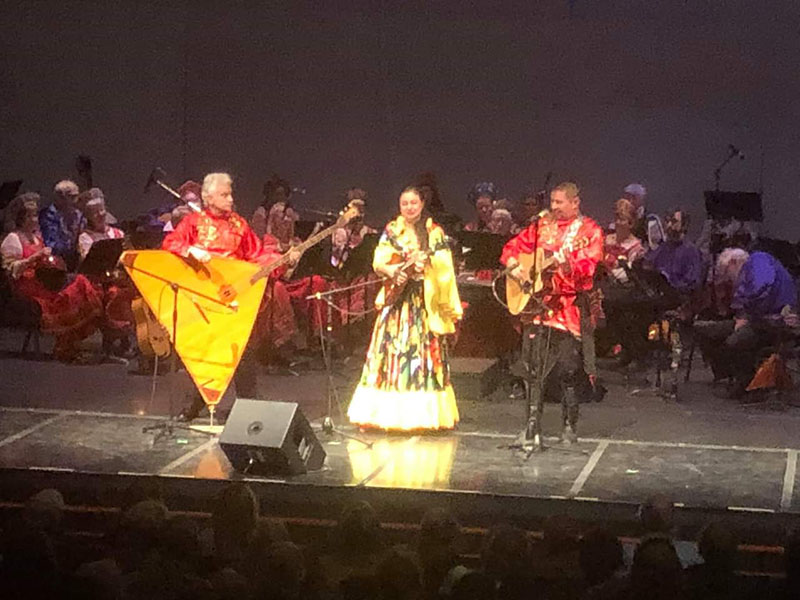
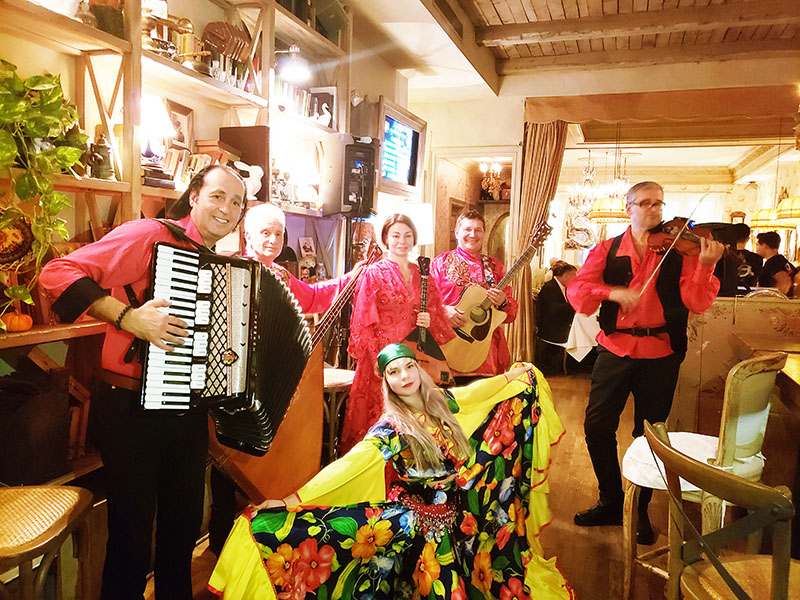
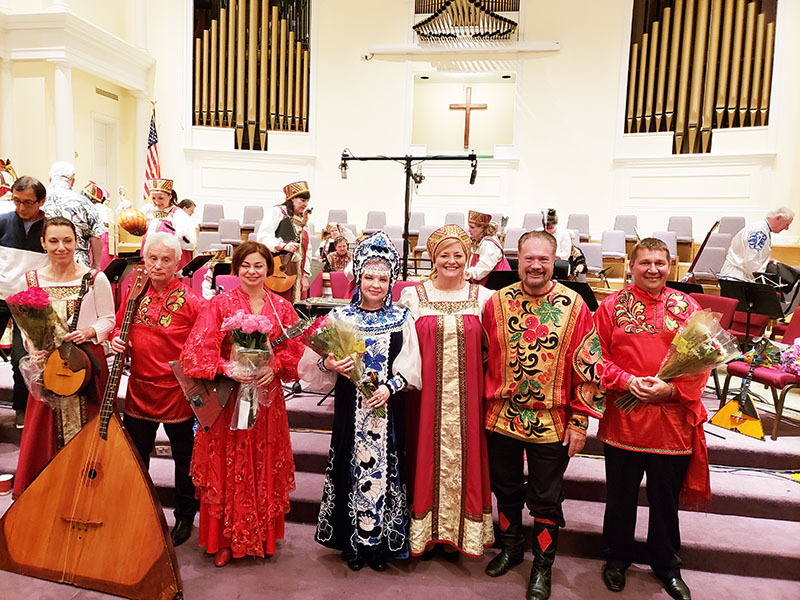
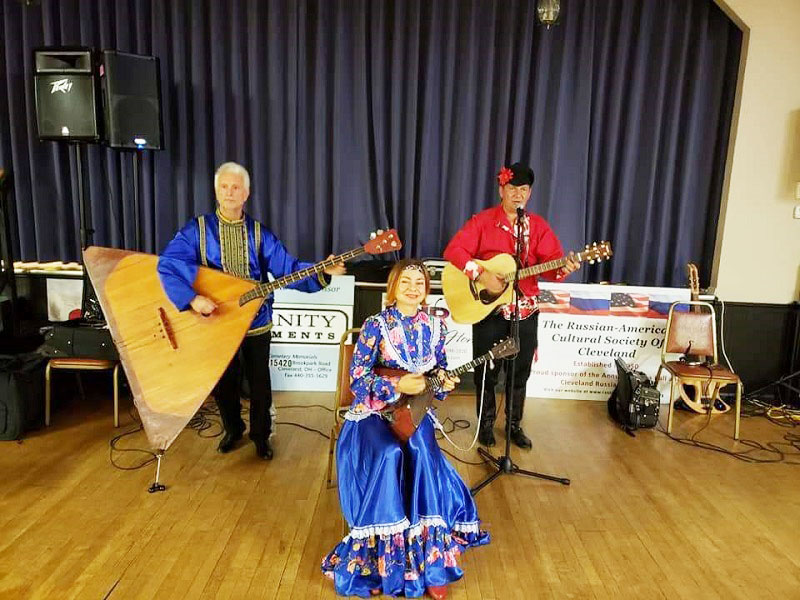
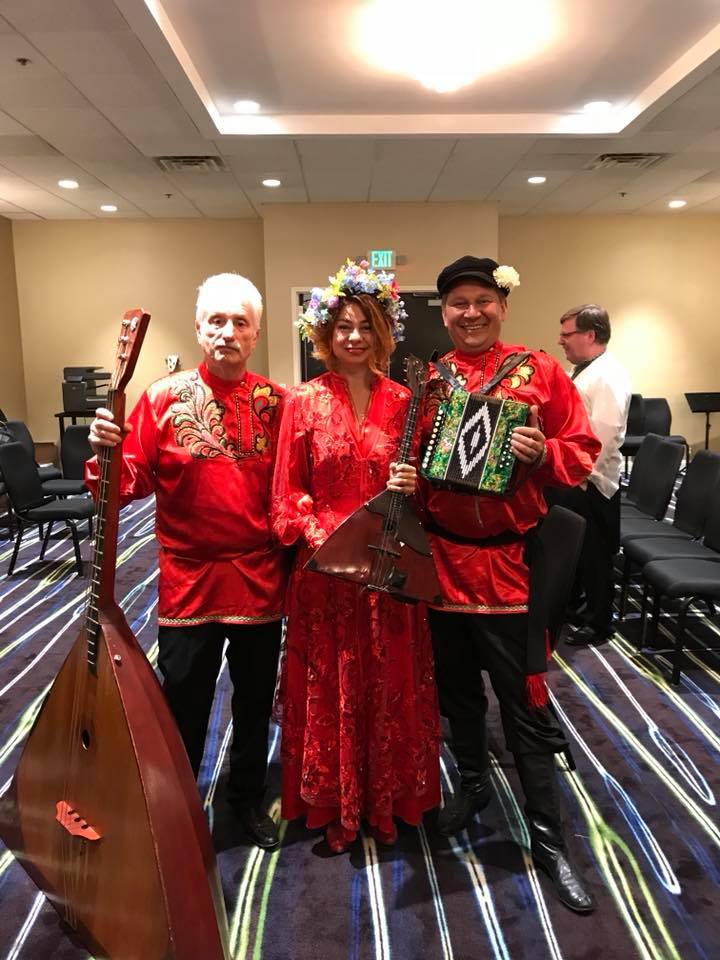
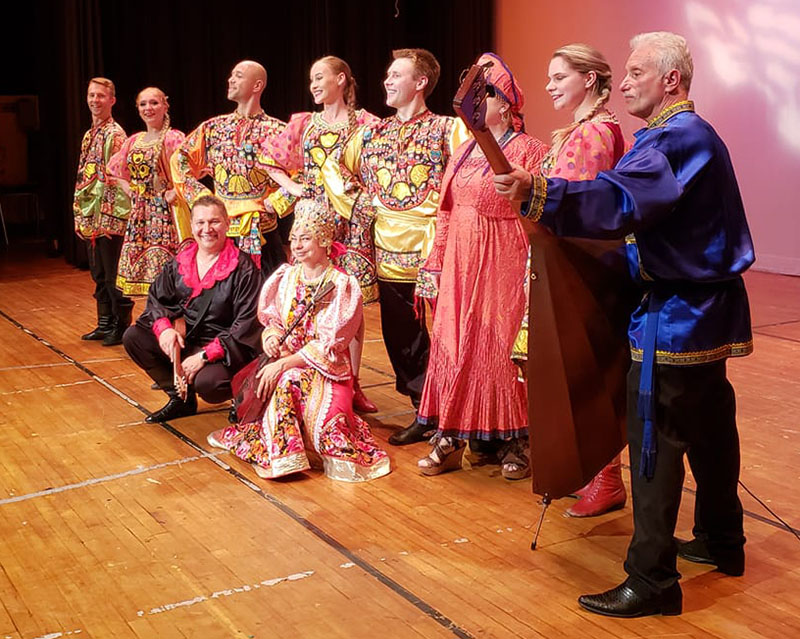
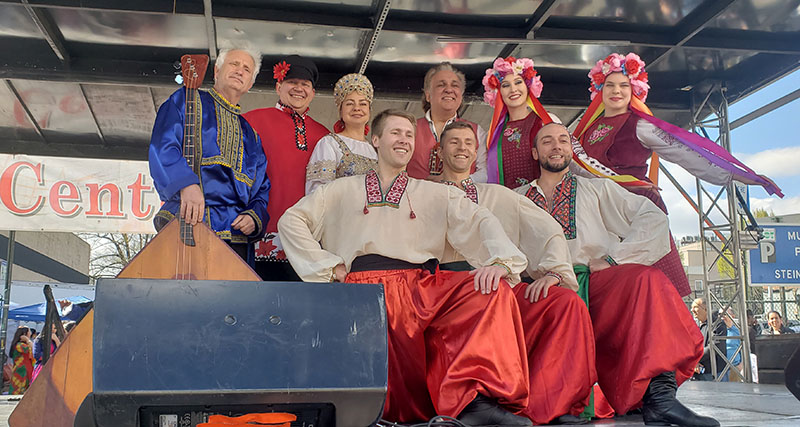
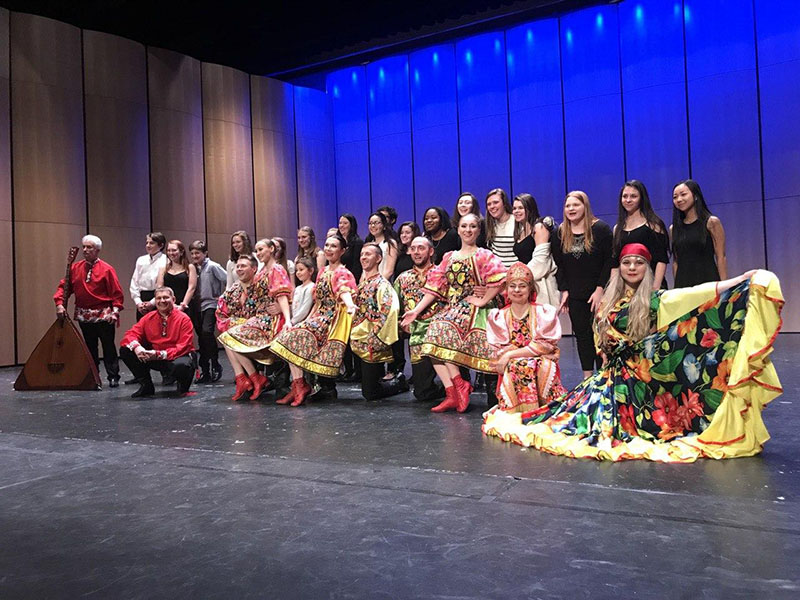
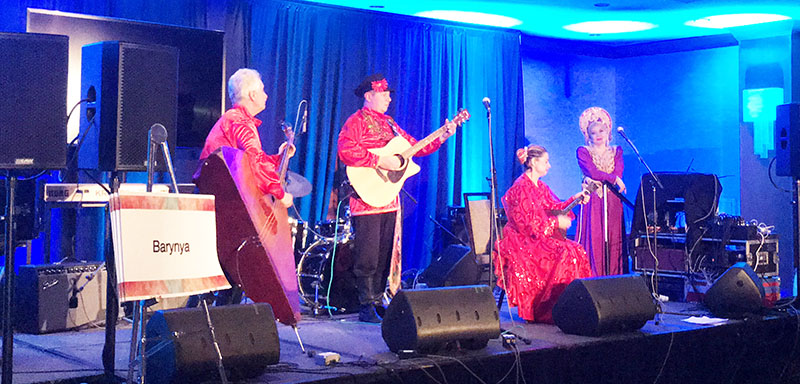
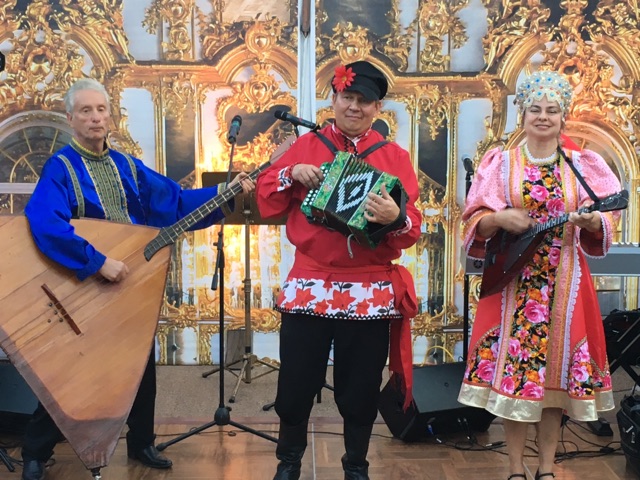
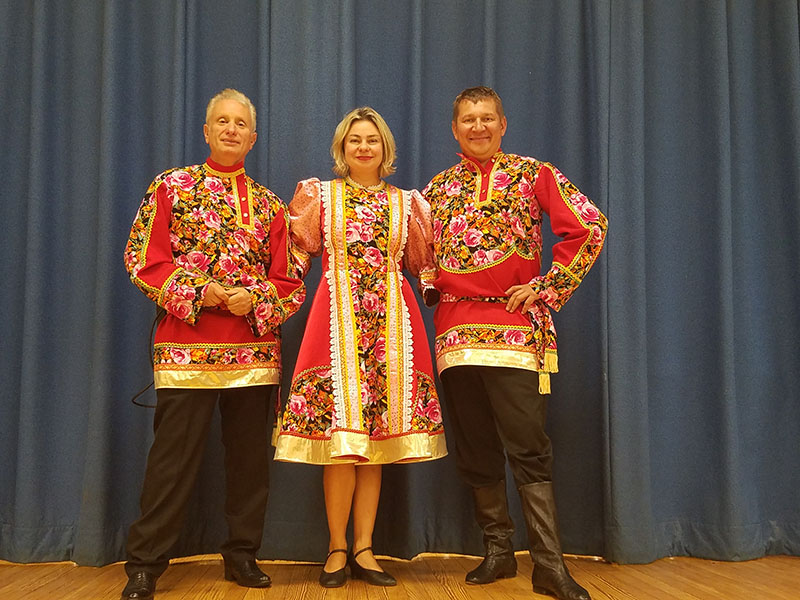
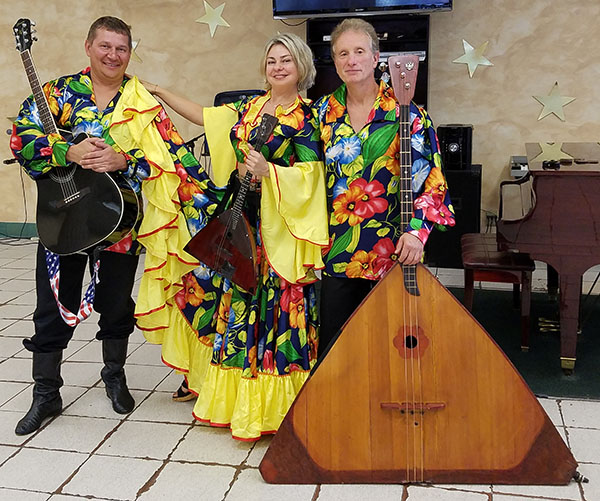
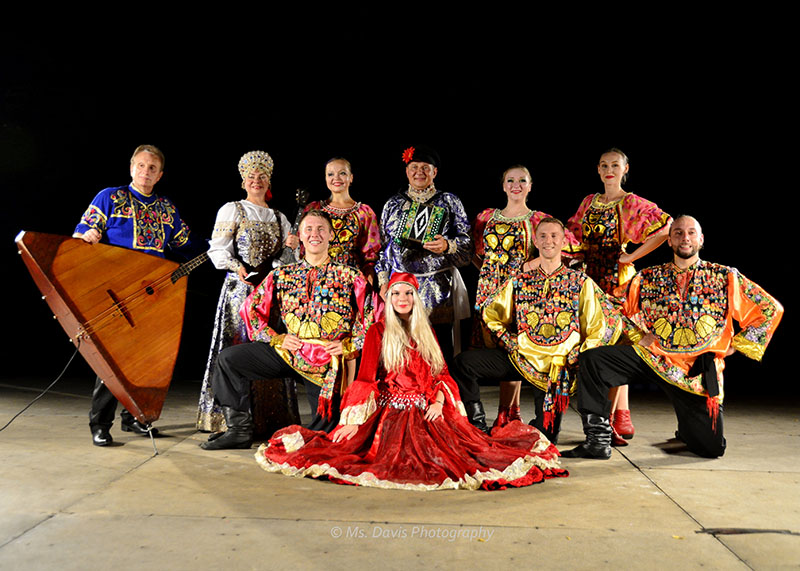
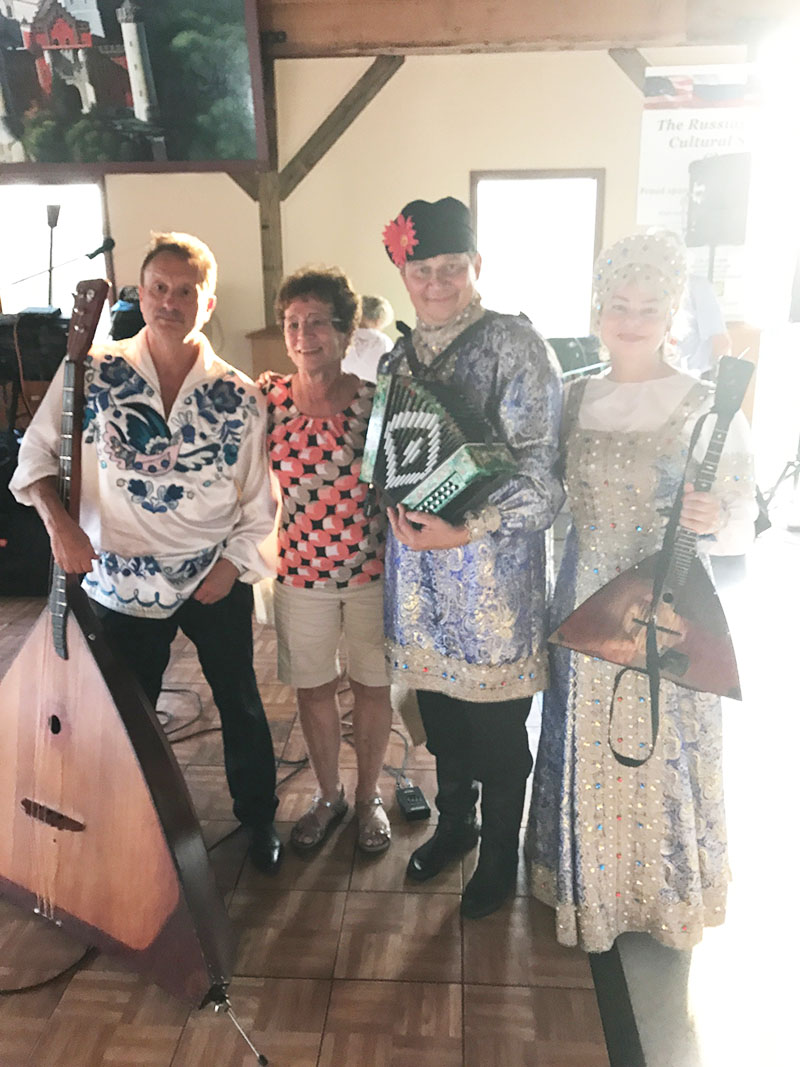
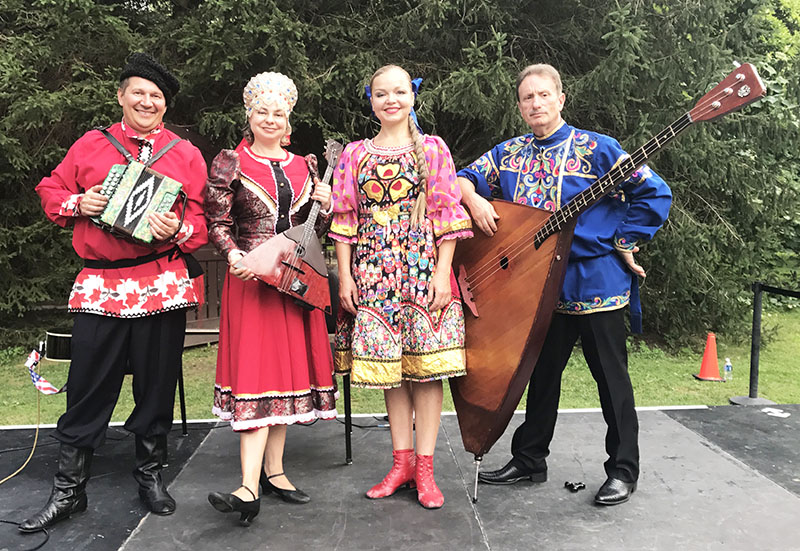
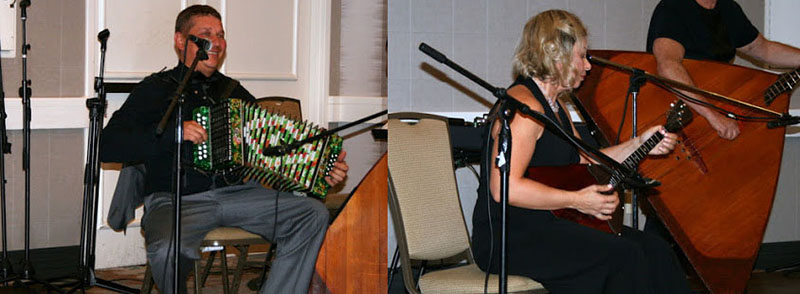
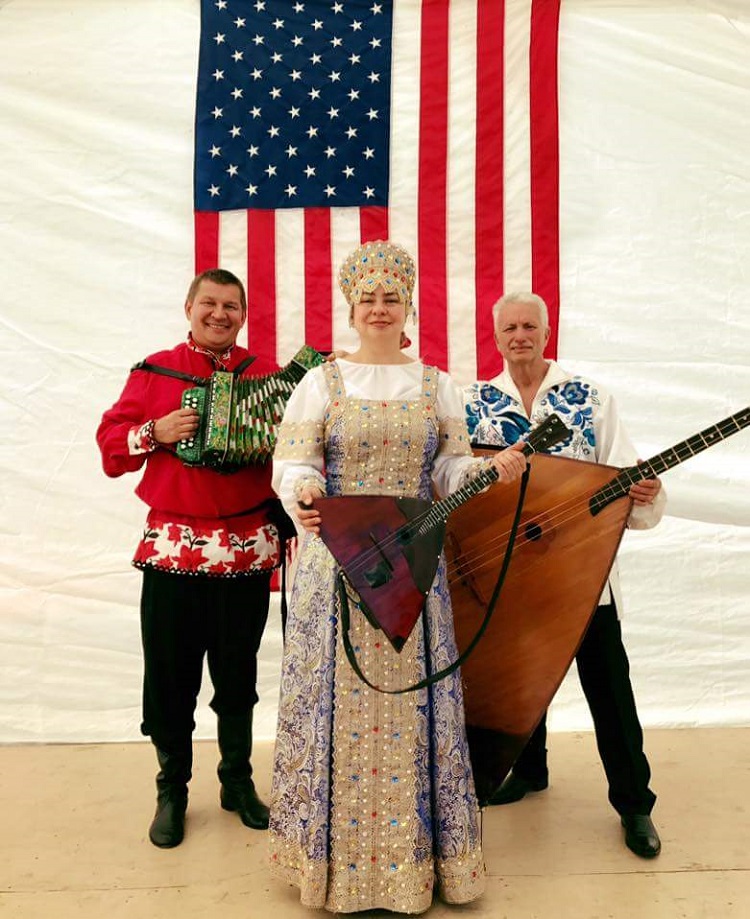
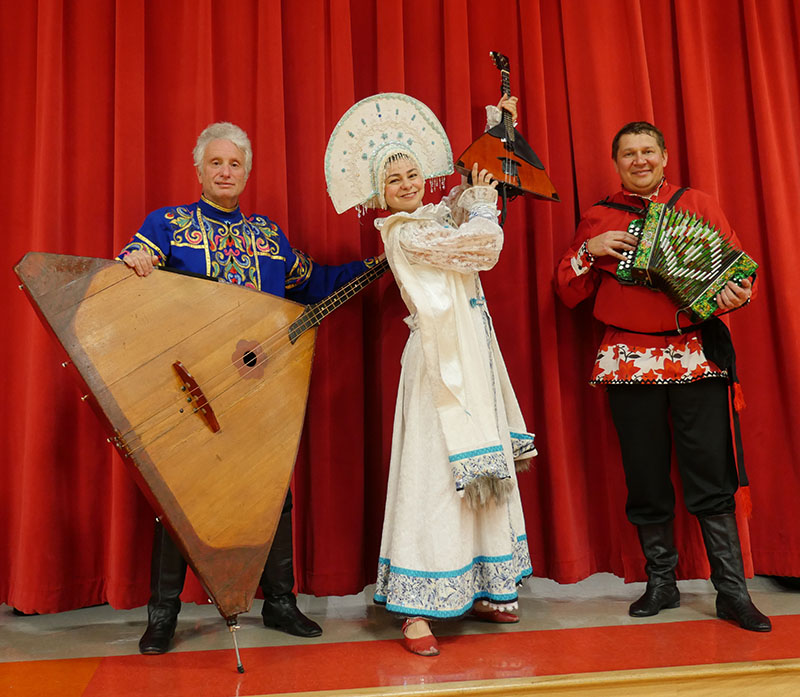



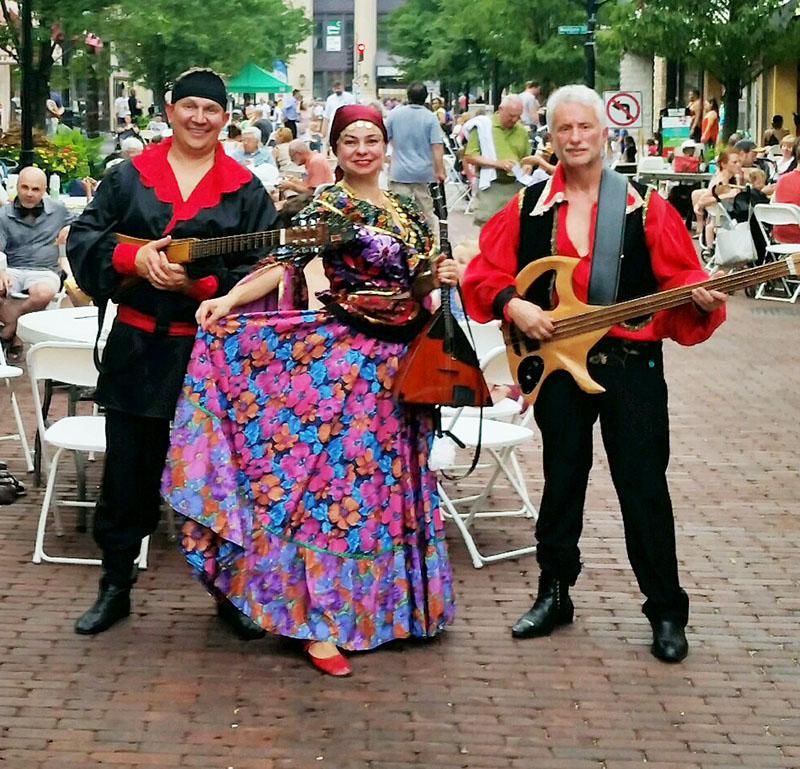

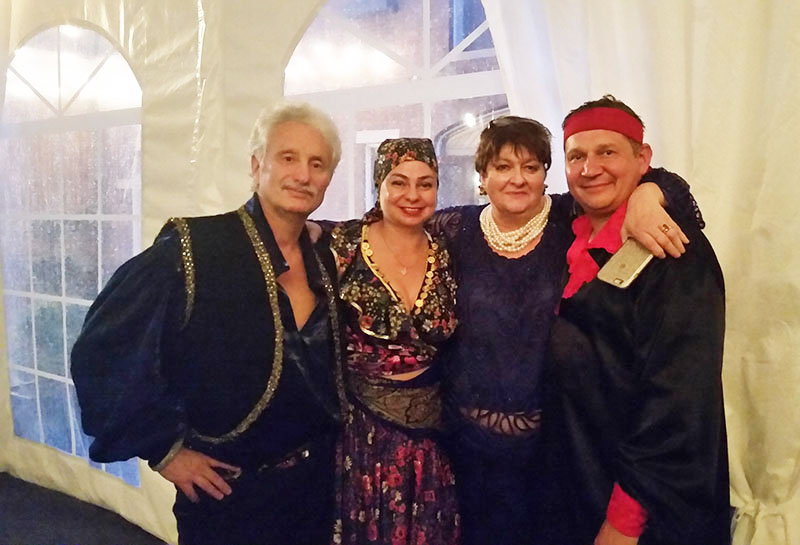
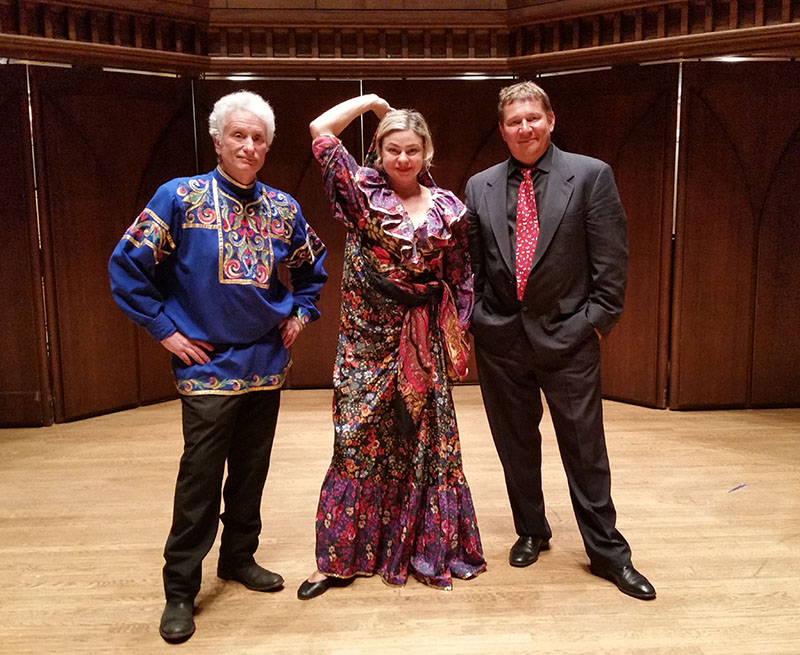
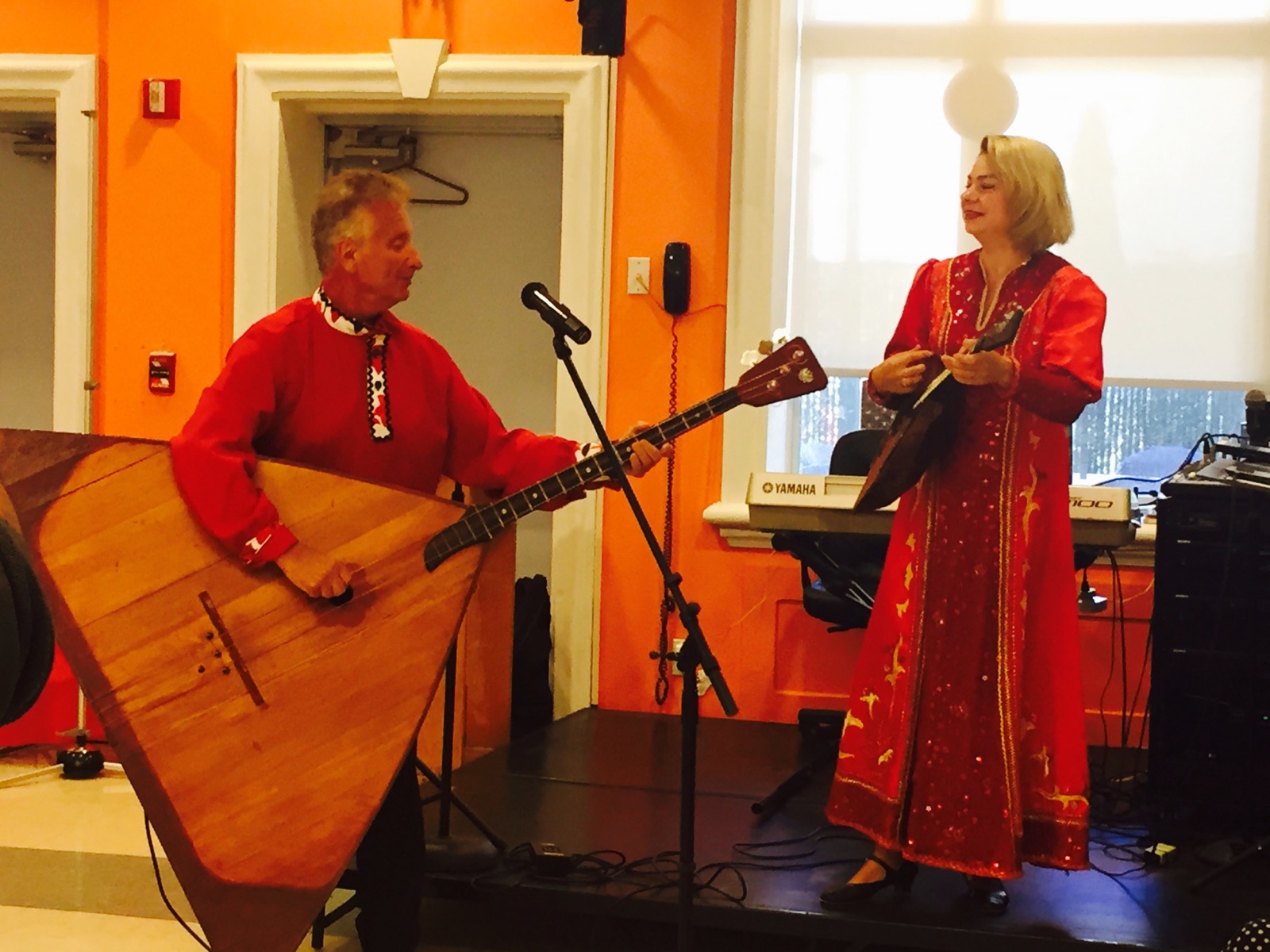

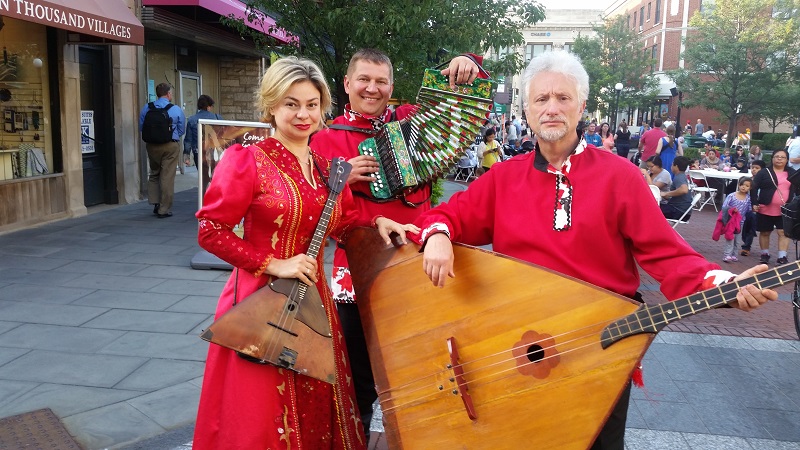
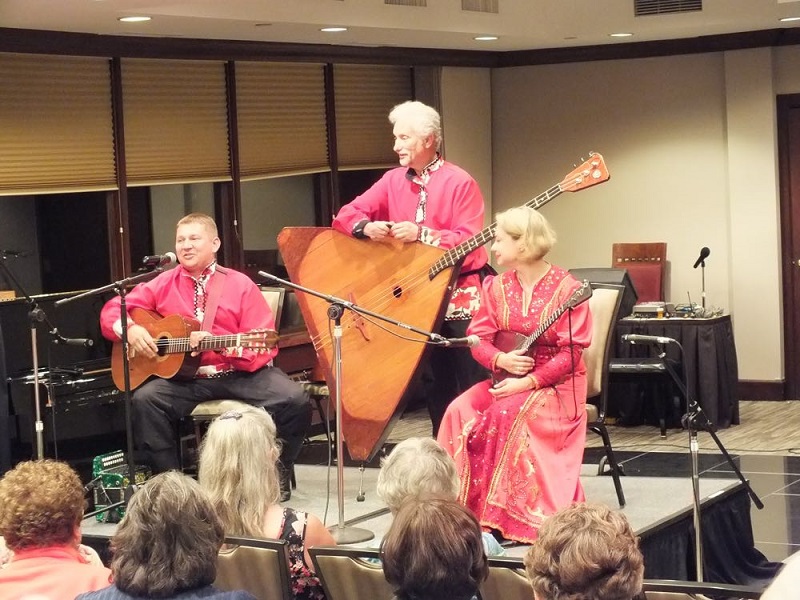

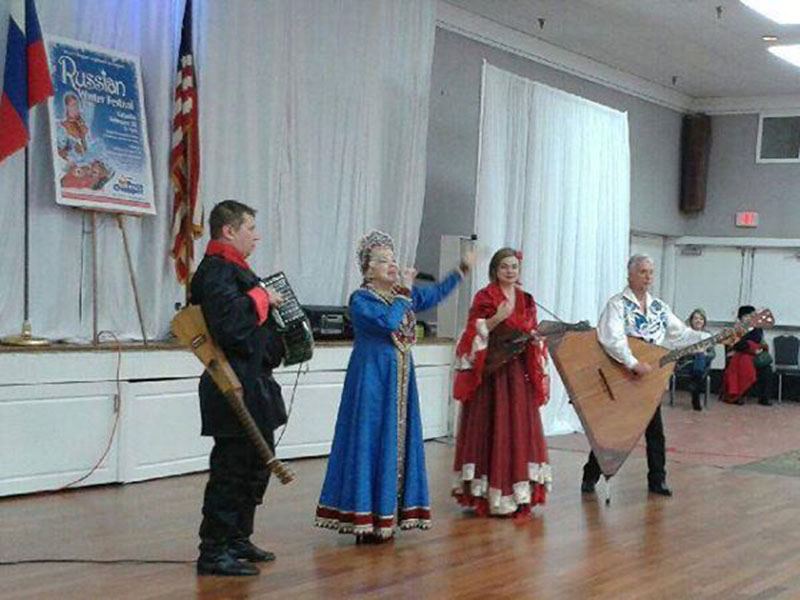
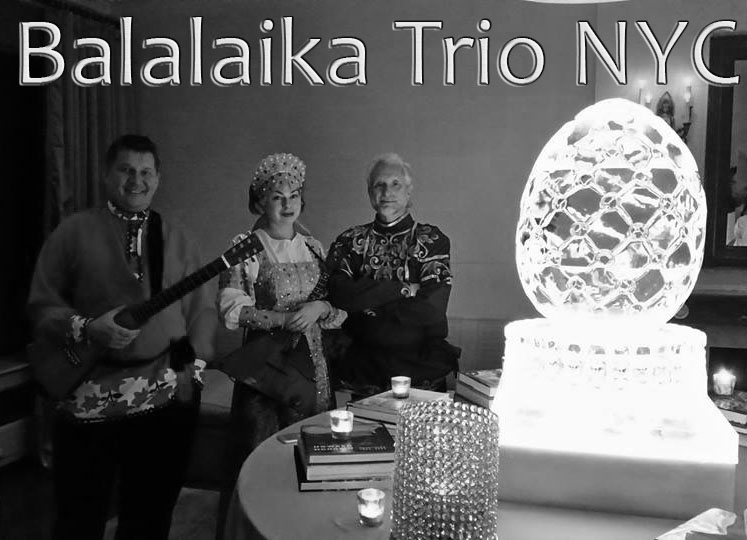
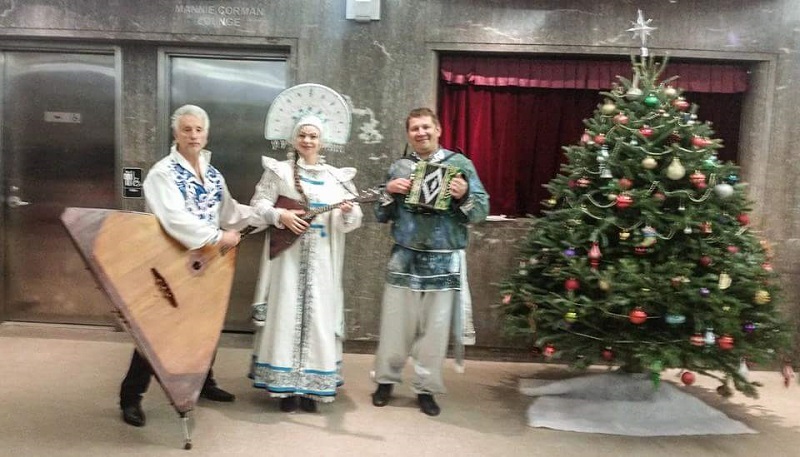
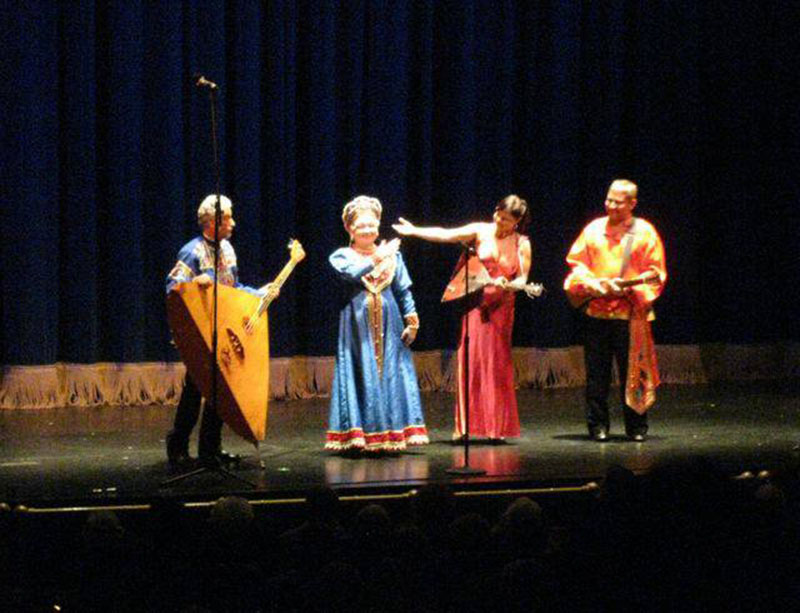
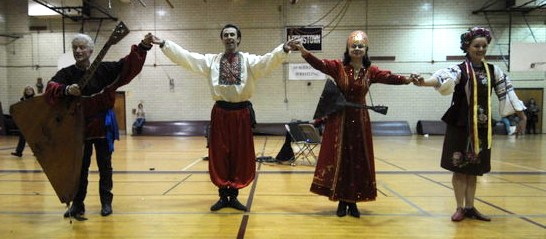
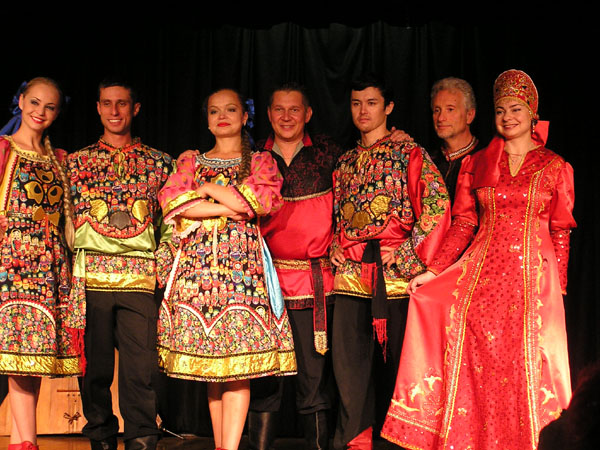
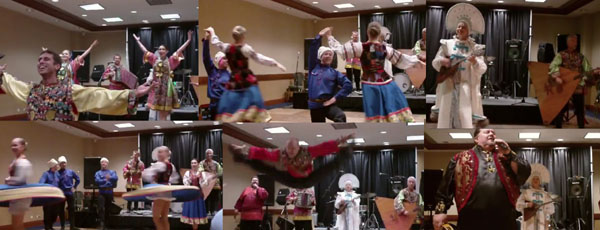
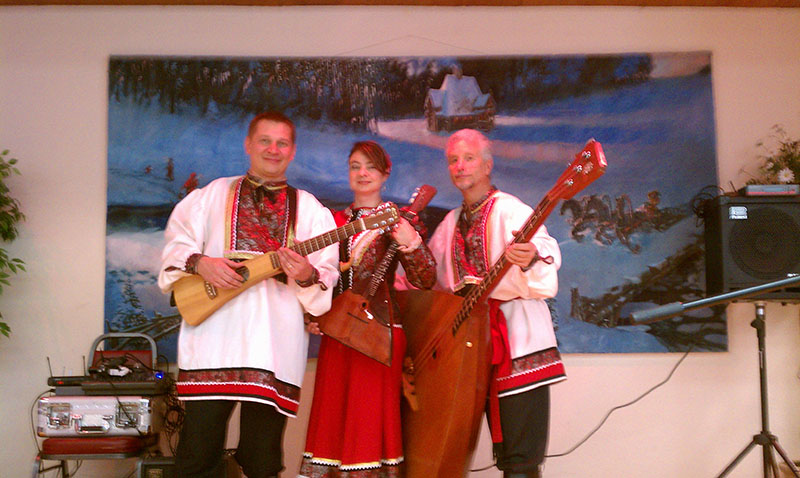
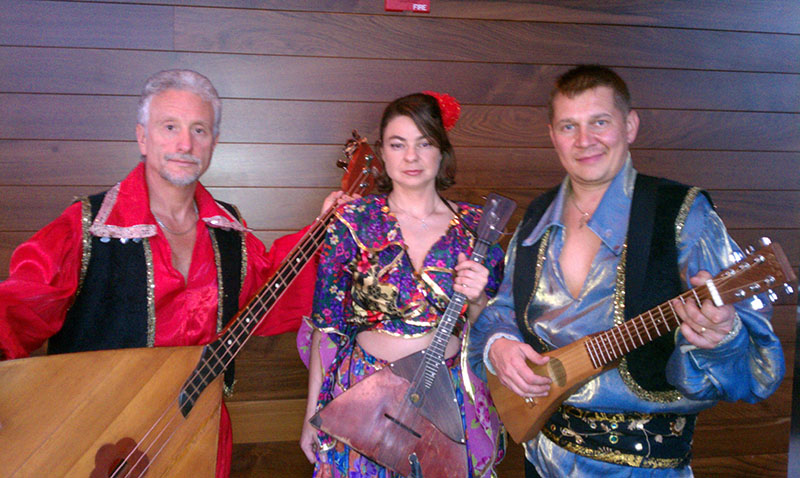
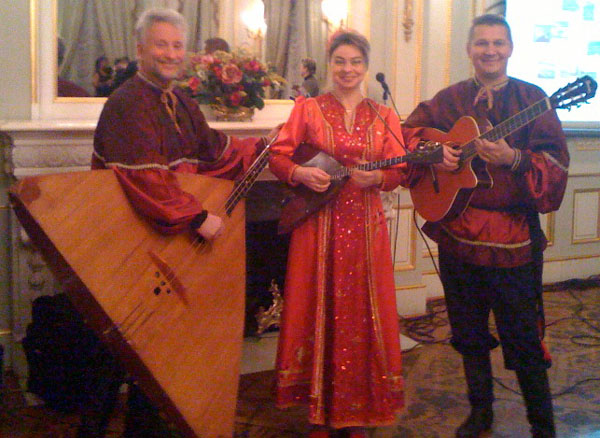
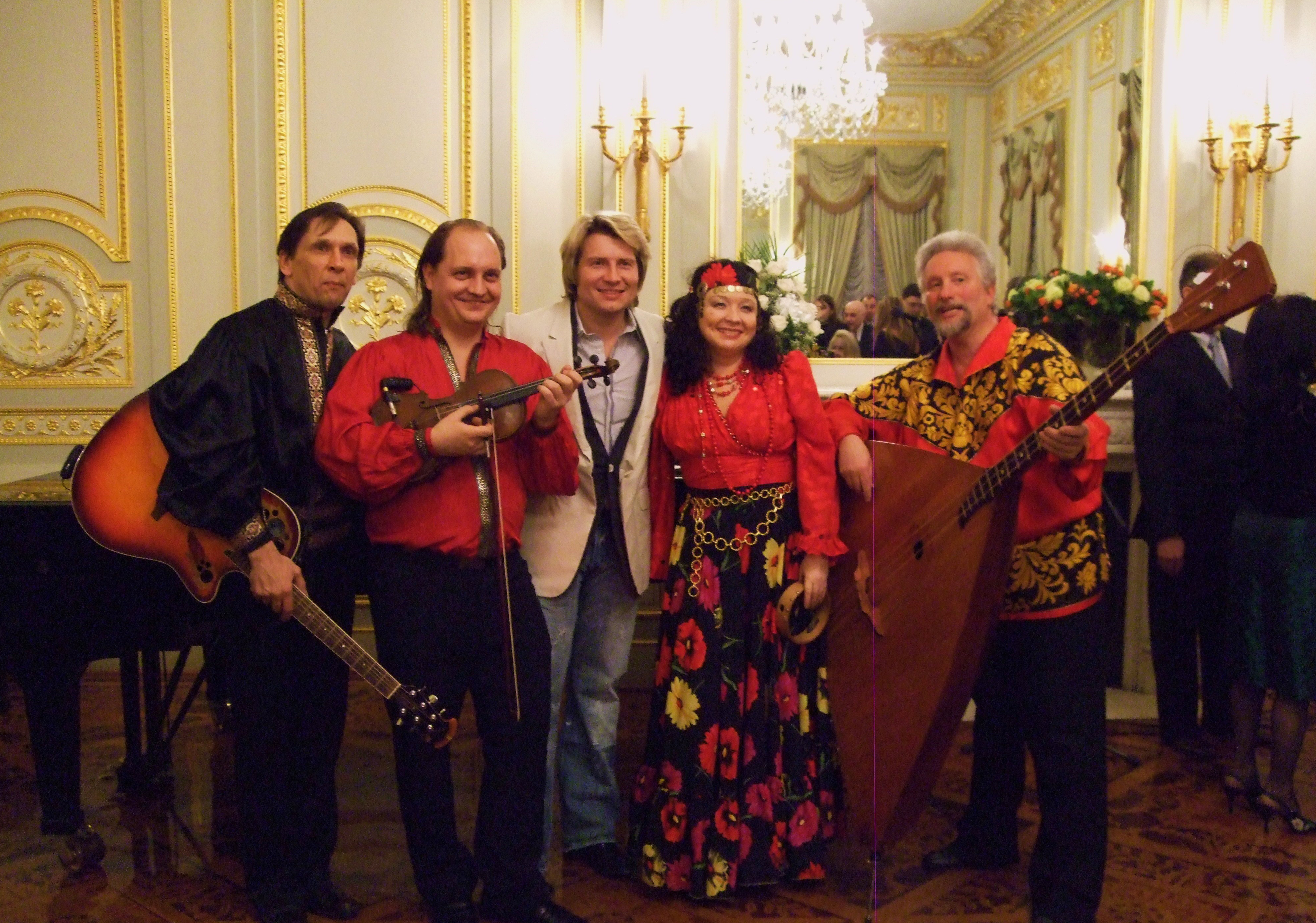
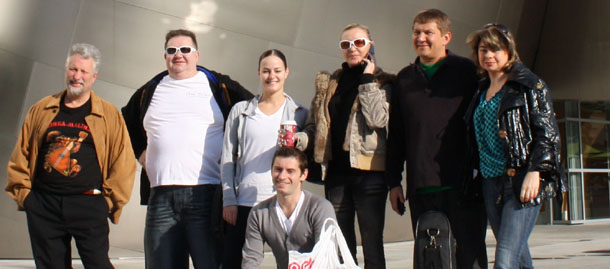
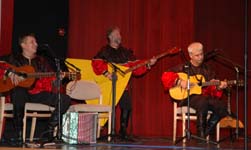
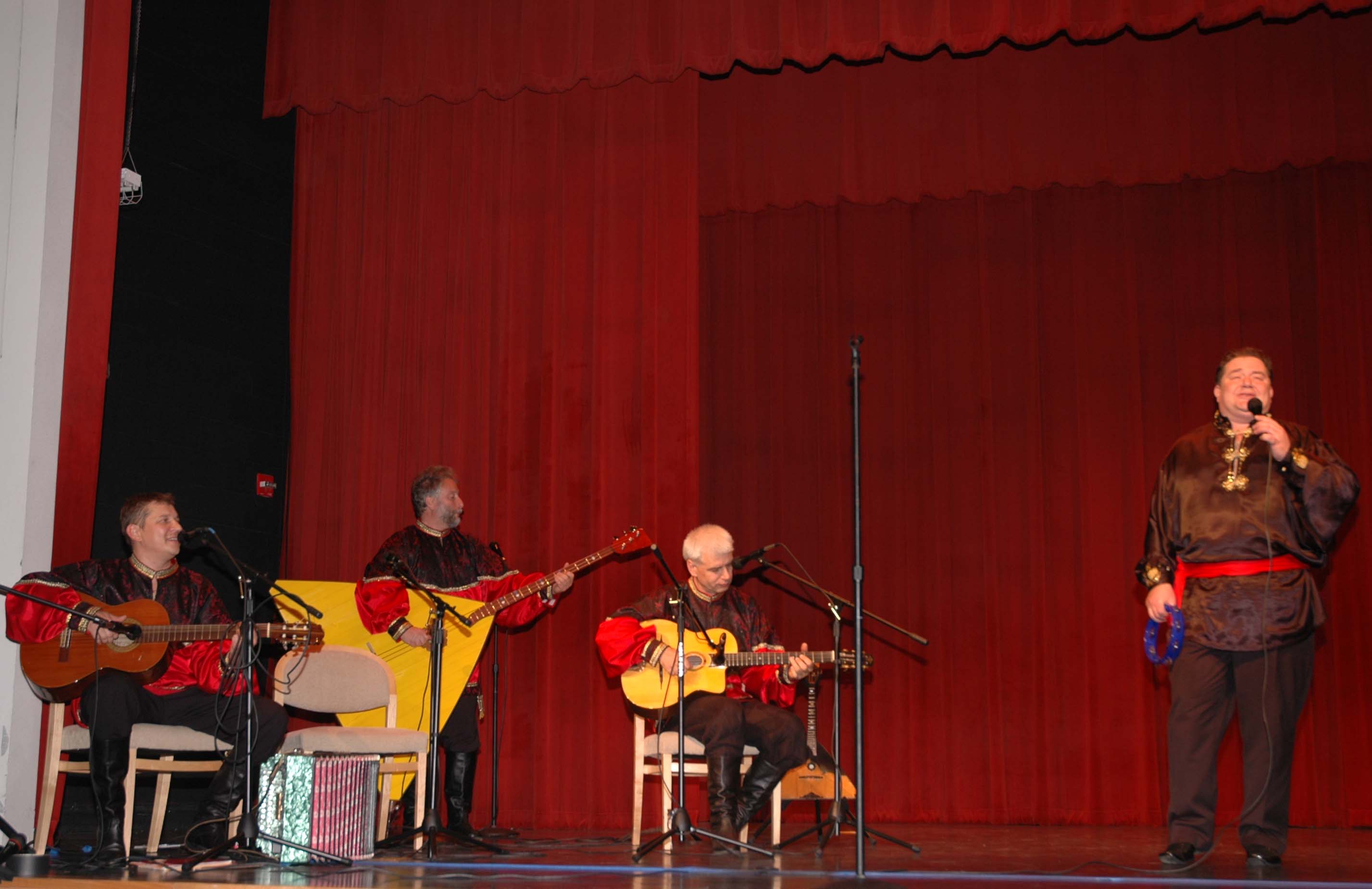
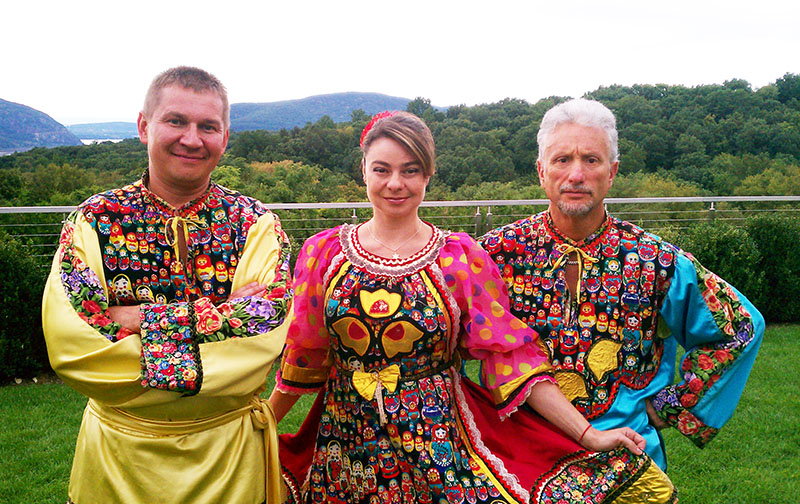 NY Russian Balalaika Trio, Elina Karokhina, Mikhail Smirnov, Leonid Bruk, Garrison, New York, 9-17-2011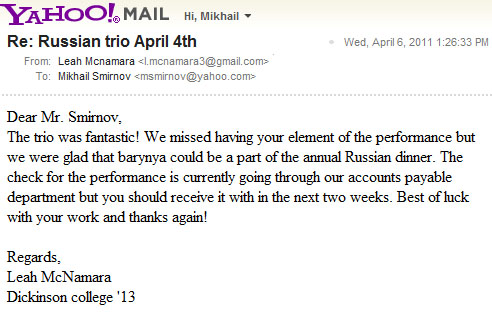
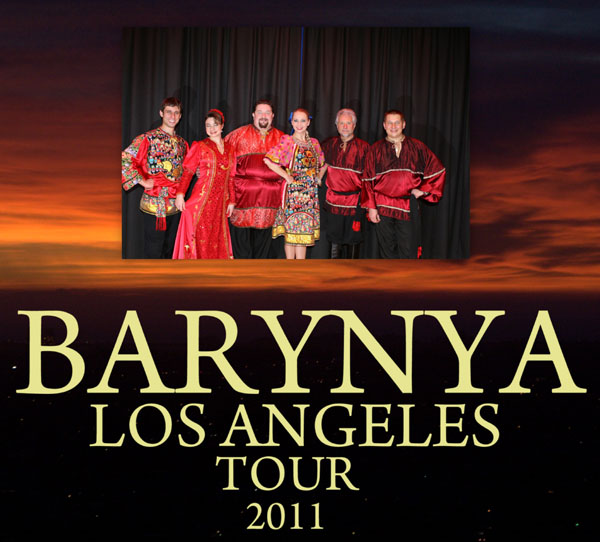
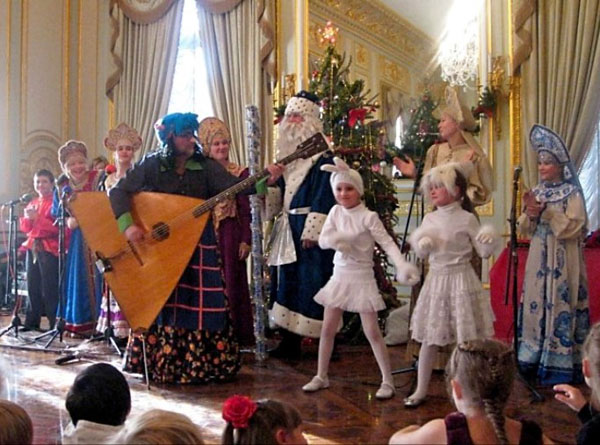

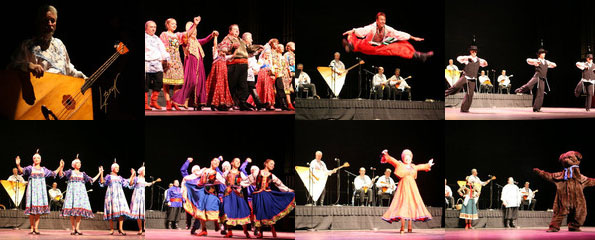
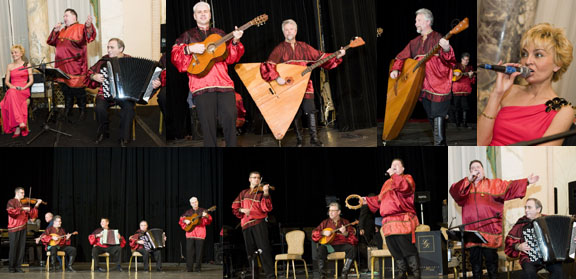
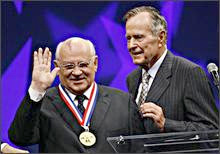 Ensemble Barynya performed during diner Gala after the Liberty Medal 2008 was presented to former Soviet leader Mikhail Gorbachev by President George H.W. Bush. Official ceremony took place on Thursday, September 18, 2008 at The National Constitution Center located at 525 Arch St. on Philadelphia’s Independence Mall...













.jpg)